Why Steam Power Plant Efficiency Is Low
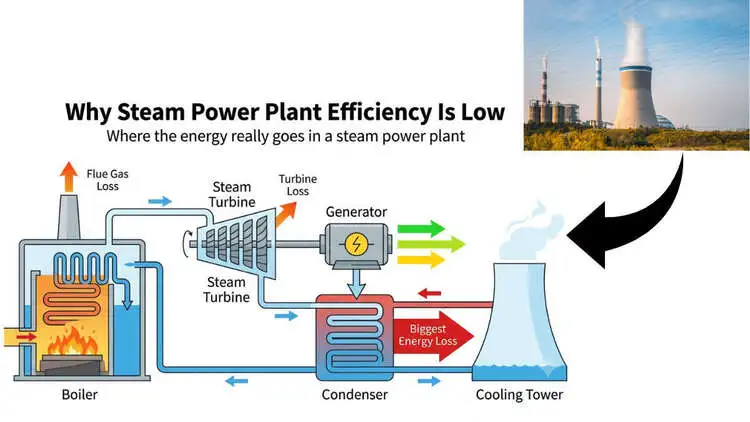
Steam power plants burn a lot of fuel to make a little electricity. That gap is exactly why steam power plant efficiency is low, and this page explains the causes behind it. Most plants turn only a slice of their fuel energy into power. The rest escapes as heat.
The process sounds simple. Burn fuel, boil water, spin a turbine, generate power. But energy slips away at almost every stage of that cycle. These steam power plant efficiency losses pile up in the boiler, the turbine, and the condenser until a huge share of the original fuel is gone.
This guide stays focused on one thing: the causes of low efficiency in steam power plant operations. We will study where the energy goes, not how to fix it. Understand the leaks first, and the numbers finally make sense.
How Efficient Is a Steam Power Plant, Really?
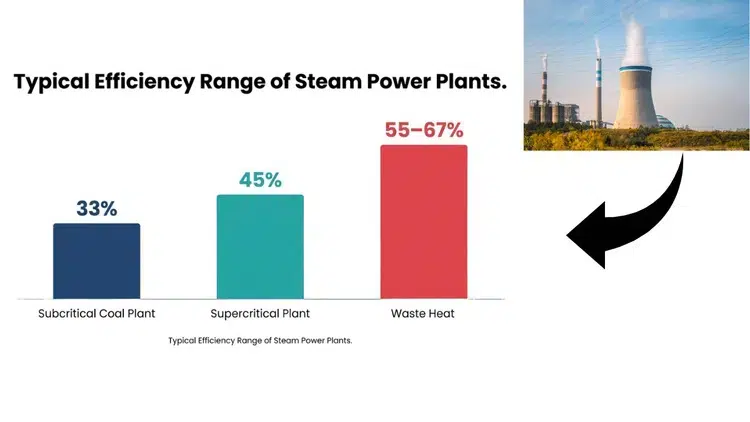
Here is the honest answer. A typical steam power plant converts only 30% to 45% of its fuel energy into electricity.
That means more than half the fuel you burn never reaches the grid. A standard subcritical coal plant lands around 33%. Advanced supercritical plants run hotter and tighter, pushing closer to 45%. Even at the top of that range, most of the energy still leaves as waste heat.
So why such a big loss? Part of the reason for this is based on the laws of physics. Steam plants run on the Rankine cycle, which needs a hot source and a cold sink. No heat engine can ever be 100% efficient — some heat must always be rejected. That single rule sets the ceiling for low thermal efficiency reasons across every plant ever built.
The rest comes down to where heat escapes along the way:
- Boiler losses: Hot exhaust gas leaves through the stack, carrying energy with it. An economiser claws some of that heat back by preheating the feedwater, but plenty still slips away.
- Turbine losses: As steam expands and cools, moisture forms and drags on the blades. A superheater dries the steam first to limit this, yet friction and droplet damage still cost output.
- Condenser losses: The biggest drain of all. Spent steam dumps its leftover heat into the cooling water and out to the environment.
- Feedwater losses: Dissolved gases in cold water insulate the boiler tubes. A deaerator strips those gases out, but any gas that slips through forces the boiler to burn more fuel.
Add these heat losses in steam power plant systems together, and the picture is clear. The energy losses in thermal power plant operations are not random faults. These are simply part of how that cycle works—and in the rest of this article, you will understand this point step by step.
The Main Causes of Low Efficiency
Energy leaks out at every stage of the cycle. To understand why steam power plant efficiency is low, you have to follow the fuel from the furnace to the grid and mark each spot where heat slips away. Five losses do most of the damage. These are listed in the order of how much they cost you.
Heat Lost in the Condenser (the Biggest Single Loss)
The condenser is where most of your energy dies. Spent steam leaving the turbine must turn back into water before it can be pumped to the boiler again. That change of state releases latent heat — the huge amount of energy locked in steam — straight into the cooling water and out to the environment. Condenser heat loss in power plant operations swallows 50% to 55% of the fuel’s energy. It cannot be reused because the heat is too low-grade to spin anything.
Flue Gas Heat Escaping Through the Chimney
Hot exhaust leaves the boiler. It takes energy with it. After combustion, flue gases must travel up the stack to keep air moving through the furnace, and they carry away sensible heat as they go. These flue gas heat losses in steam power plant systems account for 8% to 10% of total waste. The gas stays hot on purpose, since cooling it too far would let corrosive acids condense inside the chimney. So a slice of energy always escapes overhead.
Incomplete or Poor Combustion
Furnaces rarely burn fuel perfectly. When combustion runs short, two things happen. Some carbon passes through unburnt and ends up in the ash or flies out the stack, and excess air pushed in to aid combustion carries extra heat away with the exhaust. Both drag efficiency down. Combustion losses in boiler operations typically cost another 10% to 15%. Too little air means unburnt fuel; too much air means wasted heat. Either way, energy from your fuel never reaches the water.
Moisture in Steam Reaching the Turbine
Wet steam wrecks turbine performance. When steam expands and cools inside the turbine, tiny droplets of water form in the vapor. These droplets move more slowly than the steam around them, so they slam into the spinning blades and create drag. The moisture in steam affects efficiency twice — first as lost mechanical output, then as long-term blade erosion that ruins the blade shape. Both compound over time, adding to the steam power plant efficiency losses you measure at the shaft.
Friction, Radiation, and Insulation Losses
Small leaks add up. Steam scrapes against pipe walls, valves, and bends, losing pressure on its way to the turbine. Hot surfaces radiate heat into the boiler house despite heavy insulation. None of these is large on its own, but together they form a steady background drain. They sit among the quieter sources of efficiency loss in power plant systems — easy to ignore, impossible to remove completely.
Operating Habits That Lower Efficiency
Physics sets the ceiling. How you run the plant decides how far below that ceiling you land. Even a well-designed unit bleeds extra energy when daily operation drifts off target. These habits are some of the most avoidable causes of low efficiency in steam power plant work — and they explain why two identical plants can post very different numbers.
Watch for these four patterns:
- Part-load running: Plants are tuned for full output. Run them at 40% or 50% load for long stretches, and the boiler, turbine, and pumps all operate outside their best range. Efficiency drops with every step away from the design point.
- Fouled tubes: Scale on the water side and soot on the fire side behave like insulating layers. Heat can no longer move from the flame to the water, so the boiler burns more fuel to hit the same steam temperature. Because fouled or damaged boiler tubes reduce heat transfer and push fuel use higher, it is important to understand the common causes of boiler tube failure in thermal power plant operation.
- Air leaks: Gaps in ducts and casings let cold air sneak into the furnace and flue path. That air absorbs heat and carries it straight out the stack, raising flue gas losses for no benefit.
- Poor maintenance: Worn seals, leaking valves, faulty insulation, and dirty heat exchangers each shave off a little. Skip the upkeep, and these small faults stack into a large, permanent drain.
Together, these operating habits explain a big share of the energy losses in thermal power plant performance — and unlike the physics, they trace straight back to how the plant is run day to day.
Where the Biggest Losses Happen (Quick Ranking)
Not all losses are equal. Some bleed off half your fuel; others shave off a percent or two. To see why steam power plant efficiency is low at a glance, rank the leaks from largest to smallest:
- Condenser heat loss: The undisputed champion. Condenser heat loss in power plant operations rejects 50% to 55% of your fuel energy as low-grade waste heat.
- Combustion losses in the boiler: The next biggest drain. Combustion losses in boiler systems cost another 10% to 15% through unburnt fuel and excess air.
- Flue gas losses up the stack: Hot exhaust carries off 8% to 10% of total energy before any heat reaches the water.
- Auxiliary power consumption: Fans, pumps, and pulverizers eat 5% to 8% of the electricity the plant generates.
- Friction, moisture, and radiation: The quiet drains. Individually small, but together they add a steady slice to your steam power plant efficiency losses.
Keep this order in mind. It tells you exactly where the largest sources of efficiency loss in power plant operations sit — and why the condenser will always lead the list.
Key Takeaways
- Physics sets the ceiling. The Rankine cycle must reject heat to work, which is the core answer to why steam power plant efficiency is low.
- The condenser dominates. Over half your fuel energy leaves as latent heat, making it the single largest of all low thermal efficiency reasons.
- The boiler comes second. Combustion losses in boiler systems and flue gas heat escaping the stack up fast.
- Moisture and friction add up: The moisture in steam affects efficiency, blade erosion, and pipe friction all chip away at output.
- Operating habits matter. Part-load running, fouled tubes, and air leaks turn manageable energy losses in thermal power plant systems into avoidable waste.
Conclusion
Low efficiency is not a flaw. It is the price of turning heat into work. The biggest losses trace straight back to thermodynamics — the condenser must reject heat, the stack must stay hot, and no engine ever hits 100%. The rest comes down to how the plant is run day to day. Together, those two forces explain every low thermal efficiency reason you will ever measure.
The good news? Plenty of equipment fights back. An economiser reclaims heat from flue gas before it escapes. A superheater dries the steam so that it does not erode the turbine blades. A deaerator strips dissolved gases out of the feedwater so the boiler transfers heat cleanly. Each one nudges the numbers in your favor. Understand where the energy goes, and the limits finally make sense. That understanding is the first step toward running a tighter, smarter plant.
FAQ
How does a steam power plant compare to nuclear, gas, and hydro plants?
Each one hits a different ceiling. Coal steam plants land near 33% to 45%, and nuclear plants run a similar steam cycle, so they sit around 33% to 37%. Simple gas turbines reach 35% to 42%. Hydro wins easily at 85% to 90%, because it skips heat altogether.
Why are combined cycle plants so much more efficient?
They use the fuel twice. A gas turbine burns fuel and makes power first, then its hot exhaust boils water to run a second steam turbine. That double use pushes efficiency to 55% or 60%. A plain steam plant only gets one shot at the fuel.
Does climate or altitude affect plant efficiency?
Yes. The cycle needs a cold sink, so cooler air and water help the plant dump heat and run better. Hot, humid summers shrink that gap and cut output. High altitude thins the air, which weakens cooling tower performance.
What is a reheat cycle, and does it help?
It does. After steam passes through the first turbine stage, it goes back to the boiler for a second heating, then returns to the turbine. This keeps the steam drier and squeezes out more work. Most large plants use it for exactly that reason.
Does a steam plant lose efficiency as it gets older?
It usually does. Tubes foul, seals wear, and insulation degrades over the years. Each small fault traps a little heat or leaks a little energy. Without steady upkeep, an aging plant slowly drifts below its original numbers.
How does capacity factor affect efficiency?
A plant runs best at steady, full load. Frequent starts, stops, and part-load running pull it off its design point and waste fuel. A low capacity factor means more of that inefficient operation. Higher, steadier use keeps the numbers strong.
What is the difference between supercritical and subcritical plants?
It comes down to steam pressure and temperature. Subcritical plants run cooler and top out near 37%. Supercritical and ultra-supercritical plants push pressure past the critical point and run far hotter, reaching up to 45%. Hotter steam means more work from the same fuel.

I am an electrical engineer and also a blogger. I write informative blog posts on topics related to electrical and electronics engineering. If you are interested in these topics, you are welcome to my site to read these articles.