Boiler Tube Failure Causes and Prevention
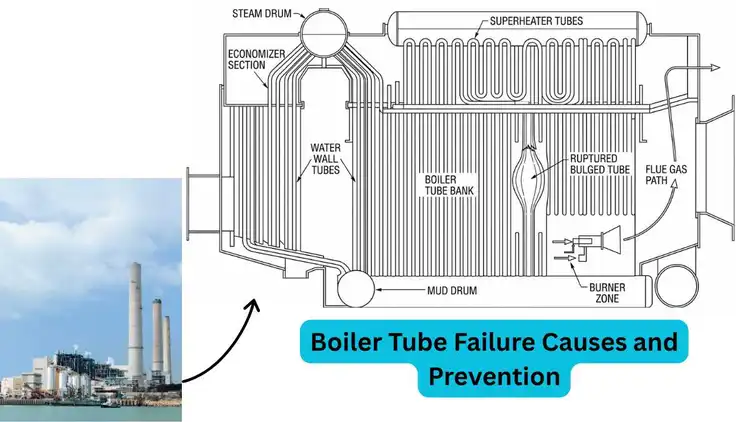
Boiler tubes fail more often than most power plant teams expect. Understanding Boiler Tube Failure Causes and Prevention is the difference between a smooth operation and a costly shutdown. In fact, boiler tube failure is one of the leading causes of unplanned outages across power and process plants. When even a single tube bursts, the entire unit shuts down for several days.
So why does it happen? The causes of boiler tube failure range from Thermal Fatigue and Corrosion in Boiler Tubes to poor water chemistry and weak Maintenance Practices. Each one chips away at tube strength until something gives.
This article explores both sides of the issue. You will learn why these malfunctions occur and, most importantly, how to prevent them so that the power plant does not shut down completely.
What Is Boiler Tube Failure?
Boiler tube failure is the cracking, rupture, or leak of a tube that carries water or steam inside a boiler. Put simply, tube failure in a boiler means the metal can no longer hold what it was built to contain.
These tubes work in brutal conditions. They face constant High-Temperature Issues, high internal pressure, and rapid heating and cooling cycles. That combination puts enormous strain on the metal walls.
Over time, these stresses trigger different boiler tube failure mechanisms. Each one wears the tube down, weakens its structure, and slowly drags down Heat Transfer Efficiency until the tube finally breaks.
Main Causes of Boiler Tube Failure
Most failures trace back to a handful of repeating culprits. Knowing these causes of boiler tube failure is the first step in any solid Boiler Tube Failure Causes and Prevention plan. Each mechanism below attacks the tube in its own way, and often more than one works at the same time.
Overheating (Short-Term and Long-Term)
Heat is the most common killer of boiler tubes. Boiler tube failure due to overheating comes in two forms. Short-term overheating hits fast, usually from a sudden loss of water flow or a blocked tube—the metal balloons and ruptures within minutes. Long-term overheating is slower and sneakier. When the tube stays a few degrees overheated for long periods, creep damage slowly builds and eventually cracks the wall. Both leave clear thinning and bulging behind.
Corrosion (Waterside and Fireside)
Corrosion eats tubes from both directions. Waterside boiler tube corrosion starts when Poor Water Quality and Chemical Imbalance let oxygen and acids attack the inner wall. Fireside corrosion comes from aggressive flue gases and molten ash on the outer surface. Either way, the metal pits and weakens.
Erosion from Ash and Steam
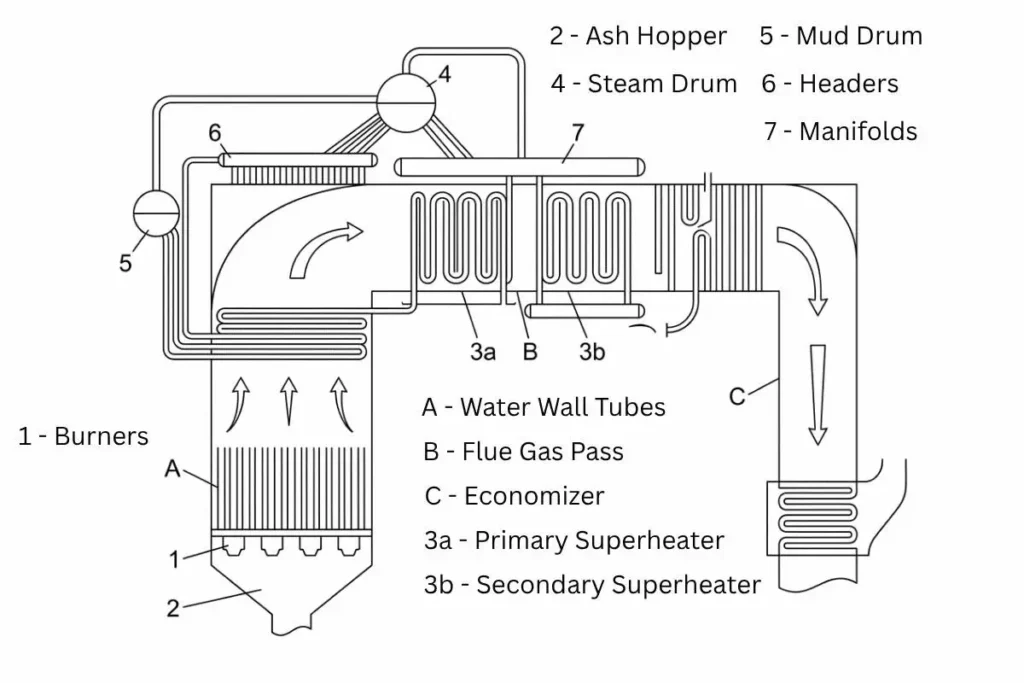
Erosion wears tubes thin, one particle at a time. Fly ash carried in fast-moving flue gas scours the outer wall like sandpaper — and in plants where the ash handling system in a thermal power plant is poorly managed, that abrasive load increases significantly. Inside, escaping steam from a nearby leak can cut into a neighboring tube within hours. Both processes strip metal away until the wall is too thin to hold pressure.
Fatigue and Thermal Stress
Boilers that start and stop pay a price. Each cycle heats and cools the metal, and that movement drives Thermal Fatigue. Over time, repeated expansion and contraction trigger Stress Cracking at welds, supports, and bends. Cycling operations make this worse than steady-load plants ever see. The cracks start small and invisible. Left alone, they grow with every cycle until the tube splits open under normal pressure.
Deposits Restricting Heat Transfer
Clean tubes transfer heat. Dirty ones overheat. Scale Build-Up on the waterside and Fouling in Boiler Tubes on the fireside both act as insulation. That insulation traps heat in the metal instead of moving it to the water. Heat Transfer Efficiency drops, the tube wall climbs past its safe limit, and you are back to overheating damage. This is why deposits rank among the most underrated boiler tube failure causes.
Vibration and Mechanical Stress
Tubes that shake will eventually crack. Flow-induced vibration from gas or steam moving across tube banks sets up constant flexing. Add poorly fitted supports or thermal movement, and mechanical stress concentrates at fixed points. Over time, that stress fatigues the metal and cracks form, often near baffles and tie points. Good support spacing and damping keep this in check.
Improper Tube Material Selection
The wrong alloy fails fast. Material Selection errors put a tube in conditions it was never built for. A low-grade steel placed in a high-temperature zone cannot cope. When the metal does not match the Operational Parameters around it — temperature, pressure, and corrosive load — failure is only a matter of time.
Boiler Tube Failure Early Warning Signs
Boiler tubes rarely fail without warning. The trick is reading the signals early. Watch for temperature deviations that creep above normal, since unexplained hot spots often point to a developing boiler tube leakage reason. Small leaks, faint hissing, or unexpected pressure changes are red flags too. A steady drop in water level or rising makeup water demand usually means a tube is already weeping. Catch these signs early with regular Inspection Techniques — visual checks, thickness testing, and leak monitoring — and you stop a small fault from becoming a full rupture.
How to Prevent Boiler Tube Failure
Prevention beats repair every time. The good news? Most failures come from a few predictable sources, and each one has a clear fix. Build the habits below into your routine, and you cut both unplanned outages and repair bills.
Water Chemistry Control
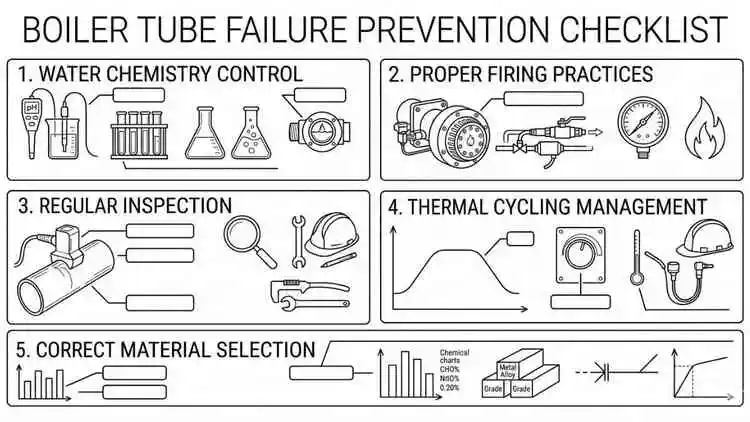
Bad water kills tubes from the inside. Keep dissolved oxygen, pH, and hardness within tight limits, and you starve waterside corrosion of its fuel. Test your feedwater and boiler water on a fixed schedule, dose treatment chemicals accurately, and log every reading. Clean water chemistry also blocks Scale Build-Up before it starts insulating the metal.
Proper Firing Practices
Uneven flames create hot spots. Hot spots burn tubes. Tune your burners so heat spreads evenly across the furnace, avoid flame impingement on the tube walls, and keep combustion air balanced. Steady, controlled firing keeps every tube inside its safe temperature range.
Regular Inspection
You cannot fix what you cannot see. Schedule thickness checks, visual walk-downs, and weld inspections at set intervals — not just after a failure. Catch thinning, pitting, and early cracks while they are still small. Routine inspection turns surprise ruptures into planned, low-cost repairs.
Managing Thermal Cycling
Every start and stop strains the metal. Rapid heating and cooling drives Thermal Fatigue and crack welds over time. Ramp temperatures up and down gradually, limit unnecessary shutdowns, and follow defined warm-up and cool-down curves. Slower transitions mean longer tube life.
Correct Boiler Operation and Load Management
Sudden load swings shock the system. Run the boiler within its design Operational Parameters, avoid sharp pressure changes, and match firing rate to demand smoothly. Steady operation reduces stress on every tube and keeps heat transfer stable across the unit.
Using High-Quality Tubes
Cheap tubes cost more later. Source tubes from trusted manufacturers, verify material certificates, and confirm each alloy matches its service zone. Sound Material Selection at the buying stage prevents premature failure long before the boiler ever fires up.
Vibration and Stress Control
Tubes that shake will crack. Fit supports and baffles at correct spacing, add damping where flow-induced vibration is strong, and check for loose or worn fittings during outages. Controlling movement keeps mechanical stress from concentrating at fixed points.
Preventing Corrosion Through Protective Coatings
Coatings build a barrier the corrosion cannot cross. Apply protective coatings or cladding on tubes exposed to aggressive flue gases and molten ash. Pair fireside coatings with strong waterside chemistry, and you defend the metal from both directions at once.
Inspection and Monitoring Practices
Failures send signals long before they happen. The plants that stay online are the ones that read those signals early. Strong Inspection Techniques and disciplined Maintenance Practices turn a guessing game into a reliable schedule.
Build your monitoring around three routine checks:
- Thickness testing. Use ultrasonic gauges to track wall loss over time. A steady thinning trend tells you exactly which tubes to watch.
- Visual and boroscope inspection. Look for bulging, pitting, scale, and surface cracks during every outage. Photograph problem areas to compare against the next inspection.
- Leak and temperature monitoring. Track tube metal temperatures and feedwater demand continuously. A small rise in either often points to a developing fault.
Pair these checks with Failure Analysis whenever a tube does fail. Inspect the failed sample, study the fracture pattern, and pinpoint the actual cause — overheating, corrosion, fatigue, or erosion. Then feed that finding back into your maintenance plan so the same failure never repeats.
Key Takeaways
- Boiler tube failure is a leading cause of unplanned outages, and most causes are predictable and preventable.
- Overheating, corrosion, erosion, fatigue, deposits, vibration, and wrong material choices drive the majority of failures.
- Tight water chemistry control and even firing practices stop two of the biggest threats before they start.
- Regular inspection, thickness testing, and temperature monitoring catch small problems before they turn into ruptures.
- Root-cause failure analysis closes the loop, so each failure makes your boiler more reliable, not just repaired.
Conclusion
Boiler tube failure does not have to be inevitable. Once you understand Boiler Tube Failure Causes and Prevention, you can attack each threat at its source. Control your water chemistry to block Corrosion in Boiler Tubes.
Manage firing and cycling to limit Thermal Fatigue. Keep tubes clean to stop Scale Build-Up from trapping heat. Choose the right alloy through careful Material Selection, and run the unit within its safe Operational Parameters every shift. Back all of this with routine inspection and honest root-cause analysis, and you turn random breakdowns into a controlled, predictable maintenance program. The payoff is real: fewer outages, lower repair costs, and a boiler you can trust under load. Start with the basics, stay consistent, and your tubes will reward you with years of reliable service.
FAQ
How long do boiler tubes usually last before replacement?
Most boiler tubes last 15 to 25 years under normal service. Hard use shortens that. High pressure, frequent cycling, and aggressive water all wear tubes faster. There is no fixed expiry date. Monitor wall thinning over time and replace the tubes when measurements fall below the safe limit, not simply according to schedule.
How much does a boiler tube failure really cost?
A single ruptured tube costs far more than the tube itself. You pay for the shutdown, lost production, emergency labor, and replacement parts. For a power plant, one unplanned outage can run into hundreds of thousands of dollars per day. That gap is exactly why Boiler Tube Failure Causes and Prevention deserves serious budget and attention.
What is the difference between fire tube and water tube failures?
The setup decides the risk. In a fire tube boiler, hot gas runs inside the tubes and water surrounds them. In a water tube boiler, the opposite is true. In fire tube boilers, failure often begins on the gas-side surface, whereas in water tube boilers it usually starts on the waterside. Knowing which type you run shapes your whole inspection plan.
Can boiler design itself cause tube failure?
Yes. Poor design sets tubes up to fail. Tight bends, bad support spacing, and uneven heat distribution all concentrate stress in weak spots. Even perfect operation cannot fully fix a flawed layout. Good boiler tube analysis and prevention starts at the design stage, where smart geometry and proper clearances remove problems before the unit ever fires.
Do insurance and regulations care about boiler tube failure?
They care a lot. Most insurers and safety codes require documented inspections, pressure testing, and maintenance records. Skip them, and a claim after a tube failure in a boiler can be denied. Regulators can also halt operation until repairs pass review. Clean records protect both your coverage and your license to run.
When should you repair a tube versus replace it?
Match the fix to the damage. Repair a single, isolated leak when the surrounding metal is still sound. Replace the tube, or a full section, when you see widespread thinning, multiple cracks, or repeat failures in the same zone. Recurring boiler tube failure types in one area signal a deeper problem that a quick patch will not solve.

I am an electrical engineer and also a blogger. I write informative blog posts on topics related to electrical and electronics engineering. If you are interested in these topics, you are welcome to my site to read these articles.