The History of Electricity Timeline
For most of human history, electricity was nothing more than a mysterious and unpredictable force of nature, seen only in the terrifying flash of a lightning bolt or the strange spark of static on a cold night. Today, it serves as the invisible heartbeat of our modern world, powering everything from massive cities to the smartphone in your pocket.
But how did we get here? The story of electricity is not just a tale of a single, sudden discovery. Rather, it is a fascinating saga of curiosity, brilliant minds, and relentless experimentation spanning thousands of years. From ancient thinkers observing natural phenomena to visionary inventors illuminating the night sky, the evolution of electricity has fundamentally reshaped human existence and paved the way for the future.
What is History of Electricity
Thousands of years ago, people noticed that certain materials, like amber, could attract lightweight objects when rubbed against fur. For centuries, this physical phenomenon remained a curious trick or a philosophical mystery rather than a practical tool.
As time passed, curious minds began to ask deeper questions. The history of electricity marks a crucial shift from merely observing natural wonders to actively experimenting with them. Thinkers and inventors started building crude devices to store charges, measure currents, and eventually generate continuous power. They transformed an abstract concept into a measurable science.
Understanding this history matters today because it highlights how collective human knowledge builds over time. The vast and reliable power grids on which we rely today are the result of countless experiments, errors, and successes achieved through cooperation. By understanding this past, we are better able to comprehend the invisible energy—the very energy that drives our everyday lives. At the same time, we also appreciate the human spirit that made this possible.
The Journey of Electricity (Ancient Discoveries to Modern Innovations)
The journey of electricity is a brilliant showcase of human curiosity, pushing the boundaries of what is possible. Long before wires and grids existed, early civilizations watched storms with awe and noticed static sparks when rubbing amber against fur. These ancient observations planted the seeds for future scientific breakthroughs.
Understanding Electricity in Ancient Times
We often view electricity as a modern marvel of engineering. Yet, the story of this invisible energy actually begins thousands of years ago. Long before inventors built power grids or crafted lightbulbs, ancient cultures interacted with electricity in its raw, natural state. Through keen observation, early humans laid the groundwork for a scientific revolution that would eventually change the world.
The “Thunderers of the Nile”
The earliest recorded encounters with electricity come from the natural world. In 2750 BCE, ancient Egyptian texts described the shocking effects of electric fish found in the Nile River.
- Protectors of the waters: The Egyptians called these creatures the “Thunderers of the Nile” and viewed them as protectors of all other fish.
- Early medical treatments: Ancient healers eventually used the numbing shocks of electric fish and rays to treat ailments like severe headaches and gout.
The Magic of Amber
Around 600 BCE, Thales, a philosopher from Miletus, conducted simple yet profound experiments on fossilized tree resin, or amber. Thales observed that rubbing amber against animal fur generated a peculiar attraction. Due to this friction, the amber began to attract light objects, such as feathers or dry grass.
This simple observation holds immense historical significance. The ancient Greek word for amber is *electron*. Centuries later, when scientists began to study this attractive force in depth, they named this phenomenon “electricity” in honor of these early Greek experiments.
This simple observation holds massive historical significance. The ancient Greek word for amber is elektron. Centuries later, when scientists began to study this pulling force in depth, they honored these early Greek experiments by naming the phenomenon “electricity.”
Benjamin Franklin’s Kite Experiment
In 1752, Benjamin Franklin undertook a daring experiment to prove a hypothesis: that the lightning flashing in the sky was the very same force as the static electricity generated on Earth. To test this theory, he devised one of the most famous experiments in the history of science.
Many people believe that a powerful jolt of electricity struck Franklin’s kite directly. The wet hemp rope acted as a conductor for the ambient electrical charge hovering within the stormy clouds. As the storm drew near, Franklin observed that the loose strands of the rope stood erect. When he extended his knuckle toward the metal key, he felt a distinct, warm, and unmistakable spark.
This tiny spark completely transformed our understanding of nature. It proved that lightning is, in fact, a massive discharge of electricity. Inspired by this remarkable experiment, Franklin invented the ‘lightning rod’—a practical device that safely diverted lightning strikes away from wooden structures, saving countless lives.
Furthermore, his work helped establish the fundamental concepts of positive and negative electrical charges, providing scientists with a clear framework for studying this powerful force and, ultimately, harnessing it.
Luigi Galvani and the Spark of Life
In the late 1700s, scientists regarded electricity as a physical force found only in storm clouds or static sparks. An Italian doctor, Luigi Galvani, completely transformed this view.
While dissecting a frog in his laboratory, Galvani observed something startling. When his assistant touched an exposed nerve in the frog’s leg with a metal knife, the dead frog’s leg twitched violently. Curious to understand this physical reaction, Galvani conducted further experiments. This proved that electrical signals travel through our nervous system and control our muscles.
However, another Italian scientist, Alessandro Volta, disagreed with Galvani’s theory. Volta argued that the frog itself did not generate the electrical energy. Instead, he believed that the moisture present in the frog’s flesh reacted with two different metals to produce an electric current. The frog was merely acting as a conductor.
This historic scientific debate gave birth to one of the most significant inventions in human history. To prove his point, Volta stacked alternating discs of zinc and copper, separated by a cloth soaked in saltwater. This device came to be known as the “Voltaic Pile”; it successfully generated a steady electric current without utilizing any animal organs. It became the world’s first chemical battery.
If you want to know more about cells and batteries, then you can read this article:- How Cells and Batteries Work
Michael Faraday and the Magic of Magnets
In 1831, an English scientist named Michael Faraday completely revolutionized the rudimentary methods of generating electricity. Prior to his discovery, people relied on simple chemical batteries to obtain electricity. While batteries worked well enough for minor experiments, they were unable to provide the vast quantities of energy required to power machinery or illuminate cities. Using two simple components—a magnet and a coil of wire—Faraday unlocked the secret to generating limitless electricity.
The Discovery of Electromagnetic Induction
Faraday observed a unique relationship between magnetism and electricity. To test his hypothesis, he conducted a simple experiment. He took an ordinary magnet and moved it in and out of a coil of copper wire. As the magnet moved, an electric current began to flow through the wire. When he stopped moving the magnet, the electricity ceased as well. By passing a magnetic field through a metallic conductor—such as copper—he compelled electric charges to move. Scientists refer to this remarkable process as ‘electromagnetic induction.’
Thomas Edison and his Practicle use of Electricity
For decades, scientists understood the fundamental principles of electricity. They could generate sparks, spin magnets, and even construct simple batteries. However, this invisible force remained, for the most part, merely a laboratory curiosity. Delivering electricity directly to the homes and businesses of ordinary people required a brilliant mind—such as that of Thomas Edison—and tireless perseverance.
The First Practical Light Bulb
In 1879, Edison achieved a breakthrough. He did not invent the very first electric light; rather, he created the first commercially successful incandescent light bulb. Earlier experimental bulbs burned out very quickly or required excessive electricity to operate.
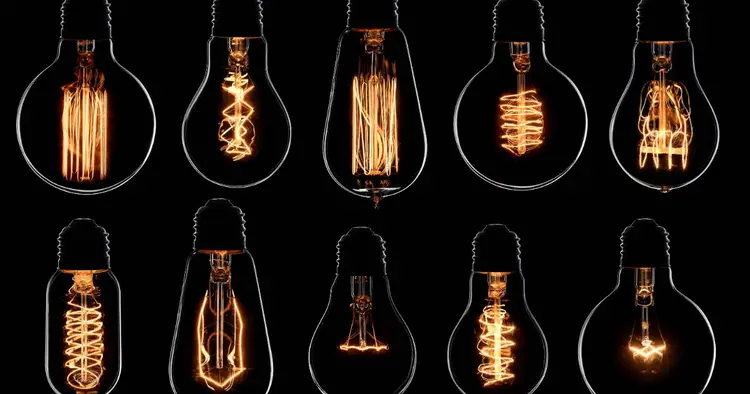
Edison and his dedicated team tested their experiments thousands of times before achieving true success. Eventually, they discovered that a bamboo filament made of carbon worked perfectly. Thanks to this specific design, the bulb continued to emit light for over 1,200 hours inside a vacuum-sealed glass enclosure. Suddenly, safe, long-lasting, and reliable electric lighting became a reality for the general public.
Edison knew that a long-lasting light bulb was completely useless without a reliable means of powering it. He realized that he would have to create an entire system to generate electricity and deliver it to customers.
In 1882, he opened the Pearl Street Station in New York City. This historic facility was the world’s first commercial central power plant. It successfully generated electricity and distributed it through a newly constructed electrical grid, illuminating homes, shops, and streets in Lower Manhattan. With this single power station, Edison proved that electricity could be produced and sold as a practical, everyday necessity.
The War of Currents
As the public demand for electricity exploded, a fierce rivalry emerged. We now call this intense period the “War of Currents.”
Edison heavily championed Direct Current (DC). This type of current flowed continuously in one single direction. It worked perfectly for small areas, but it lost significant power when traveling over long wires.
Meanwhile, inventor George Westinghouse and engineer Nikola Tesla promoted Alternating Current (AC). AC could easily step up to high voltages for long-distance travel across the country, and then step back down for safe home use.
Edison fought hard to keep his DC system on top, launching massive public relations campaigns to discredit AC. However, the sheer efficiency and reach of AC eventually made it the clear winner and the global standard for power grids.
How Electricity Transformed Modern Life
Electricity started as a strange spark in a laboratory. Over time, it grew into the invisible force that runs our entire world. When we finally figured out how to harness and deliver this energy, human history changed forever. Every part of our daily routine now relies on this steady flow of power.
Shift to Electrical Automation
Before the electric grid, human muscle, water, and steam powered the world. Factories relied on massive, dangerous steam engines with complex belts and pulleys. Once electric motors arrived, manufacturing became safer, faster, and far more efficient.
This major change also reached our homes. Electric appliances like washing machines, refrigerators, and vacuum cleaners replaced hours of exhausting manual labor. People suddenly had much more free time, which completely reshaped family life and daily schedules. We let machines handle the heavy lifting.
Connecting the Globe
Electricity also gave us the power of instant communication. We started by sending simple electrical pulses over long telegraph wires. Soon after, the telephone allowed us to hear voices across vast distances.
As technology advanced, electricity-powered radios and televisions brought news and entertainment directly into our living rooms. Today, this same energy runs the massive data centers that keep the internet online. We can now share information and connect with anyone across the globe in a fraction of a second.
Electricity Research Abbreviation (1620-1880s)
- Some scientists like Michael Faraday,Joseph Henry,Georg Ohm of the 19th century had given birth to many theories in the field of electricity on their experimental basis.
- Electricity’s discovery in the 1600s-1800s marked a significant turning point in human history, forever altering its course. Electrical experiments during this era laid the groundwork for our current understanding and use of electricity;
- Its discoveries spurred adventurous individuals with insatiable appetites for knowledge and innovation to venture into uncharted waters in quest of discovery and progress.
- William Gilbert invented the term “electricity” along with related terms like static electricity and magnetism in the late 16th Century. His groundbreaking work laid the foundation for further discoveries to unlock electrical forces.
- Moving into the 18th Century, people such as Benjamin Franklin proved lightning was a form of electricity through his famous kite experiment – captivating many minds while inspiring further investigation of this powerful force.
- Each application of electricity during these centuries added another level of discovery, enabling us to control an invisible energy source, power entire cities, and revolutionize industries.
- Thanks to their tireless efforts and successes, early scientists provide us with a critical opportunity to reflect upon their work – it shows how far we have come since their discoveries and where more progress needs to be made in progress and discovery.
- These incredible technological marvels of today can be traced back to ancient discoveries that ignited curiosity centuries ago.
- Learning more about early electrical experiments adds depth of understanding for past achievements and inspires further advances in science and technology.
Conclusion
The history of electricity has profoundly shaped modern society, revolutionizing every aspect of daily life. From lighting homes to powering complex industries, electricity has become indispensable. Its evolution, driven by groundbreaking discoveries, laid the foundation for innovations like electric transportation and renewable energy systems. Modern technology, communication, and even healthcare rely heavily on electrical advancements, showcasing its vast impact. Electricity not only boosts convenience and productivity but also drives global progress. By reflecting on the history of electricity, we recognize its central role in building a more connected, efficient, and sustainable future for generations to come.
FAQ
Who invented electricity?
Electricity was not invented by a single individual, but the contributions of scientists such as Benjamin Franklin, Michael Faraday, and Thomas Edison were significant.
When was the concept of electricity understood?
In the 17th and 18th centuries, scientists began to understand the basic concepts of electricity.
When was electricity first put to practical use?
In the 19th century, Thomas Edison developed the first commercial electric bulb.
When did the industrial use of electricity begin?
In the 1880s, electricity began to be used in industries and homes.
When was the first power plant for electricity built?
In 1882, Thomas Edison built the first power plant in New York.

I am an electrical engineer and also a blogger. I write informative blog posts on topics related to electrical and electronics engineering. If you are interested in these topics, you are welcome to my site to read these articles.