Are Cells and Batteries the Same?
When your television remote stops working, you probably head to the store to buy some new “batteries.” We all do it. However, from a technical and scientific standpoint, you are actually buying cells.
People use the terms “cell” and “battery” interchangeably every single day. Manufacturers even label single cells as batteries on their packaging, which only adds to the widespread confusion. But why does this distinction matter? As we rely more heavily on portable electronics, electric vehicles, and renewable grid storage, knowing exactly how your devices get their power helps you make smarter purchasing and maintenance decisions.
In this guide, we will break down exactly what a cell is, explain how a battery functions, and explore why getting the terminology right matters for the technology you use every day.
What is a Cells and Batteries
What is a Cell?
At its core, a cell is a single unit that converts stored chemical energy into electrical energy. It is the fundamental building block of portable power. Every cell contains three main components: a positive electrode (cathode), a negative electrode (anode), and an electrolyte substance that reacts with these electrodes to generate electrochemical energy. The cell was invented in 1800 by Alessandro Volta; this electric battery was named the Voltaic Pile.
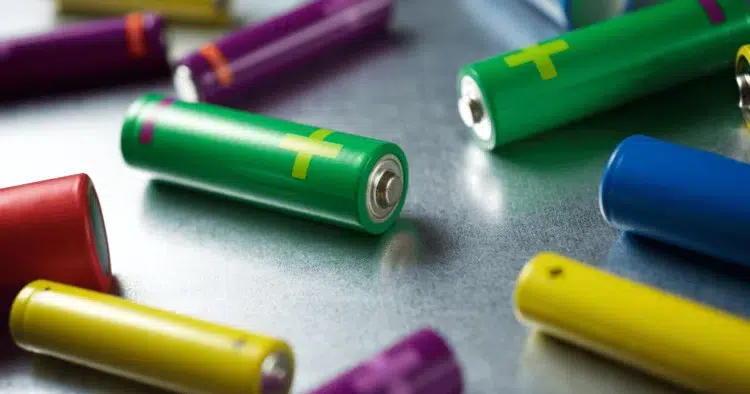
Because a cell is just one single unit, it provides a very specific, limited amount of electric current and voltage. When you place one of these units into a wall clock or a wireless mouse, it acts as a standalone miniature generator to keep the device running.
Types of Cells: Primary vs. Secondary
Generally, cells divide into two distinct categories based on their chemical reactions:
- Primary Cells: These are single-use power units. The chemical reaction occurring within a primary cell proceeds in only one direction. Once its chemicals are depleted, the cell ceases to generate electricity, and you must dispose of it safely.
- Secondary Cells: These are rechargeable units. By passing an electric current through the cell in the reverse direction, its internal chemical reaction is reversed. This allows you to restore the cell’s energy capacity and use it multiple times.
Everyday Examples of Cells
We all constantly come into contact with cells in our everyday lives. The standard cylindrical units you insert into flashlights, children’s toys, and remote controls—such as AA, AAA, C, and D sizes—are, in fact, individual cells. Another common example is the small, flat “coin cell” or “button cell” found in wristwatches, hearing aids, and medical devices.
What is a Battery?
If a cell is a single building block, a battery is the entire building. By definition, a battery is a collection of two or more cells connected to act as a unified power source.
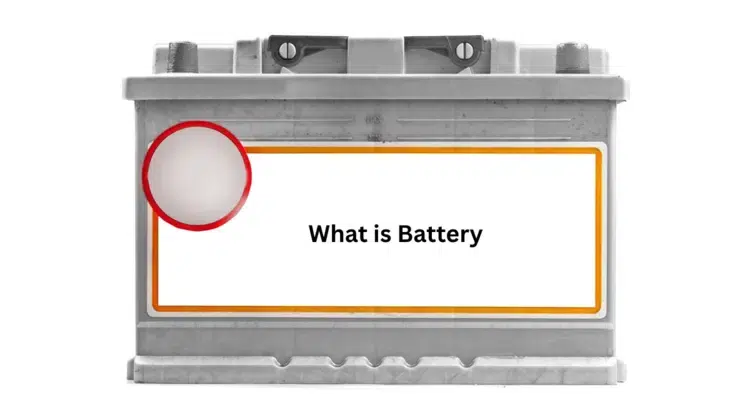
Engineers connect these individual cells in specific arrangements—either in series, in parallel, or a combination of both. Connecting cells in a series increases the overall voltage output, while connecting them in parallel increases the total current capacity. By grouping cells, a battery can deliver significantly more power than a single cell ever could on its own.
How Cells Form a Battery
Think of a traditional flashlight that requires three AA cells to turn on. The flashlight casing holds those three individual cells in a series. Together, they form a simple three-cell battery that provides enough voltage to light the bulb. The individual cell is the energy generator, while the battery is the complete, multi-cell system delivering the required power.
Common Examples of Batteries
True batteries power the heavy-duty machinery and complex electronics in our lives. A standard 12-volt car battery is a perfect example. If you open a car battery, you will typically find six separate 2-volt lead-acid cells connected in a series.
Laptop batteries operate on the same principle. The bulky power brick attached to the bottom of an older laptop, or the flat pouch inside a modern ultrabook, contains multiple lithium-ion cells wired together. The same applies to electric vehicles; the massive power source propelling an electric car down the highway is actually a battery pack containing thousands of individual lithium-ion cells working in perfect harmony.
How is a Battery Different from a Cell
Both cells and batteries store and release energy, yet their capabilities differ significantly from one another. To understand the distinctions between the two, it is essential to focus on several key factors: first, how they are constructed; second, how they function; and third, where they are utilised.
Construction
The most fundamental difference lies in their physical construction. A cell is a single, standalone unit. It represents the most basic form of portable energy generation, containing exactly one set of electrodes (an anode and a cathode) and an electrolyte. Because of this simple, singular design, we classify cells as individual electrochemical units.
A battery, on the other hand, is a complex assembly. It consists of two or more of these single cells packaged together into one unified container. Engineers design batteries by linking multiple cells to work as a team. You can think of a cell as a single brick, while a battery is the entire brick wall.
Working Principle
Because a cell is a single unit, it has a fixed and relatively low electrical potential. The chemical reaction inside a standard alkaline cell, for example, typically produces about 1.5 volts. While this is perfect for basic tasks, a single unit cannot increase its energy output beyond its natural chemical limits.
A battery overcomes this limitation by combining forces. When manufacturers link multiple cells together using a series and parallel connection, they dramatically change the system’s capabilities. Connecting cells in series multiplies the total voltage output, providing the strong push needed for larger electronics.
Connecting them in parallel increases the overall power capacity, allowing the energy to last much longer under heavy loads. Therefore, a cell functions as a basic, individual energy source, while a battery acts as a high-powered, customizable energy reservoir.
Applications
The physical size and power limits of cells dictate where we use them. You will find single cells powering small, low-drain devices that require minimal energy to function. Standard items like television remotes, wall clocks, laser pointers, and simple toys run perfectly well on the small electrical current provided by individual cells.
Batteries take over when devices demand substantial energy. You need the combined power of a true battery to start a combustion engine, run a laptop, or operate a smartphone. Heavy-duty applications rely entirely on the high voltage and massive storage capacity that only multi-cell battery packs can provide. From medical defibrillators and power tools to electric vehicles and solar grid storage systems, true batteries handle the heavy lifting that single cells cannot manage.
Why We Confuse Cells and Batteries
You grab a dead AA cylinder from your TV remote and toss it in the recycling bin. If someone asked what you just threw away, you would confidently say, “A battery.” We all do it. However, ask an electrical engineer the same question, and they will quickly correct you. You just threw away a cell.
This simple mix-up happens millions of times a day. For the average consumer, the distinction might seem like pointless scientific pedantry. But as we transition into an era dominated by portable electronics and electric vehicles, misunderstanding how we store and deploy power can lead to expensive mistakes.
Real-World Applications
The difference between a cell and a battery dictates the size, cost, and capability of everything we use.
Everyday Devices Running on Single Cells
Small, low-drain devices rely entirely on the steady, limited output of single cells. These units do not need complex management systems.
- Remote controls: A simple infrared signal takes very little power. Two individual AA or AAA cells provide enough energy to last for months.
- Basic flashlights: Small, handheld LED lights often run perfectly on a single lithium or alkaline cell.
- Medical implants: Devices like pacemakers rely on incredibly stable, single coin cells to provide a slow, steady drip of life-saving power.
The Power of Multi-Cell Battery Packs
When you need serious power, you must graduate to a true battery. This requires grouping cells into a series-parallel configuration. Wiring cells in a series increases the voltage, while wiring them in parallel boosts the total capacity.
- Power banks: When you charge your phone on the go, you use a battery pack. Inside that plastic shell, several internal lithium-ion cells work together in a parallel setup to transfer a massive amount of energy quickly.
- Power tools: That heavy block that clicks into your cordless drill is a true battery pack, combining multiple 18650 cells to deliver the high voltage needed to drive screws through dense wood.
Electric Vehicles
The most impressive application of the cell versus battery distinction lives inside electric vehicles. You cannot power a two-ton car with a single giant cell. The chemistry would be too unstable, and the heat generation would be unmanageable.
Instead, EV manufacturers build massive battery packs using thousands of individual cells. For example, Tesla utilises its advanced 4680 cells. These individual cylindrical units boast an incredibly high energy density. Engineers wire thousands of these 4680 cells together to form the complete battery pack that sits in the floor of the vehicle. If one cell fails, the software routes around it, keeping the massive battery functioning smoothly.
Conclusion
To summarise, the difference between a cell and a battery ultimately comes down to scale and structure. A cell is a singular electrochemical unit that generates a specific, limited amount of power. A battery, however, is a complex assembly of multiple cells working in unison to deliver significantly higher voltage and capacity. While mixing up the terms is a common habit, understanding this distinction remains critical. It goes far beyond mere technical accuracy.
FAQ
-
What is the main difference between a cell and a battery?
A cell is a single electrochemical unit that generates electricity, while a battery is a collection of multiple cells working together to provide higher voltage or capacity.
-
Can a single cell be used as a battery?
Technically, no. A single cell provides limited power, whereas a battery combines multiple cells to deliver more energy.
-
How are cells connected to form a battery?
Cells are connected in series to increase voltage or in parallel to increase capacity, depending on the battery’s design.
-
How does understanding cells and batteries help with sustainability?
Knowing how they work encourages proper recycling, reduces waste, and promotes the use of energy-efficient devices.

I am an electrical engineer and also a blogger. I write informative blog posts on topics related to electrical and electronics engineering. If you are interested in these topics, you are welcome to my site to read these articles.