Working Principle of Steam Power Plant
The working principle of a steam power plant rests on one clear idea: heat is turned into electricity through a steady chain of energy changes. The plant burns fuel to make high-pressure steam, the steam spins a turbine, and the turbine drives a generator that produces electricity. What makes the steam power plant working principle elegant is its closed loop—water keeps circulating, getting heated, used, cooled, and reused again and again. This guide explains how a steam power plant works step by step, written for students and beginners with no prior background. By the end, you’ll understand the full conversion chain from fuel to power.
What Is a Steam Power Plant?
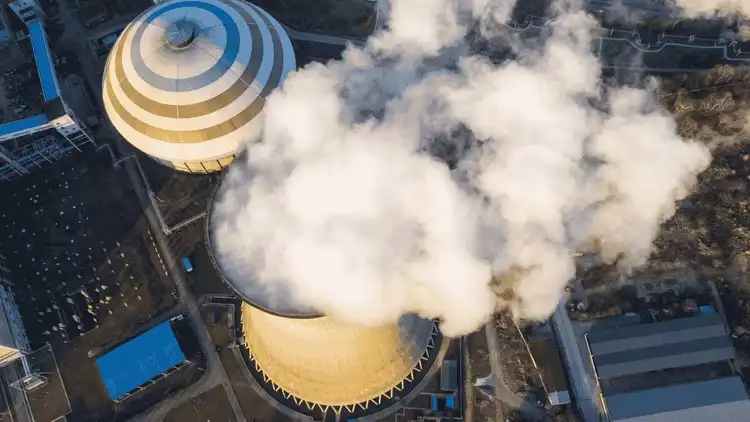
A steam power plant is a thermal facility that converts heat energy into electrical energy. It heats water to create steam, then uses that steam’s pressure to spin a turbine connected to a generator.
Because most plants of this kind burn coal, you’ll often hear the term coal-based thermal power plant. The same thermal power plant working principle still applies when the fuel is oil, natural gas, or biomass—only the fuel source changes, not the core process. At its heart, the plant is an energy converter: it takes chemical energy stored in fuel and transforms it, stage by stage, into the electricity that reaches homes, industries, and cities.
Working Principle of a Steam Power Plant
The principle of a steam power plant follows a single, logical energy chain: chemical energy → heat energy → mechanical energy → electrical energy.
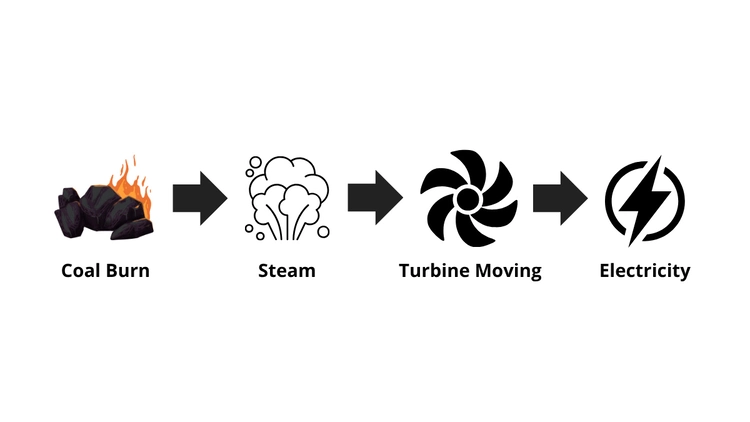
It starts when fuel burns and releases heat. That heat boils water into high-pressure, high-temperature steam. The steam then strikes a turbine and forces it to spin, which converts heat into mechanical energy. The spinning turbine shaft drives a generator, and the generator produces electricity.
Here’s the simple chain to remember: burn fuel, heat water, make steam, spin turbine, run generator, produce electricity. The clever part is what happens at the end—instead of wasting the used steam, the plant cools it back into water and sends it around again. This closed loop is the backbone of the working of a steam power plant, and the detailed steps below show how each stage connects.
How a Steam Power Plant Works (Step by Step)
Here is the steam power plant process step by step. Each stage handles one specific job, and together they explain how a steam power plant works as a continuous, repeating cycle.
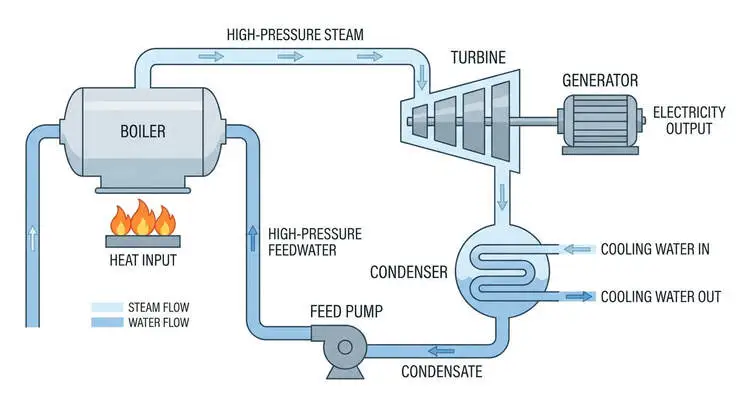
Fuel and Combustion
The process begins with fuel. In a coal-based thermal power plant, coal is crushed into a fine powder so it burns quickly and completely. This powder is blown into the boiler furnace and ignited.
As the fuel burns, it releases intense heat. The finer the coal, the larger its surface area—so it burns more efficiently and gives off more usable heat for the next stage.
Steam Formation
That heat passes straight into the water inside the boiler. The water absorbs the energy, rises in temperature, and changes into steam.
This isn’t ordinary steam, though. It leaves the boiler at high pressure and high temperature, packed with energy. That high-pressure, high-temperature condition is what gives the steam the force it needs to do mechanical work in the next step.
Steam Drives the Turbine
Next, the powerful steam is directed onto the turbine blades. The force and speed of the steam push against the blades and make the turbine spin rapidly.
This is the key conversion moment: the heat energy carried by the steam becomes mechanical energy in the rotating turbine. As the steam expands and flows through the turbine stages, it loses pressure and gives up its energy to keep the shaft turning.
Generating Electricity
The turbine is joined to an AC generator by a single rotating shaft. As the turbine spins, the shaft turns the generator with it.
Inside the generator, this spinning motion creates a magnetic effect that produces an electric current. In short, mechanical energy becomes electrical energy. This is how electricity is generated in a steam power plant—and it’s the stage where the plant finally delivers its useful output.
Condensing the Steam
Once the steam has passed through the turbine, it has given up most of its energy and turned weak and low in pressure. This used steam flows into the condenser.
In the condenser, cooling water lowers the steam’s temperature until it turns back into liquid water. This step matters for more than tidiness—condensing the steam creates a low-pressure zone at the turbine exit and recovers clean water, which improves both efficiency and reuse.
Water Returns to the Boiler
Finally, a feed pump pushes this recovered water back into the boiler at high pressure. There it is heated once more, and the entire process repeats.
This is the closed loop that defines the working principle of a steam power plant. Because the water keeps cycling—heated, used, cooled, and returned—the plant can generate electricity steadily, around the clock.
Main Parts of a Steam Power Plant at a Glance
Now that you’ve seen how a steam power plant works, let’s meet the team behind it. Each of the main parts of a steam power plant handles one clear job in the energy chain — think of this as a quick map of who does what.
- Boiler — Burns fuel and turns water into high-pressure steam. It works hard, and when its tubes fail, the whole plant can stop; that’s why boiler tube failure causes and prevention is worth understanding. The ash left behind is cleared away by the ash handling system.
- Superheater — Pushes the steam to an even higher temperature so it carries more energy into the turbine. If you want the deeper story, see what a superheater does in a steam power plant.
- Turbine — Spins when the steam strikes its blades, turning heat into mechanical energy. Too much shaking here is a real problem, which is covered in turbine vibration problems and solutions.
- Generator — Converts the turbine’s spinning motion into the electricity you actually use.
- Condenser — Cools the used steam back into water so it can be reused. It also keeps the turbine running efficiently — learn why a condenser is used in a steam power plant, and what happens when it struggles in condenser vacuum loss causes and remedies.
- Cooling tower — Releases the leftover heat from the condenser water into the open air.
- Feed pump — Pushes the recovered water back into the boiler at high pressure, usually after a deaerator strips out trapped gases.
Here’s the key takeaway: each part hands its work to the next, like links in a chain. To see how they all fit together physically, the steam power plant layout guide gives you the full picture.
The Rankine Cycle Made Simple
The working principle of a steam power plant is built on something called the Rankine cycle. The name sounds technical, but it’s really just four simple steps that water repeats again and again. You’ve already watched these steps happen — here they are with their proper labels.
- Pump — The feed pump pushes water into the boiler at high pressure.
- Heat — The boiler heats that water until it becomes high-pressure, high-temperature steam.
- Expand — The steam expands through the turbine and spins it, doing the real work.
- Condense — The condenser cools the used steam back into water, ready to be pumped again.
That’s the full Rankine cycle in steam power plant terms. Notice how neatly it matches the step-by-step process from earlier: pump the water, heat it, spin the turbine, then condense the steam. Engineers gave this closed loop a name, but it’s the same working of a steam power plant you already understand.
Here’s a quick way to test yourself: can you name what happens in each of the four steps without peeking? If you can, you’ve grasped the heart of the working principle of a steam power plant.
Key Takeaways
- The working principle of a steam power plant follows one chain: fuel → steam → turbine → generator → electricity.
- Heat energy becomes mechanical energy in the turbine, then electrical energy in the generator.
- Water moves in a closed loop — heated, used, cooled, and reused — and that loop is the Rankine cycle.
- The main parts of a steam power plant are the boiler, superheater, turbine, generator, condenser, cooling tower, and feed pump.
- A large amount of heat escapes at the condenser, which is one big reason steam power plant efficiency is low.
Conclusion
The working principle of a steam power plant comes down to one simple chain of events: fuel burns to create high-pressure steam, that steam spins a turbine, and the turbine drives a generator that produces electricity. What makes it so reliable is the closed loop behind it—water is heated, used, cooled in the condenser, and pumped back to start all over again.
Every part plays its role in this cycle. The boiler makes the steam, the turbine and generator turn that energy into power, and the condenser and feed pump keep the water moving so the plant can run without pause. Once you see how these pieces connect, the whole process clicks into place. If you’d like to go a step further, explore the individual parts or the full plant layout next. Understanding how each component works will give you an even clearer picture of how electricity reaches your home.
FAQ
How does the Rankine cycle relate to a steam power plant?
The Rankine cycle is the basic principle behind every steam power plant. It describes the four steps water goes through — pump, heat, expand, and condense — as it turns into steam, drives the turbine, and returns to water. In short, the Rankine cycle is the working cycle that keeps the plant running around the clock.
What are the main parts of a steam power plant?
The main parts are the boiler, superheater, turbine, generator, condenser, cooling tower, and feed pump. The boiler makes the steam, the turbine and generator produce the electricity, and the condenser and pump recycle the water so the cycle can repeat without waste.
Why is the thermal efficiency of a steam power plant low?
A large share of the heat is lost in the condenser when steam is cooled back into water. More energy slips away through friction, radiation, and incomplete combustion. Because of these combined losses, only part of the fuel’s energy becomes electricity, so the overall efficiency stays low.
What is pulverized fuel?
Pulverized fuel is coal that has been crushed into a fine powder. Grinding the coal increases its surface area, so it burns faster and more completely inside the boiler furnace. This releases more usable heat and helps the plant perform better.
How is electricity generated in a steam power plant?
High-pressure steam spins the turbine, which turns a generator through a shared shaft. Inside the generator, this spinning motion creates a magnetic effect that produces an electric current. That’s how electricity is generated in a steam power plant — mechanical energy is converted into electrical energy.

I am an electrical engineer and also a blogger. I write informative blog posts on topics related to electrical and electronics engineering. If you are interested in these topics, you are welcome to my site to read these articles.