Air Conditioners vs Fans: Which is Best?
Just imagine: it is scorching hot outside, and you are sitting in your living room, wondering whether to switch on the air conditioner or simply turn on the fan. The choice between an air conditioner and a fan is not merely a matter of personal preference; rather, it involves factors such as energy consumption, health implications, comfort, and budget.
In this article, we will delve into the key differences between air conditioners vs fans in detail, providing you with the necessary information to determine which option is best suited to your specific situation—thereby offering you relief not only from the heat but also from the anxiety of skyrocketing electricity bills.
How Fans and Air Conditioners Work: Compare

How Does an Air Conditioner Work?
Let’s understand how an air conditioner works, step by step:
- Hot Air Intake: This system begins operation by drawing warm air from your home through an intake vent. This air is drawn into the system to initiate the cooling process.
- Evaporator Coil Magic: Inside the system, the warm air passes over the Evaporator Coil, which is filled with a cooling gas like refrigerant or Freon. The refrigerant absorbs the heat and moisture from the air, transforming from a liquid into a gas in the process.
- The Compressor’s Role: The now superheated refrigerant gas is pumped by the Compressor, which increases its pressure and sends it to the next stage of the cycle.
- Heat Release in the Condenser Coil: The hot refrigerant gas travels to the Condenser Coil, located outside your home. Here, the outdoor air absorbs the heat from the refrigerant, cooling it down and converting it back into a liquid.
- Cool Air Circulation: The cooled refrigerant liquid returns indoors to the Evaporator Coil, where the cycle begins again. As the refrigerant absorbs more heat, the system continues to cool the air until your home reaches the desired temperature.
- Thermostat Control: Once your home’s temperature matches the thermostat setting, the system automatically shuts off. It will restart as needed to maintain your comfort.
How Does a Ceiling Fan Work?
A ceiling fan doesn’t cool the air like an air conditioner—it works by improving air circulation and creating a cooling sensation through the movement of air. Here’s a step-by-step breakdown of how a ceiling fan operates:
- Electric Motor Activation: When you switch on the fan, electricity powers the motor inside the fan’s housing. This motor is the heart of the fan, converting electrical energy into mechanical energy.
- Blade Rotation: The motor drives the fan blades, causing them to rotate. The angle or pitch of the blades is designed to push air downward or upward, depending on the direction of rotation.
- Air Circulation: the fan pushes air downward, creating a breeze that enhances ventilation and evaporates sweat from your skin. This makes you feel cooler, even though the room’s temperature doesn’t change.
Cooling Efficiency: Air Conditioners vs. Fans
- Air Conditioner: Air conditioners excel in cooling efficiency by actively lowering the temperature in a room. They work by removing heat and humidity, providing precise temperature control. This makes them highly effective in extreme heat or humid conditions, ensuring a consistently cool and comfortable environment.
- Fan: Fans, while not designed to lower the temperature, improve air circulation by moving air around. This creates a cooling sensation on your skin through evaporation, making fans effective in mild weather or when a gentle breeze is sufficient for comfort.
Environmental Impact: Air Conditioners vs. Fans
- Air Conditioner: Air conditioners have a significantly higher carbon footprint due to their energy-intensive operation. They consume large amounts of electricity, often generated from fossil fuels, contributing to greenhouse gas emissions. Furthermore, older AC models utilize refrigerants such as Freon; if not managed properly, these substances damage the ozone layer.
- Fan: Fans are far more eco-friendly because, unlike air conditioners, they do not utilize any harmful refrigerant gases; consequently, they have no negative impact on the environment, making them a greener option for cooling.
Note: Modern AC units (such as Energy Star models) consume less electricity and utilize eco-friendly refrigerants, thereby minimizing their environmental impact. Inverter technology in ACs also helps optimize power consumption.
Cost Comparison
Initial Cost:
- Air Conditioners: The upfront cost of purchasing an air conditioner is significantly higher. Depending on the type (window, split, or central AC), prices can range from moderate to very expensive. Installation costs for split AC or central AC systems further add to the initial expense.
- Fans: Fans are much more affordable, with ceiling fans, pedestal fans, or table fans available at a fraction of the cost of an air conditioner. They are a budget-friendly option for those seeking a quick and economical cooling solution.
Maintenance Cost:
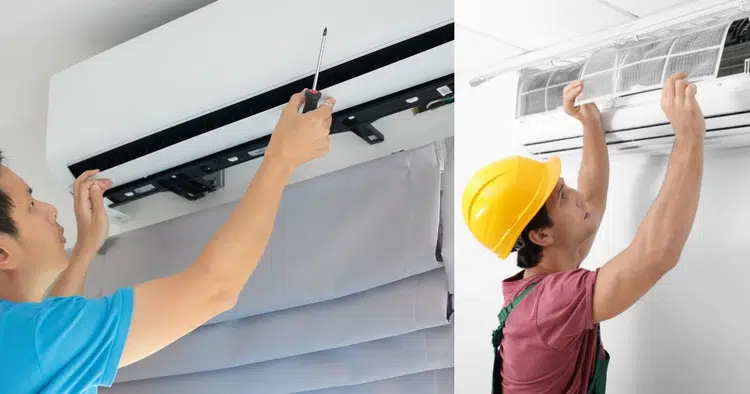
- Air Conditioners: Regular servicing is essential to maintain an air conditioner’s efficiency. This includes cleaning filters, checking refrigerant levels, and servicing the compressor. As a result, the annual maintenance cost increases significantly.
- Fans: Fans require very little maintenance. Occasionally, you can clean the blades and the motor yourself.
Long-term Cost:
- Air Conditioners: Over time, air conditioners can lead to high electricity bills due to their energy-intensive operation. However, energy-efficient models can help reduce these costs. Additionally, their durability depends on proper maintenance, with most units lasting 10-15 years.
- Fans: Over the long run, fans result in lower electricity costs. They are also durable and often continue to function for decades without significant wear and tear.
Ceiling Fan vs. Air Conditioner Energy Use
How much electricity does an 2 Ton AC consume?
For example, we are using a 2-ton AC, as this type of air conditioner is widely used nowadays. In air conditioning, a “ton” doesn’t refer to weight. Instead, it measures the cooling capacity of the system. 1 ton = 12,000 BTUs (British Thermal Units) per hour. So, a 2-ton air conditioner can remove 24,000 BTUs of heat per hour from your home.
Power Consumption of a 2-Ton AC
- The electricity usage of a 2-ton AC depends on its SEER rating (Seasonal Energy Efficiency Ratio).
- A 2-ton AC with a 16 SEER rating consumes approximately 1500 watts (1.5 kW) per hour.
- A less efficient 2-ton AC with a 10 SEER rating would consume around 2400 watts (2.4 kW) per hour.
- Assuming the AC runs for 12 hours per day
- 16 SEER AC: 1.5 kW × 12 hours = 18 kWh per day.
- 10 SEER AC: 2.4 kW × 12 hours = 28.8 kWh per day.
Monthly Electricity Usage
Over a 30-day period:
- 16 SEER AC: 18 kWh × 30 days = 540 kWh per month.
- 16 SEER AC: 18 kWh × 30 days = 540 kWh per month.
Why SEER Rating Matters for a 2-Ton AC
- A higher SEER-rated 2-ton AC (e.g., 16 SEER) uses less electricity to provide the same cooling as a lower SEER-rated unit (e.g., 10 SEER).
- This means lower energy bills and a smaller carbon footprint.
Electricity Consumption of a Ceiling Fan
Power Rating of a Ceiling Fan
- Most ceiling fans have a power rating between 50 to 100 watts, depending on their size, speed, and motor efficiency.
- Energy-efficient models (like those with a BLDC motor) can consume as little as 30-40 watts.
Electricity Usage Per Hour
- To calculate hourly electricity consumption:
- A standard fan with a 75-watt motor running for 1 hour uses: 75 watts ÷ 1000 = 0.075 kWh (kilowatt-hours).
- An energy-efficient fan with a 40-watt motor running for 1 hour uses: 40 watts ÷ 1000 = 0.04 kWh.
Daily Electricity Usage
- Assuming the fan runs for 12 hours per day
- Standard Fan (75 watts): 0.075 kWh × 12 hours = 0.9 kWh per day.
- Energy-Efficient Fan (40 watts): 0.04 kWh × 12 hours = 0.48 kWh per day.
Monthly Electricity Usage
- Over a 30-day period
- Standard Fan (75 watts): 0.9 kWh × 30 days = 27 kWh per month.
- Energy-Efficient Fan (40 watts): 0.48 kWh × 30 days = 14.4 kWh per month.
Electricity Cost
- To calculate the cost, multiply the monthly usage by your electricity rate (e.g., $0.12 per kWh):
- Standard Fan: 27 kWh × $0.12 = $3.24 per month.
- Energy-Efficient Fan: 14.4 kWh × $0.12 = $1.73 per month.
Factors Affecting Electricity Consumption
- Fan Speed: Higher speeds consume more electricity.
- Motor Type: BLDC (Brushless Direct Current) motors are more energy-efficient than traditional motors.
- Usage Duration: Longer usage increases electricity consumption.
- Blade Size: Larger fans may consume slightly more power but can cool larger areas effectively.
Fan vs AC: The Final Verdict ( Conclusion )
In the fans vs air conditioners debate, the fan emerges as the clear winner in terms of energy efficiency and cost-effectiveness. Fans consume significantly less electricity, making them ideal for milder climates or short-term use. However, in regions with extreme heat, air conditioners become a necessity to maintain a comfortable environment, even if they come with higher energy costs.
The smartest approach? Use both strategically. Combine a high-efficiency ceiling fan (like a BLDC fan) with an energy-efficient air conditioner (preferably with a high Energy Star rating). Run the AC intermittently for quick cooling and let the fan circulate the cool air, reducing the workload on your AC and keeping energy bills in check.
FAQ
-
Which is More Energy-Efficient: a Fan or an Air Conditioner?
Fans are far more energy-efficient than air conditioners, consuming significantly less electricity. A typical ceiling fan uses 30-100 watts, while an air conditioner can use 1,500-3,500 watts.
-
Can Fans Replace Air Conditioners in Hot Climates?
In extremely hot climates, fans alone may not provide sufficient cooling. Air conditioners are necessary for maintaining a comfortable indoor temperature in such conditions.
-
How can I Reduce my Energy Bills While using an Air Conditioner?
Use a ceiling or portable fan alongside your air conditioner to circulate cool air. This allows you to set the thermostat higher, reducing the AC’s energy consumption.
-
Do Fans Cool the Air in a Room?
No, fans don’t cool the air. They create a breeze that helps evaporate sweat from your skin, making you feel cooler. This is why fans should be turned off when you leave the room.
-
What is the Best Thermostat Setting for Summer?
The recommended thermostat setting for summer is 24-26°C (75-78°F). Pairing this with a fan can enhance comfort while saving energy.
-
What is a BLDC Fan, and Why is it Recommended?
A BLDC (Brushless Direct Current) fan is an energy-efficient fan that consumes less electricity (as low as 30 watts) compared to traditional fans. It’s a great choice for reducing power consumption.
-
Are Energy-Efficient Air Conditioners Worth the Investment?
Yes, air conditioners with a high SEER rating or Energy Star certification consume less electricity, reducing long-term energy costs and environmental impact.
-
Can using Both a Fan and an Air Conditioner Together Save Energy?
Yes, combining a fan with an air conditioner allows you to cool your home more efficiently. The fan circulates cool air, reducing the AC’s workload and energy usage.

I am an electrical engineer and also a blogger. I write informative blog posts on topics related to electrical and electronics engineering. If you are interested in these topics, you are welcome to my site to read these articles.