
Different Types of Fuse with Advantages and Disadvantages
A fuse is an electrical safety device that protects electrical systems from dangerous situations such as overcurrent and short circuits. However, every circuit and device has different requirements, so a single type of fuse is not suitable for every situation. This is why various types of fuses were needed, each designed for specific applications. From small electronic devices to large industrial machinery, every system requires a specific fuse. In this article, we will learn in detail about the different types of fuses, their function, and how to select the correct fuse for various applications.
What is an Electric Fuse
An electric fuse is a safety device designed to protect electrical circuits from damage caused by excessive current flow. It acts as a safeguard between the electrical supply and the connected device, ensuring that no overcurrent or short circuit damages the system. The fuse breaks the circuit when the electric current exceeds a safe limit, preventing potential hazards such as fires or equipment damage.
Why are different types of fuses needed?
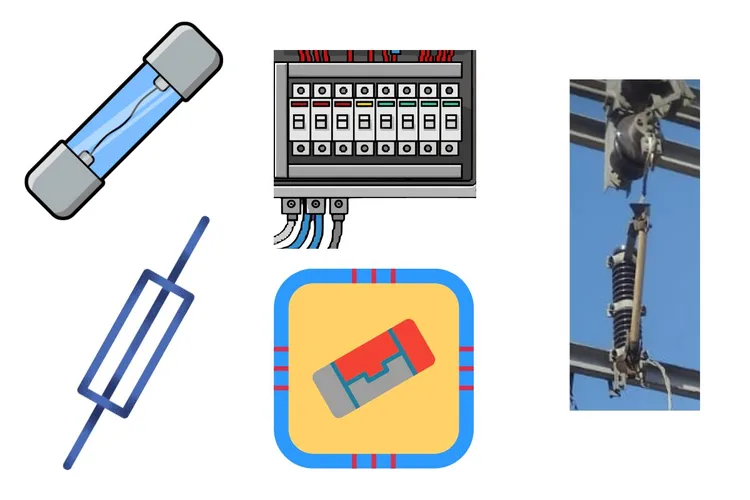
Fuses are used as protective components in electrical systems, designed to protect circuits and devices from damage caused by overcurrents or short circuits. The need for different types of fuses arises because electrical systems vary in their design, applications, and requirements. Let’s understand the importance of fuses and why different types are necessary before discussing the various types of fuses.
Different Designs for Specific Applications
Every electrical system works differently. For example:
- Fuses with low voltage current ratings are suitable for household appliances.
- High-voltage heavy-duty fuses are used in industrial machinery.
- Compact devices like laptops and TVs need miniature fuses, while industrial systems use larger, heavy-duty fuses.
- Some sensitive electronic devices require fast-acting fuses to protect them from even slight voltage surges. In contrast, motors or transformers require time-delay fuses to protect them from temporary voltage surges that occur during startup.
Overcurrent and Short Circuit Protection
When the circuit is overloaded for any reason, the fuse function works to break the circuit and protect the system from damage. When the circuit is overloaded for any reason, the fuse function works to break the circuit and protect the system from damage. There can be several reasons for overcurrent and short circuits, such as:
- Excessive current flow can cause the wire to overheat, leading to a fire.
- Sensitive components, which come in many different ratings, can be permanently damaged by even a brief overcurrent. Using different fuse types effectively protects these components.
Durability and efficiency
Each fuse is designed and manufactured keeping its durability and efficiency in mind. For example:
- Fast-blow fuses are best used in devices with sensitive electronics.
- Slow-blow fuses are more suitable for motors and heavy appliances.
For Cost-Effective
Using different types of fuses allows for the selection of the correct fuse for each application, making it cost-effective as well:
- A proper fuse can save thousands of rupees by preventing damage to expensive equipment.
- Choosing a durable and appropriate fuse minimizes Downtime.
- When fuses meet the system’s requirements, they ensure efficient energy use, reducing electricity costs.
Types of Fuse in Electrical
It is crucial to understand the various types of fuses to maintain the safety and effectiveness of electrical systems. electric Fuses are safety devices that protect circuits from overcurrents and short circuits, which can damage equipment, cause fires, or lead to system failure. Knowing the appropriate fuse types for a particular application helps prevent costly damage and ensure smooth system operation.
Choosing the wrong fuse types can lead to inadequate protection or frequent interruptions. For example, using a standard fuse in a high-current industrial setup can result in overheating or failure. On the other hand, selecting the correct type of fuse ensures durability, cost-effectiveness, and reliable performance.
Understanding the different types of fuses is not just a technical requirement, but also a crucial step for the safety and longevity of electrical systems. Choosing the correct type of fuse for specific needs ensures both safety and efficiency.
AC Fuse
An AC fuse is an electrical fuse specifically designed to protect circuits carrying alternating current (AC). AC circuits have a natural zero-crossing point in each cycle, which helps extinguish the arc when the fuse blows. This makes AC fuses highly effective in handling overcurrents and short circuits in household wiring, industrial systems, and power grids.
Unlike other types of fuses, AC fuses are engineered to handle the unique characteristics of alternating current, ensuring safety and reliability. Their design focuses on durability and efficiency, making them a crucial component in protecting electrical systems from potential damage.
AC fuses are specifically designed for alternating current circuits and are classified into several types based on their construction and application. AC fuses are two types Low voltage AC fuse and High voltage AC fuse. Some of the main types of Low voltage AC fuses are:
Types of Low Voltage AC Fuse
Catridge fuse
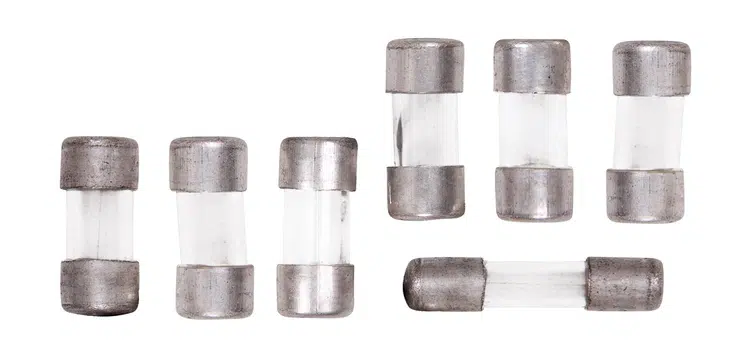
Cartridge fuses are widely used to protect electrical circuits from overcurrents and short circuits. They are cylindrical in shape, with a non-conductive outer body, such as glass or ceramic, enclosing a fuse element (wire or strip). When excess electric current flows through the circuit, the fuse metal inside the cartridge melts, breaks the circuit, and prevents damage to the connected device. This simple yet effective fuse working mechanism makes it one of the most reliable types of fuses.
Construction and Components
- Fuse Body: The fuse body is the outer part of the fuse, designed to protect the fuse element inside. It is typically made of materials such as glass, ceramic, or plastic, each chosen for its specific properties.
- Fuse Element: The fuse element is the part of a cartridge fuse that breaks the circuit. It is a thin wire or fuse strip made of a low-melting-point fusible metal, such as zinc, copper, or silver, chosen for its specific properties.
- End Caps: The end caps of a cartridge fuse are metallic components located at both ends of the cylindrical body. The fuse element is connected to these end caps, which play a crucial role in establishing a secure electrical connection. These caps are typically made of conductive metals such as copper, brass, or tin-plated steel, chosen for their excellent electrical conduction and corrosion resistance.
- Filler Material: In high-performance cartridge-type fuses, a filler material enhances safety and efficiency. This material, often sand or other granular substances, is packed inside the fuse body, surrounding the fuse metal (fuse element). While not present in every type, the filler material plays a crucial role in ensuring reliable fuse operation, especially in circuits with high fault currents.
Advantages of Cartridge Fuse
- Reliable Protection: Provides consistent performance in overcurrent situations.
- Durability: The ceramic or glass body ensures long-lasting use.
- Compact Design: Suitable for small spaces.
- Wide Range of Applications: Available in various ratings for different fuse types.
Disadvantages
- This is non-reusable; once it blows, the fuse must be replaced.
- The ability to withstand overload is limited.
- High-quality fuse metals are costly because they use silver as the fuse material.
Drop Out Fuse
A drop-out fuse is a protective fuse device commonly used in high-voltage electrical systems to protect circuits from overcurrents and short circuits. It is called a “drop-out” fuse because when the fuse operates, the fuse carrier physically drops down from its mounting, providing a clear visual indication of the fault. This fuse’s working mechanism facilitates quick fault isolation and easy identification of a blown fuse.
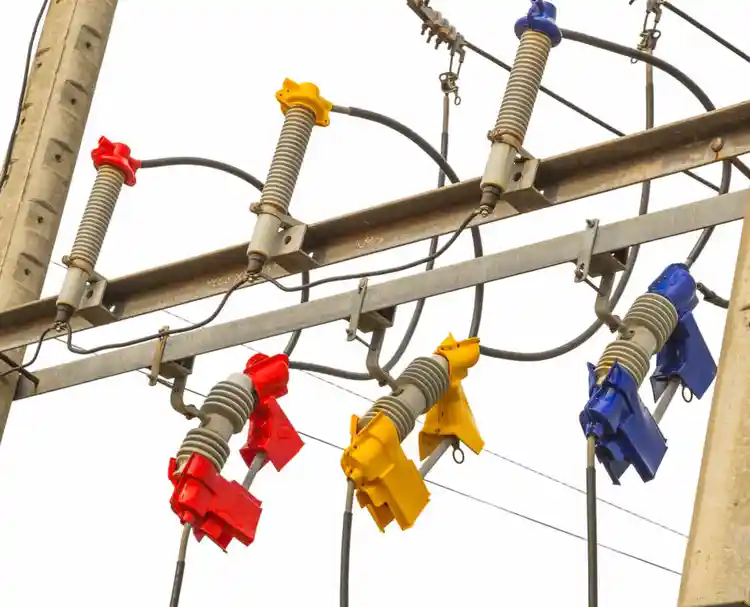
The drop-out fuse operates when the current exceeds its rated limit. First, the fuse metal (fuse element) melts. The melting of the fuse element breaks the circuit, and the fuse carrier drops down due to gravity or spring action, disconnecting the circuit and isolating the faulty section.
Construction and Components
Fuse Carrier:
- A rotating structure that holds the fuse wire and drops down when the fuse blows.
- The fuse carrier uses insulating electrodes such as fiberglass or porcelain, inside which the fuse element is housed.
Fuse Element:
- It uses a thin wire or strip of copper, silver, or tin as the fuse metal, which melts at excessive current levels.
Mounting Bracket:
- It is connected to the pole or fuse box, which holds the fuse carrier in place and provides the electrical connection to the circuit.
Arc Extinguishing Chamber:
- • In high-rated designs, the arc formed during the melting of the fuse element is extinguished in a chamber, ensuring safe operation.
Terminals:
- Fuses are connected to the electrical circuit via terminals to ensure a secure, low-resistance connection.
Advantages of Drop Out Fuse
- The physical dropping of the fuse carrier provides a clear visual indication of a fault, making it easy to identify and replace the blown fuse.
- The fuse working mechanism ensures quick and effective isolation of faulty sections, protecting the rest of the system.
- Strong materials such as porcelain and high-quality fused metal are used, which enables the drop-out fuses to withstand harsh environmental conditions.
- Compared to other high-voltage protection devices, drop-out fuses are relatively inexpensive and easy to maintain.
Disadvantages of Drop Out Fuse
- Once a fuse blows, the fuse carrier must be replaced manually, a time-consuming process.
- The fused metal that has been operated on cannot be reused, and a new fuse element must be installed after each malfunction.
- Drop-out fuses are specifically designed for high-voltage systems and are not suitable for low-voltage applications such as household fuse boxes.
Rewireable Fuse
A rewireable fuse is a traditional type of fuse commonly used in low-voltage electrical circuits. It uses a metal fuse wire to protect the circuit from overcurrents and short circuits. When high current flows through the circuit, the fuse wire heats and melts, breaking the circuit and protecting the connected devices from damage. The main advantage of this type of fuse is that the blown fuse wire can be easily replaced manually, enabling reuse.
Construction and Components
- Fuse Base: The base, which is made of insulating material such as porcelain or bakelite, holds the fuse carrier and provides secure mounting in the fuse box.
- Fuse Carrier: This is the detachable part of the fuse holder that contains the fuse’s metal wire, which is connected at both ends. It can be easily removed from the fuse holder to replace the wire.
- Fuse Wire: A fuse wire is made of tin, lead, or a low-melting-point alloy metal. This wire is the main component that melts to break the circuit.
- Terminals: The base and carrier are fitted with metal connectors that ensure a secure, fused connection with the circuit.
Advantages of Rewirable Fuse
- In a rewirable fuse, only the metal wire needs to be replaced after a fault, making it inexpensive and economical for repeated use.
- The fuse wire can be easily replaced without requiring specialized tools or expertise, making it user-friendly.
- This fuse is reliable and easy to maintain because of its simple design.
- Compared to other types of fuses, rewirable fuses do not need to be replaced entirely, which saves time and reduces costs.
Disadvantages of Rewirable Fuse
- Replacing the fuse metal wire requires manual effort, which can be inconvenient, especially in critical systems.
- Replacing a fuse wire incorrectly (for example, using a wire with the wrong rating or gauge) can compromise the fuse’s safety and effectiveness.
- Compared to modern types of fuses, rewirable fuses are less precise in handling overcurrents, which can lead to delays in operation.
- Rewirable fuses are primarily used in low-voltage systems and are not suitable for high-voltage or high-current applications.
Striker Fuse
A striker fuse is a unique type of fuse that not only safeguards electrical circuits from overcurrent but also features a mechanical mechanism that indicates or performs an action when it blows. It incorporates a spring-loaded striker mechanism that activates after the fuse element melts due to excessive current. This fuse’s working mechanism provides both electrical protection and a clear visual or mechanical signal, making it highly useful in systems where rapid fault identification is crucial.
When the electric current exceeds the rated limit, the fuse element inside the striker fuse heats up and melts, releasing the spring-loaded striker. This striker can then operate various functions, such as triggering a switch, activating an alarm, or providing a visual indication of the fault.
Construction and Components
- Fuse Body: Its body is made of durable materials such as ceramic or glass, which protect the internal fuse components and also provide insulation.
- Fuse Metal: A thin strip of a fusible metal, such as copper, silver, or tin, is fitted inside the body. When the current exceeds the rated value, this element melts and breaks the circuit.
- Striker Mechanism: A fuse contains a spring-loaded device that holds the fuse metal in place. When the fuse blows, the striker is released and performs its function.
- Terminals: Metal connectors that facilitate the connection of electrical circuits with a fuse.
- Indicator: A visual or mechanical signal, such as a pin or flag, that pops out when the fuse blows, indicating that the fuse has blown.
Advantages of Striker Fuse
- The striker mechanism provides an immediate visual or mechanical signal when the fuse blows, reducing downtime and helping to identify the fault quickly.
- Like other fuse types, the striker fuse also provides adequate protection for the circuit by interrupting current flow in the time of an overcurrent condition.
- Using a striker enhances system security by incorporating additional safety mechanisms such as alarms or circuit breakers.
- Designed with expensive and high-quality materials such as ceramic and strong fused metal, the Striker Fuse can withstand even the toughest conditions.
Disadvantages of Striker Fuse
- Compared to standard types of fuses, striker fuses are more costly due to their additional components and functionality.
- The added striker mechanism makes the fuse more complex, requiring careful handling and installation.
- Due to their higher cost and specialized nature, striker fuses are not commonly used in simple or basic systems.
Switch Fuse
A switch fuse is a combination of both a switch and a fuse integrated into a single unit. It is designed to provide both circuit protection and manual disconnection or isolation of the circuit. This type of fuse is commonly used in electrical systems that require both frequent switching and overcurrent protection. The fuse’s working mechanism ensures that the circuit breaks when the current exceeds the rated limit, while the switch provides manual control of the circuit.
When the current surpasses the safe limit, the fuse element (made of fuse metal) inside the switch fuse melts, interrupting the circuit and safeguarding the connected devices. The switch can then be used to isolate the circuit for maintenance manually or when the fuse needs to be replaced.
Construction and Components
- Switch Mechanism: A manually operated switch that allows the circuit to be turned on or off. It is typically made of durable materials to handle frequent operations.
- Fuse Holder: A switch fuse unit has a compartment that securely holds the electrical fuse.
- Fuse Element: The fuse element uses a thin wire made of a fusible metal such as copper, silver, or tin. When the current exceeds the rated circuit value, this element melts and breaks the circuit.
- Terminals: This fuse also uses metal connectors to ensure a secure fuse connection with the electrical circuit.
- Insulated Enclosure: The entire unit is housed in an insulated casing made of materials like bakelite or plastic to ensure safety and prevent electrical shocks.
Advantages of Switch Fuse
- It combines the functions of both a switch and a fuse, providing both circuit protection and manual control options in a single unit.
- This switch allows easy circuit isolation, making it easier to replace electrical fuses without disturbing the entire system.
- A fuse’s working mechanism provides adequate protection for the circuit against overcurrent, thereby safeguarding the connected devices.
- Using high-quality fuse metal increases durability and ensures long-term performance.
Disadvantages of Switch Fuse
- Due to the presence of a switch function, it is slightly more expensive compared to other fuses.
- Not suitable for very high-voltage or high-current systems that require more advanced protection devices.
- The switch needs to be operated manually, which may not be suitable for an automated system.
- After each fault, the fuse metal must be replaced, which is quite time-consuming in systems with frequent overcurrent events.
Types of High Voltage AC fuse
There are two types. The two main types of high-voltage AC fuses are:
High Voltage AC Expulsion Fuse
A high-voltage AC expulsion fuse is an AC fuse used to protect high-voltage electrical systems from overcurrents and short circuits. It is called an “expulsion fuse” because it uses gas expulsion to extinguish the arc that forms when the fuse metal melts. This type of electrical fuse is widely used in power distribution systems to protect transformers, feeders, and other high-voltage equipment.
In its operation, when the current exceeds the fuse’s rated limit, the fuse metal (fuse element) melts. As the fuse element melts, an arc is formed, which is then extinguished by the gases expelled from the fuse tube. This process interrupts the circuit, preventing damage to the system.
Construction and Components
- Fuse Tube: The central part of the fuse is made of materials such as fiber or glass-reinforced plastic, which can easily withstand high temperatures and pressures. The fuse element is located inside the tube and acts as an insulator.
- Fuse Element: Copper, silver, or tin metals are used to make the fuse element, which is a thin wire located inside the fuse body. When the current exceeds the fuse’s specified limit, this element melts, breaking the circuit.
- Arc-Extinguishing Medium: The walls of the fuse tube are lined with materials that produce gases (such as boric acid) when heated. These gases help extinguish the arc by displacing oxygen and cooling the arc zone.
- Terminals: The fuse has metal connectors at both ends that securely connect the fuse to the electrical circuit.
- Mounting Bracket: A support structure that holds the fuse in place, often fitted on poles or inside high-voltage switchgear.
- Expulsion Mechanism: The fuse tube is designed so that the gas is expelled quickly, the arc extinguishes rapidly, and the circuit is safely interrupted.
Advantages of High Voltage AC Expulsion Fuse
- It quickly and reliably extinguishes the resulting gas arc, making it suitable for high-voltage applications.
- Compared to other high-voltage fuse types, such as HRC fuses, expulsion fuses are relatively inexpensive and easy to replace.
- Due to its simple construction, a fuse is easy to install and maintain.
- The fuse function ensures adequate circuit protection against overcurrent and short circuits, thereby protecting high-voltage equipment.
- Made from durable materials, this fuse can withstand any harsh weather conditions, making it ideal for outdoor use.
Disadvantages of High Voltage AC Expulsion Fuse
- The release of gases during operation is dangerous in confined spaces, which limits its use in indoor applications.
- Once the fuse metal melts, it must be replaced, which can be time-consuming in critical systems.
- This type of AC fuse is particularly suitable for high-voltage systems, but it is not practical for low-voltage applications.
High Voltage AC HRC Fuse
High-voltage AC HRC (High Rupturing Capacity) fuses are a type of AC fuse specifically designed to protect devices and circuits from overcurrents and short circuits in high-voltage electrical systems. They are known for their ability to handle high fault currents without damaging surrounding equipment. The fuse’s working mechanism ensures that the circuit is safely and efficiently interrupted when the current exceeds a specified limit.
An HRC fuse contains a fuse metal (fuse element) that melts when the current flowing through it exceeds a safe limit. As the fuse element melts, the filler material within the fuse extinguishes the resulting arc, ensuring a clean, reliable break in the circuit. This makes it one of the most reliable AC fuses for high-voltage applications.
Construction and Components
- Fuse Body: Its body is made of high-strength ceramic or glass that can withstand high temperatures and pressures during operation.
- Fuse Element: A fuse element consists of a thin wire or strip of metal, usually made of silver or copper. When the current exceeds a specified value, this strip melts, breaking the circuit.
- Filler Material: The fuse body is filled with materials such as quartz sand, which absorb heat and extinguish the electric arc that forms when the fuse element melts. This ensures safe and efficient operation.
- Terminals: HRC fuses have metal connectors at both ends that securely connect to the electrical circuit.
- Arc-Extinguishing Chamber: A chamber is designed to prevent and extinguish the arc that forms during the melting of the fuse element.
Advantages of High Voltage AC HRC Fuse
- The fuse function is designed to handle excessive fault current without damaging the system, making it ideal for high-voltage applications.
- The fuse’s working mechanism ensures precise and effective circuit protection, keeping equipment safe in the event of overcurrent or short-circuit conditions.
- Made from robust compounds such as ceramic and high-quality fuse metal, HRC fuses are long-lasting and can withstand even harsh operating conditions.
- The filler material and arc-quenching chamber safely control the arc, preventing damage or the risk of fire.
Disadvantages of High Voltage AC HRC Fuse
- Compared to other types of AC fuses, HRC fuses are more expensive due to their advanced design and materials.
- Once the fuse metal melts, it cannot be reused and must be replaced, increasing maintenance costs.
- HRC fuses are specifically designed for high-voltage systems and are not suitable for low-voltage or household applications.
- Replacing an HRC fuse requires careful handling and takes longer than replacing a simpler type of electrical fuse.
DC Fuse
DC Cartridge Fuse
A DC cartridge fuse is an electrical fuse designed explicitly for use in direct current (DC) circuits to protect against overcurrents and short circuits. It is a cartridge-type fuse with a cylindrical body containing a fuse element (fuse metal) that melts and interrupts the circuit when the current exceeds a safe limit. Due to the continuous and unidirectional current flow of DC, extinguishing the arc in a DC fuse is more challenging than in an AC fuse. The fuse’s working mechanism safely interrupts the circuit, preventing damage to the device.
When the circuit current exceeds the specified value, the cartridge fuse heats up and melts. The melting of the component breaks the circuit, stopping the flow of electricity and thereby protecting the system from damage. The cartridge-type fuse design ensures that the arc is contained and safely extinguished.
Construction and Components
- Fuse Body: The cartridge fuse features a cylindrical body crafted from robust materials such as ceramic, glass, or high-strength plastic, which safeguards the internal components while providing proper insulation.
- Fuse Metal: A thin wire or strip of metal, such as silver, copper, or tin, is used as the fuse element. When an overcurrent or short circuit occurs, this element melts and breaks the circuit.
- End Caps: This fuse body has metal caps at both ends that provide secure fuse connections with the circuit.
- Arc-Extinguishing Medium: DC cartridge fuses also contain materials such as quartz sand or other fillers that help extinguish the arc generated when the fuse element melts.
- Mounting Base: Fuses are often installed in a fuse holder or base, which provides a safe and insulated mounting point.
Advantages of DC Cartridge Fuse
- The fuse function ensures adequate protection against overcurrent and short circuits for sensitive DC equipment.
- The cylindrical design of the cartridge-type fuse makes it compact and easy to install in systems with limited space.
- Made from high-quality materials such as ceramic and robust fused metal, DC cartridge fuses are designed to withstand high temperatures and mechanical stress with ease.
- Due to the enclosed design, the arc formed during operation remains safely contained and extinguished within the enclosure, reducing the risk of fire or damage.
- The fuse can be easily replaced without requiring complex tools or procedures.
Disadvantages of DC Cartridge Fuse
- Once the fuse metal melts, the fuse cannot be reused and must be replaced, which can increase maintenance costs.
- DC cartridge fuses are designed for specific voltage and current ratings, making them unsuitable for very high-voltage applications.
- Since DC flows continuously in the same direction, extinguishing the arc is more difficult compared to AC systems, requiring careful design.
- In a system that frequently malfunctions, repeatedly replacing fuses can be time-consuming.
DC Automotive Fuse
A DC automotive fuse is an electrical fuse designed to protect vehicle circuits from overcurrents and short circuits. It is an essential automotive fuse that protects components such as lights, batteries, and electronic control units. The fuse stops the flow of electric current when the current exceeds a safe limit, thereby preventing damage to the vehicle’s electrical system.
When the current exceeds a specific limit, the fuse metal (fuse element) inside the automotive fuse heats up and melts. This melting breaks the circuit, stopping the flow of electricity and protecting the connected components. Automotive fuses are designed to protect DC circuits in vehicles, where current flows in only one direction.
Construction and Components
- Fuse Body: Its body is made from durable materials such as plastic or ceramic, which house the internal components and also provide insulation for the fuse.
- Fuse Metal: A thin-wire fuse is made of metal, such as copper, aluminum, or an alloy. This element melts when an abnormal current flows through the circuit, thereby interrupting it.
- Terminals: Metal connectors are attached to both ends of the fuse to facilitate secure connections to the vehicle’s electrical system.
- Mounting Design: Automotive fuses are designed to fit into specific fuse holders or fuse boxes, ensuring a secure and vibration-resistant connection.
Advantages of DC Automotive Fuse
- The fuse function provides adequate protection against overcurrent and short circuits, thereby protecting the vehicle’s sensitive components.
- Automotive fuses are small and lightweight, making them ideal for use in space-constrained vehicle systems.
- Made with high-quality materials, these fuses can withstand the vibrations, temperature variations, and harsh conditions typically encountered in vehicles.
- Automotive fuses are easy to replace, often without requiring specialized tools.
- Available in various fuse types and ratings to suit different automotive applications, from low-power circuits to high-current systems.
Disadvantages of DC Automotive Fuse
- Once the fuse metal melts, the fuse cannot be reused and must be replaced, which can increase maintenance costs.
- Automotive fuses are designed for specific voltage and current ratings, making them unsuitable for non-automotive or high-voltage applications.
- When a fuse blows, it must be replaced manually, which can be inconvenient when expertise is lacking.
- Using a fuse with the wrong rating during replacement can compromise the system’s safety and functionality.
DC Resettable Fuse
A DC resettable fuse, also known as a polymeric positive temperature coefficient (PPTC) fuse, is a type of fuse designed to protect DC circuits from overcurrents. Unlike traditional fuses, which require replacement after failure, a resettable fuse automatically resets itself once the fault is cleared. This makes it a reusable and cost-effective solution for circuit protection. The fuse’s operation relies on the material’s temperature-dependent resistance, ensuring that the circuit is interrupted during an overcurrent and restored when normal conditions return.
When the current flows above the rated limit, the material inside the resettable fuse heats up, significantly increasing its resistance, limiting current, and protecting the circuit. Once the fault is cleared and the fuse cools down, its resistance returns to normal, allowing current to flow again.
Construction and Components
- Polymeric Material: The core of a resettable fuse is made of a polymer material containing conductive particles. This material changes its resistance with temperature.
- Electrodes: Metal electrodes made of polymer material are used to connect the fuse to the circuit.
- Encapsulation: The entire fuse is housed inside a protective casing made of plastic or epoxy to provide insulation and protect it from external elements.
- Terminals: Metal terminals or leads connect the fuse to the circuit.
- Resettable Mechanism: The use of a polymer material that resets itself after cooling is the main feature of this fuse function.
Advantages of DC Resettable Fuse
- Unlike traditional fuses, resettable fuses do not need to be replaced after a fault, significantly reducing maintenance costs.
- The fuse automatically restores the circuit once the fault is cleared, ensuring minimal downtime.
- Resettable fuses are small and lightweight, making them ideal for compact electronic devices.
- Designed to withstand multiple fault cycles, these fuses are highly durable and reliable.
- The fuse working mechanism ensures that the circuit is protected without the risk of fire or damage.
Disadvantages of DC Resettable Fuse
- Unlike other types of fuses, resettable fuses are not used for high-current or high-voltage applications.
- These fuses take slightly longer to respond to overcurrent compared to traditional fuses, which may not be ideal for highly sensitive circuits.
- The performance of a fuse can be affected by the surrounding temperature, leading to false tripping or delayed response.
DC Semiconductor Fuse
A DC semiconductor fuse is a specialized electrical fuse designed to protect sensitive semiconductor devices, such as diodes, thyristors, and IGBTs, from overcurrents and short circuits. These fuses are engineered to react quickly to high fault currents, thereby protecting delicate electronic components. Unlike standard fuses, semiconductor fuses are optimized for high-speed operation and are frequently used in DC circuits where precision and reliability are critical.
The fuse’s operation involves the rapid melting of the fuse element (fuse metal) when the current exceeds its rated value. This fast response prevents excessive energy from reaching the semiconductor device, thus protecting it from damage. Semiconductor fuses are often referred to as fast-acting fuses due to their small size and precise functionality.
Construction and Components
- Fuse Body: The body, made of high-strength ceramic or glass, provides insulation and protects the fuse components inside. It is created to withstand high temperatures and pressures during operation.
- Fuse Element: A fuse is made of silver or copper and consists of a thin strip or wire. This element is designed to melt quickly in the event of a fault, thereby interrupting the circuit.
- Arc-Extinguishing Material: Fuses are often filled with materials such as quartz sand, which absorb heat and help extinguish the electric arc that forms when the fuse element melts.
- Terminals: Metal connectors at both ends of the electric fuse ensure a secure connection to the circuit.
- Compact Design: This fuse is small and lightweight, making it suitable for use in systems with limited space.
Advantages of DC Semiconductor Fuse
- The fuse working mechanism ensures rapid circuit interruption, protecting sensitive semiconductor devices from damage.
- Explicitly designed for semiconductor protection, these fuses offer precise operation and minimal let-through energy.
- The small fuse design makes it ideal for use in compact electronic systems and devices.
- Made with high-quality materials, these fuses are built to withstand harsh operating conditions.
Disadvantages of DC Semiconductor Fuse
- Compared to standard fuse types, semiconductor fuses are more expensive due to their special design and materials.
- Once a fuse has operated, it cannot be reused and must be replaced, which can increase maintenance costs.
- Specifically designed for semiconductor protection, these fuses are not suitable for general-purpose or high-voltage AC applications.
DC Overvoltage Suppression Fuse
A DC overvoltage suppression fuse is an electrical fuse designed to protect DC circuits from overvoltage conditions. Unlike traditional fuses, which primarily address overcurrents, this fuse also protects sensitive electronic components from voltage spikes or surges. This fuse combines functionality with overvoltage suppression elements, providing comprehensive protection for the circuit. The fuse activates when the voltage exceeds a predetermined limit, preventing damage to the connected devices.
When an overvoltage condition occurs, the suppression element within the fuse absorbs or diverts the excess energy. If the surge persists, the fuse element melts, interrupting the circuit. This dual protection makes it an important component in systems prone to voltage fluctuations.
Construction and Components
- Fuse Body: Made from durable materials such as ceramic or high-strength plastic, its body, along with the insulation, protects the internal components.
- Fuse Element: Metals like silver or copper are used in the fuse element. When the current or voltage in the circuit becomes abnormal, this element melts and breaks the circuit.
- Overvoltage Suppression Element: Typically, a metal oxide varistor (MOV) or a similar component absorbs or diverts excess voltage to protect the circuit.
- Terminals: The metal connectors at both ends of the fuse ensure a secure connection between the fuse and the circuit.
- Encapsulation: The entire fuse is operated in a closed chamber to protect it from environmental factors and ensure safe operation.
Advantages of DC Overvoltage Suppression Fuse
- Combines overcurrent and overvoltage protection in a single device, ensuring comprehensive circuit safety.
- The fuse working mechanism ensures a quick and effective response to voltage spikes and surges.
- These fuses can withstand harsh operating conditions and frequent voltage fluctuations.
Disadvantages of DC Overvoltage Suppression Fuse
- These fuses are more expensive due to their advanced design and dual functionality.
- Once the fuse metal melts or the suppression element is damaged, the fuse must be replaced.
- In systems with frequent overvoltage problems, repeated replacements are time-consuming.
Conclusion
Fuses are indispensable components in electrical systems, designed to protect circuits from overcurrent, short circuits, and, in some cases, overvoltage. With a variety of fuse types available, each serves a specific purpose for a given application. Electrical fuse types like cartridge fuses, HRC fuses, resettable fuses, semiconductor fuses, and overvoltage suppression fuses cater to diverse needs, from safeguarding sensitive electronics to protecting high-voltage industrial systems.
While miniature fuses like DC automotive fuses are ideal for compact circuits, AC fuse types, such as expulsion and HRC fuses, excel in high-voltage environments. Every kind of fuse plays a critical role in ensuring safety, reliability, and efficiency across residential, industrial, automotive, and renewable energy applications, making them an essential part of modern electrical systems.

I am an electrical engineer and also a blogger. I write informative blog posts on topics related to electrical and electronics engineering. If you are interested in these topics, you are welcome to my site to read these articles.

I absolutely love your blog and find nearly all of your post’s to be precisely what I’m looking for.
Would you offer guest writers to write content available for you?
I wouldn’t mind producing a post or elaborating on many
of the subjects you write related to here. Again, awesome website!
You can show your prepared article.
This info is invaluable. When can I find out more?
Something that will soon bring me joy.