
What is the Role of Transformer in Power Transmission
The electricity we use in our homes relies on a vast network that operates silently in the background. This network is built on a power transmission system that transports electricity over long distances—from power plants to homes, shops, and factories. To ensure that this flow of electricity remains stable, safe, and economical, the system must control voltage levels with extreme precision.
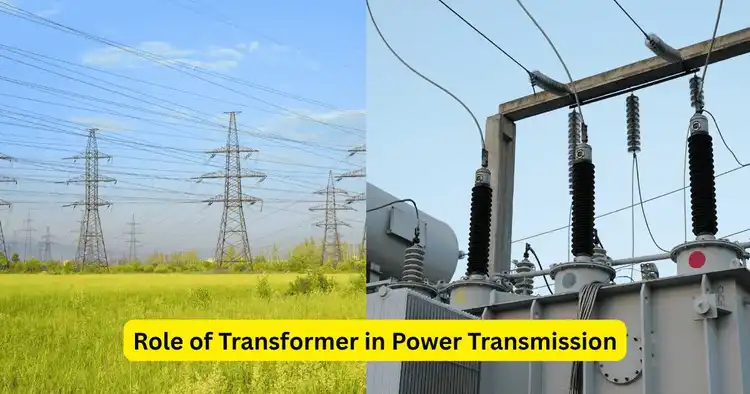
This is where transformers become essential. In modern electrical grids, transformers make long-distance transmission practical by stepping the voltage up for transmission and down for end use. This process improves energy efficiency, reduces transmission losses, supports voltage regulation, and helps maintain reliable electricity delivery under changing load conditions. Without transformers, power systems would face far greater losses, poorer performance, and significant limits on grid expansion.
This article discusses the technical role and significance of transformers within power networks. It explains how they facilitate efficient transmission, enable the reliable operation of the grid, and serve as a foundational component of modern electrical infrastructure.
Types of Transformers Used in Power Transmission
Different transformer types serve different points in the grid. While the electromagnetic principle stays the same, the application changes based on voltage level, network location, and load demand. Three of the most important types are step-up transformers, step-down transformers, and distribution transformers.
Step-Up Transformers
A step-up transformer increases voltage from the primary side to the secondary side. This happens when the secondary winding has more turns than the primary winding.
In power generation plants, step-up transformers are installed between generators and transmission lines. Generators typically produce electricity at moderate voltage levels, but long-distance transmission requires much higher voltages. By raising voltage before transmission, step-up transformers reduce line current for the same power transfer.
Why Step-Up Transformers Are Essential
Step-up transformers play a key role at the start of the transmission process.
They raise voltage for efficient transmission
The main purpose of a step-up transformer is to increase voltage. When the voltage increases, the current decreases for the same amount of power. Lower current means less heat loss in the wires.
This matters because transmission lines often span long distances. Even small losses can become very large when huge amounts of electricity are being moved every day.
They help lower operating costs
By reducing line losses, step-up transformers help utilities use less energy to deliver the same power. This improves system efficiency and can lower operating costs over time.
Practical example
Imagine a generating station located far from a city. If the station sent electricity at a lower voltage, much more energy would be wasted as heat before the power reached urban substations. A step-up transformer solves this problem by stepping up the power for long-distance transmission.
Step-Down Transformers
A step-down transformer changes high voltage into a lower voltage level. This happens when the secondary winding has fewer turns than the primary winding.
These transformers are used throughout substations in transmission and sub-transmission networks. After electricity has traveled long distances at high voltage, it must be reduced in stages to levels suitable for regional distribution and industrial use.
Why Step-Down Transformers Are Essential
Step-down transformers are just as important as step-up transformers.
They lower voltage to usable levels
High transmission voltage is efficient for transport, but it is too high for most equipment and far too dangerous for homes and offices. Step-down transformers reduce voltage to levels that are suitable for distribution and end use.
They support safe delivery
Residential appliances, lighting systems, office equipment, and many industrial machines are designed to operate within specific voltage ranges. Step-down transformers ensure the voltage meets those needs.
Practical example
A substation near a town may receive power from high-voltage transmission lines. A step-down transformer lowers that voltage before the electricity enters local feeders. Smaller distribution transformers near streets or buildings may reduce it further before it reaches customers.
Distribution Transformers
Distribution transformers are the final voltage conversion units before power reaches most end users. They usually operate near the consumer side of the network, reducing medium-voltage distribution to the utilization voltage required by homes, offices, shops, and small industries.
Although distribution transformers are smaller than major transmission transformers, their role in the grid is just as important. They serve as the last controlled voltage interface between the wider network and the customer.
Their design priorities often include:
- high reliability
- strong all-day energy efficiency
- low no-load loss
- stable output voltage under normal service conditions
Because distribution transformers remain energized for long periods, even under light load, their core losses are a major design concern. Utilities often focus on loss reduction in these units because the cumulative effect across a large network is significant.
In practical terms, distribution transformers support:
- local voltage delivery
- service continuity
- neighborhood-level power quality
- safe utilization of electricity
They are a foundational part of how electrical grids convert bulk transmitted energy into usable consumer power.
Why Transformers Matter in Power Transmission
Transformers are essential because the power system does not use one single voltage from start to finish. Different stages of the grid need different voltage levels.
For example:
- Power plants generate electricity at one voltage
- Transmission lines carry it at a much higher voltage
- Distribution networks lower it again
- Homes and businesses receive it at much lower usable levels
Transformers make these changes possible.
They make long-distance power transfer practical
If utilities tried to send large amounts of electricity over long distances at low voltage, the current would be very high. High current results in greater energy loss as heat. It also requires thicker conductors, which increase system costs.
By raising the voltage, transformers allow the same amount of power to travel with a lower current. This makes long-distance transmission much more efficient.
They match electricity to system needs
Electricity must be delivered at the right voltage for each stage of the grid. A transmission network, an industrial plant, and a residential neighborhood all need different voltage levels.
Transformers adjust voltage so each part of the system gets power in a form it can use safely and effectively.
How Transformers Work in Power Transmission
Transformers are installed at important stages of the power system, from electricity generation to transmission and final distribution.
Step 1: Power generation
A power plant produces electricity using turbines driven by steam, water, wind, gas, or other energy sources. The voltage produced at this stage is not usually high enough for efficient long-distance transmission.
Step 2: Step-up transformation
A step-up transformer increases the voltage leaving the power plant. This higher voltage allows electricity to travel through transmission lines with less current and lower energy loss.
For example, before electricity generated at a plant is sent to the grid, its medium voltage is stepped up to a very high transmission voltage.
Step 3: High-voltage transmission
Once the voltage is increased, electricity flows across the transmission network. These high-voltage lines connect generating stations to substations and load centers where power is needed.
Step 4: Step-down transformation
At substations, a step-down transformer lowers the voltage from transmission levels to lower levels used in regional and local distribution systems.
Step 5: Final delivery
Before reaching homes, offices, schools, hospitals, and factories, additional transformers reduce the voltage once again. This step-by-step voltage control is one of the main reasons the electric grid can serve so many different users.
How Transformers Reduce Transmission Losses
One of the most important benefits of transformers is their ability to reduce energy loss in the transmission system.
The link between voltage, current, and loss
For a given amount of power, raising the voltage lowers the current. This matters because heat loss in power lines increases strongly with current.
In simple terms:
- Higher current creates more heat in conductors
- More heating means more wasted energy
- Raising the voltage reduces the current
- Lower current reduces line losses
That is why high-voltage transmission is the standard approach in modern power systems.
Better use of infrastructure
Lower current also reduces stress on transmission equipment. overhead Conductors, connectors, and other components can operate more efficiently when losses and heating are kept under control.
This helps utilities move large amounts of power across wide areas without wasting as much energy.
How Transformers Support Voltage Regulation
Voltage regulation means keeping voltage within an acceptable range as power moves through the grid. This is important because electrical equipment works best when the supplied voltage stays stable.
They help maintain consistent voltage
As electricity travels through lines and passes through different loads, voltage can rise or fall. Transformers help manage these changes by adjusting voltage to meet system requirements.
Some transformers are designed with tap changers, which allow operators to fine-tune voltage levels as demand changes.
They improve power quality
Stable voltage supports better performance for:
- Motors
- Lighting systems
- Electronics
- Industrial equipment
- Commercial machinery
Poor voltage control can lead to equipment problems, reduced efficiency, and shorter service life. Transformers help prevent these issues by keeping the voltage closer to the desired level.
Practical example
During peak demand periods, such as hot summer afternoons, electricity use rises sharply. Utilities may adjust transformer settings at substations to help maintain proper voltage across the network, ensuring customers continue to receive reliable service.
How Transformers Improve Grid Reliability
A reliable grid can deliver electricity steadily under changing conditions. Transformers contribute to this reliability in several ways.
They connect different parts of the grid
Power systems are composed of many components, including generating plants, transmission networks, substations, and local distribution areas. Transformers allow these parts to work together even when they operate at different voltage levels. Without transformers, linking these parts would be much harder. If you want to learn more about overhead transmission lines components, you can read my article on the components of an overhead transmission line.
They support flexible power flow
Grid operators often need to route power where it is needed most. Transformers help make this possible by enabling voltage conversion at key points in the system.
This supports:
- Regional power transfer
- Load balancing
- Substation operation
- Integration of new power sources
They help limit outages
Well-designed transformer systems can improve fault handling and system stability. If one section of the grid has a problem, substations and protection systems can isolate the issue and help restore service more effectively.
While transformers do not prevent every outage, they are a major part of a strong and resilient grid.
How Transformers Enhance Safety
Safety is a major concern in every electrical system, especially in power transmission, where voltage levels are extremely high.
They separate voltage stages safely
Transformers enable controlled switching between high-voltage transmission and lower-voltage distribution. This helps keep dangerous voltage away from end users and everyday equipment.
They work with protective systems
Transformers are used alongside circuit breakers, relays, grounding systems, and insulation to improve electric safety. These features help detect problems, isolate faults, and reduce the risk of damage or injury.
They include cooling and insulation for protection
Transformers generate heat during operation, so they need proper cooling. They also need strong insulation to prevent internal faults and electrical leakage.
Routine inspection and maintenance help operators detect problems such as:
- Overheating
- Insulation breakdown
- Oil contamination
- Moisture ingress
- Loose connections
Good design and maintenance are key to safe transformer operation.
Simple Way to Understand the Transformer’s Role
A transformer acts like a control point for voltage.
- It raises the voltage when power needs to travel far
- It lowers the voltage when power needs to be used safely
- It helps reduce energy waste
- It supports stable system performance
- It improves safety and reliability across the grid
In that sense, transformers are not just helpful devices. They are core building blocks of the entire electric power system.
Conclusion
The role of a transformer in power transmission is to make the movement of electricity efficient, reliable, and safe. By adjusting voltage at key points in the grid, transformers enable utilities to send power over long distances with lower losses and then deliver it at levels homes, businesses, and industries can use.
Step-up transformers prepare electricity for transmission. Step-down transformers make that electricity practical and safe for distribution and use. Along the way, transformers also support voltage regulation, grid reliability, and overall system protection. Modern power transmission depends on this voltage control. Without transformers, the electric grid would be far less efficient and far harder to operate.
FAQ
-
What is the difference between step-up and step-down transformers?
A step-up transformer increases voltage for long-distance power transmission. A step-down transformer lowers voltage so electricity can be used safely in homes and businesses.
-
How do transformers reduce power loss in transmission?
Transformers reduce power loss by increasing voltage before electricity travels long distances. Higher voltage means lower current, which reduces heat loss in power lines.
-
Where are transformers used in the power system?
Transformers are used at power plants, substations, and local distribution networks. They help move electricity from generation to transmission, then lower the voltage before it reaches homes and businesses.
-
Do transformers work with AC or DC in standard power transmission?
Standard power transformers work with AC, not DC. They need changing current to transfer energy between circuits.
-
Why are transformers important for safety?
Transformers make electricity safer by lowering high voltage before it reaches homes, buildings, and equipment. They also help separate different parts of the power system to reduce electrical risk.
-
Can electricity be delivered efficiently without transformers?
No, electricity cannot be delivered as efficiently without transformers. They make long-distance transmission practical by adjusting voltage to reduce power loss and improve safety.

I am an electrical engineer and also a blogger. I write informative blog posts on topics related to electrical and electronics engineering. If you are interested in these topics, you are welcome to my site to read these articles.
If you are going for best contents like me, only pay a visit this web page everyday because it presents feature contents, thanks