Superheater in Thermal Power Plant: Role and Function
A superheater is a heat exchanger that raises steam temperature beyond its saturation point — turning wet saturated steam into dry superheated steam. That single job changes everything downstream.
In a thermal power plant, the superheater resolves the problem associated with this. Saturated steam carries water droplets. Those droplets slam into turbine blades at high speed, causing erosion and wasted energy. Wet steam means damaged blades, lost power, and rising repair bills.
The superheater fixes that. It heats the steam past saturation, strips out the moisture, and sends dry, high-energy steam to the turbine instead.
In this article, you’ll learn the complete role and function of the superheater in thermal power plant operation — how it converts steam, lifts efficiency, protects turbine blades, and cuts losses. Every function, broken down clearly.
What is a Superheater in a Thermal Power Plant?
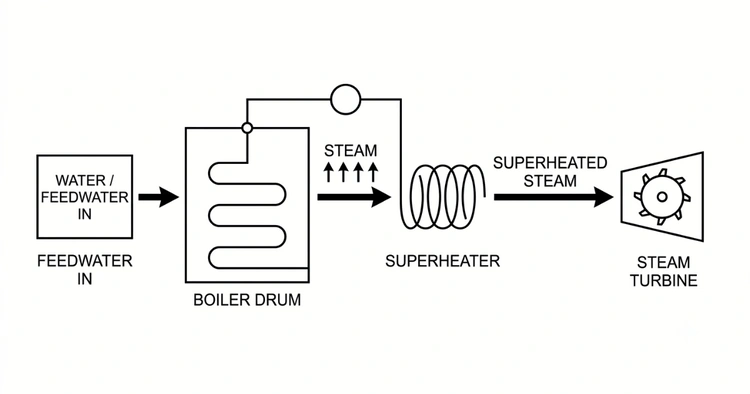
A superheater is a set of tube coils placed in the high-temperature flue gas path of the boiler. Saturated steam from the boiler drum flows through these tubes and picks up extra heat from the hot gases passing over them. That heat pushes the steam temperature well past its saturation point.
Its place in the system is fixed — the superheater sits after the boiler drum and before the steam turbine. Steam leaves the drum saturated, passes through the superheater, then arrives at the turbine dry and ready to work. That position is what makes the superheater in a steam power plant such a key link in the steam cycle.
How Does a Superheater Work? (Brief Working Principle)
The superheater works on heat transfer — hot flue gases on the outside, steam on the inside. The gases flow over the tube coils and pass their heat through the tube walls into the steam. This adds temperature without adding pressure, so the steam climbs well past saturation while staying at the same pressure. That’s the gap between saturated steam and superheated steam — same pressure, much higher heat.
Here’s how the superheater working in thermal power plant flows, step by step:
- Saturated steam exits the boiler drum — at its saturation temperature, still carrying moisture.
- Steam enters the superheater tube coils — flowing through the tubes set in the flue gas path.
- Hot flue gases pass over the tubes — flue gas heat transfer moves energy through the tube walls into the steam.
- Steam temperature rises to 540°C–600°C — the steam temperature increase delivers dry, high-energy steam that exits toward the turbine.
That added heat is what makes every function of the superheater possible.
Role and Function of Superheater in Steam Power Plant
The role and function of the steam superheater in a coal power plant boil down to five distinct jobs — each one builds on the heat it adds to the steam.
1. Converting Saturated Steam to Superheated Steam
This is the superheater’s primary job — turning wet saturated steam into dry superheated steam.
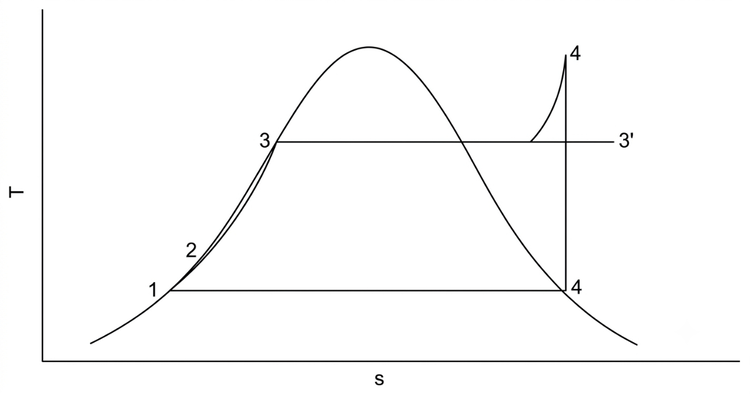
The superheater raises steam temperature above its saturation point, and it does this at constant pressure. The pressure stays the same — only the heat climbs. That single change transforms the steam completely.
Here’s the difference. Saturated steam carries moisture — tiny water droplets riding along with the vapor. Superheated steam is dry. No droplets, just pure high-energy vapor. And dry steam packs more energy per kilogram than wet steam ever could.
This conversion is the foundation. Every other function depends on it.
2. Increasing Thermal Efficiency of the Plant
Hotter steam means a bigger payoff at the turbine.
When steam enters the turbine at a higher temperature, it allows a larger heat drop across the turbine stages. A larger heat drop means more work extracted per unit of steam — you pull more power out of the same flow.
This is where Rankine cycle efficiency comes in. Raise the steam temperature, and you lift the cycle efficiency measurably. Modern superheated steam temperature sits around 540°C and above — and that pushes plant efficiency several percentage points higher than saturated-steam operation.
The result is direct thermal efficiency improvement. Same fuel in. More power out. Although the superheater improves steam power plant efficiency to a great extent, the overall efficiency of a typical steam power plant still remains only around 33% to 38%; if you want to understand why it is still so low, you can read this article on why steam power plant efficiency is low.
3. Reducing Moisture Content in Steam
Wet steam is a liability. The superheater removes it.
By heating the steam well past its saturation point, the superheater drives out the moisture content in the steam and delivers dry steam straight to the turbine. The water is gone — what reaches the blades is clean, dry vapor.
The payoff is twofold. Dry steam carries more energy, and it flows cleaner through the turbine stages. Less water. More work.
4. Protecting Turbine Blades from Erosion
Water droplets are the enemy of turbine blades.
In wet steam, those droplets hit the spinning blades at high speed. The result is turbine blade erosion — pitting, surface damage, and shortened blade life. Over time, that means cracked blades, costly repairs, and forced shutdowns.
Superheated steam is dry, so it removes that droplet impact entirely. The blades face clean vapor instead of high-speed water.
What this means for you:
- Longer blade life — dry steam stops the erosion before it starts.
- Fewer repairs — less damage means fewer maintenance cycles.
- Lower maintenance cost — less replacement spend on damaged blades.
- Less downtime — fewer shutdowns, more hours generating power.
5. Reducing Condensation Losses
Steam cools as it expands through the turbine — and that’s where saturated steam fails.
Saturated steam condenses early. As it moves through the turbine stages, it loses heat fast and starts forming droplets mid-expansion. That’s lost energy and a fresh erosion risk, right when you need the steam working hardest.
Superheated steam starts hotter. Because it begins with that extra heat, it stays dry deeper into the expansion before it ever nears the condensation point. The outcome cuts condensation losses in turbine operation — less premature condensation and more energy extracted before the steam reaches the condenser.
One device. Five jobs. Every one of them earning its place in the plant.
What is the Importance and Benefits of the Superheater
Add up all five functions, and the superheater pays you back in one currency — measurable plant performance.
Here’s what the steam superheater delivers:
- Higher thermal efficiency — More power is extracted from the same fuel. That’s a thermal efficiency improvement you can read straight off the meter.
- Dry steam to the turbine — more energy per kilogram of steam, with no water riding along to waste it.
- Longer turbine blade life — dry steam removes droplet erosion, so the blades last longer and repair costs drop. That’s turbine blade protection working in real time.
- Lower condensation losses — steam stays dry deeper into the turbine, so you cut condensation losses in turbine operation and pull more work from every kilogram.
- Better overall plant economy — higher efficiency and lower maintenance add up to savings you can count on, billing cycle after billing cycle.
These are the real superheater uses in thermal power plant operation — one component tucked into the flue gas path, returning direct, measurable gains in both efficiency and equipment life.
Conclusion
The superheater raises steam temperature past saturation to deliver dry, high-energy steam straight to the turbine — that’s its core job, start to finish.
It does this through five functions working together: converting saturated steam to superheated steam, increasing thermal efficiency, reducing moisture in the steam, protecting turbine blades from erosion, and cutting condensation losses.
The bottom line is simple. The superheater is a single device — but it lifts both efficiency and equipment life across the entire plant.
FAQ
What is a superheater in a thermal power plant?
A superheater is a set of tube coils placed in the boiler’s high-temperature flue gas path. Saturated steam from the boiler drum flows through these tubes and picks up extra heat. It sits after the boiler drum and before the turbine — turning wet steam into dry, high-energy steam.
What is the primary function of a superheater?
Its primary job is converting saturated steam into superheated steam. It raises steam temperature above the saturation point at constant pressure — the pressure stays the same, only the heat climbs. That single change strips out moisture and powers every other function.
How does a superheater improve thermal efficiency?
Hotter steam means a larger heat drop across the turbine — more work pulled from each kilogram of steam. Raising steam temperature lifts Rankine cycle efficiency measurably. Modern superheated steam (540°C+) pushes plant efficiency several percentage points higher than saturated-steam operation. Same fuel in, more power out.
How does a superheater protect turbine blades?
Wet steam carries water droplets that hit spinning blades at high speed, causing erosion and pitting. Superheated steam is dry — no droplets, no impact damage. The result: longer blade life, fewer repairs, lower maintenance cost, and less downtime.
What is the difference between saturated and superheated steam?
Saturated steam carries moisture — tiny water droplets riding along with the vapor. Superheated steam is dry, heated well past the saturation point at the same pressure. Dry steam packs more usable energy per kilogram and flows cleaner through the turbine stages.
What is the temperature range of superheated steam?
In modern thermal power plants, superheated steam typically sits between 540°C and 600°C. The superheater pushes saturated steam well past its saturation temperature into this range — delivering dry, high-energy steam straight to the turbine.

I am an electrical engineer and also a blogger. I write informative blog posts on topics related to electrical and electronics engineering. If you are interested in these topics, you are welcome to my site to read these articles.