Why Does a Fuse Keep Blowing in My House? Causes and Solution
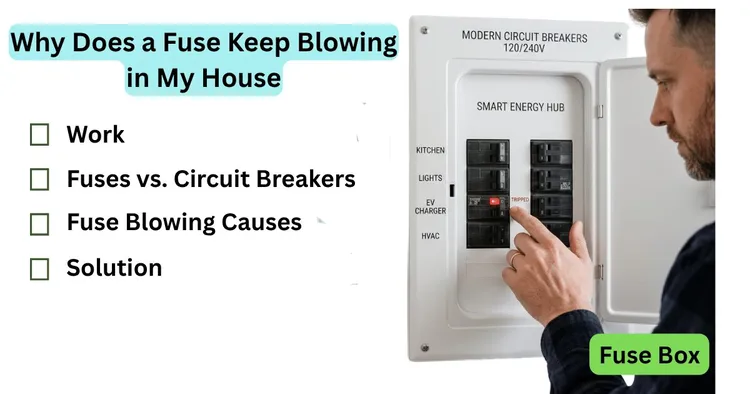
A Electric fuse keeps blowing because the circuit is drawing more current than the fuse can safely handle. The usual culprits are an overloaded circuit, a short circuit, faulty wiring, a defective appliance, or the wrong fuse rating. Repeated blowing signals an underlying problem that needs attention.
This isn’t just an annoyance. Home electrical fires account for an estimated 51,000 fires each year, causing nearly 500 deaths, more than 1,400 injuries, and $1.3 billion in property damage, according to the Electrical Safety Foundation International (ESFI). Electrical distribution systems rank as the third leading cause of home structure fires. A electrical fuse that blows repeatedly often points to a deeper issue, especially in older homes that still rely on a fuse box.
Here’s what you’ll learn: how a fuse works, the common causes of a fuse blowing, how to troubleshoot the problem, step-by-step fixes, and when it’s time to call a professional.
How Does a Fuse Work?
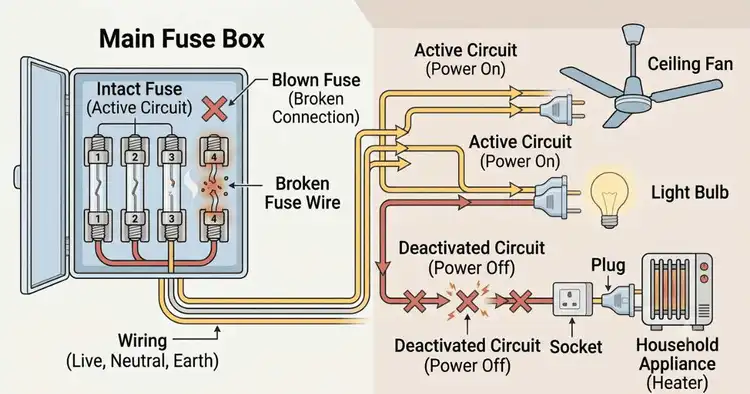
A fuse is a small but mighty safety device that protects your home’s electrical system. Inside each fuse unit sits a thin metal strip. When too much electric current flows through the circuit, that strip heats up and melts, instantly breaking the connection and cutting power to that area.
The takeaway? The electric fuse “sacrifices itself” to protect your wiring and appliances from overheating or catching fire. A blown fuse means the device did exactly its job.
Fuses vs. Circuit Breakers: What’s the Difference?
Many homeowners are far more familiar with circuit breakers than residential fuses, so it helps to clear up the confusion before we dig into why your fuse keeps blowing. Both devices do the same basic job—they protect your home’s electrical system from too much current. The difference is in how they react when something goes wrong.
A electrical fuse contains a thin metal strip that melts when the electrical current gets too high. Once it melts, the fuse is done. You have to replace it with a new one. A circuit breaker, on the other hand, simply flips off (or “trips”) and can be switched back on with your hand once you’ve fixed the problem.
If you want to understand where different types of circuit breakers are used in a home electrical system and others, read our detailed guide on types of circuit breakers.
Here’s a quick side-by-side comparison:
| Feature | Fuse | Circuit Breaker |
| How it reacts | Metal strip melts and breaks the circuit entirely | Trips and shuts off the circuit |
| After it activates | Must be replaced with a new fuse | Can be reset by flipping the switch |
| Cost to fix | Low, but you need spare fuses on hand | None—just reset it |
| Where you’ll find it | Older homes with electrical systems not updated in decades | Most modern homes |
| Convenience | Less convenient (replacement needed each time) | More convenient (instant reset) |
| Safety today | Reliable but outdated | Generally safer and easier to manage |
If your home still runs on a fuse box, you likely live in an older property that hasn’t had an electrical upgrade in many years. There’s nothing wrong with a working fuse box, but most electricians recommend upgrading to a modern breaker panel for added safety and everyday convenience. A breaker panel saves you the hassle of buying replacement electric fuses and makes it much easier to restore power after a trip.
Most Common Reasons a Fuse Keeps Blowing
So why does a electric fuse keep blowing in your house? In almost every case, the answer comes down to one thing: the circuit is drawing more current than the fuse can safely handle. But several different problems can trigger that overload. Let’s break down the most common causes one by one, so you can pinpoint what’s happening in your home.
1. Overloaded Circuit
This is by far the most common reason a fuse keeps blowing. An overloaded circuit happens when too many high-wattage devices pull power from the same circuit at the same time. Think space heaters, microwaves, hair dryers, and vacuums—all of these are energy-hungry appliances.
When the combined demand pushes the current past what the fuse is rated for, the fuse does its job and blows to stop the wires from overheating. If your fuse trips every time you run the kettle and the toaster together, you’ve likely found your culprit. The fix is usually as simple as spreading those appliances across different circuits.
2. Short Circuit
A Electrical short circuit is more serious. It occurs when a hot wire touches a neutral wire or a ground wire, creating a sudden surge of electricity. That surge sends a huge amount of current through the circuit in an instant, and the fuse blows almost immediately to cut it off.
Short circuits are dangerous. They can cause sparks, scorch marks, and a real risk of a house fire. If you suspect a short circuit—especially if you see or smell burning—don’t keep replacing electrical fuses. This needs immediate attention from a qualified electrician.
3. Ground Fault
A ground fault is a specific type of short circuit. It happens when electrical current unintentionally flows to the ground, often through a grounding wire or a damp surface. Bathrooms, kitchens, and outdoor outlets are common trouble spots because water and electricity don’t mix.
Like a regular short circuit, a ground fault can blow your fuse and pose a shock or fire hazard. If you keep losing power in areas near water, get it checked by an electrician promptly rather than guessing at the cause.
4. Faulty Wiring and Loose Connections
Older or damaged wiring is another frequent reason a electric fuse keeps blowing. Over time, wires wear out, insulation cracks, and terminals come loose. These problems cause electrical fluctuations and arcing that can trip your house fuse without warning.
This isn’t a minor issue. According to the Electrical Safety Foundation International (ESFI), arcing faults are responsible for starting more than 28,000 home fires each year, causing over $700 million in property damage. If your wiring is old or you notice scorch marks around outlets, have a professional inspect your system.
5. Faulty Appliances
Sometimes the problem isn’t your wiring at all—it’s the appliance itself. An old or damaged appliance can draw too much power or develop an internal short circuit, both of which will blow a fuse device the moment you switch it on.
A simple test helps here: unplug the suspect appliance, replace the electrical fuse, and see if the problem returns. If the fuse holds while the appliance stays unplugged, you’ve found the offender. Repair or replace that appliance before plugging it back in.
6. Old or Wrong Fuse Type
Finally, the fuse itself may be the problem. Using a main fuse with the wrong amp rating is a common mistake. If the rating is too low, the fuse will blow under normal conditions even when nothing is wrong. If it’s too high, the fuse won’t blow when it should, which removes your safety protection and raises the fire risk.
Always match the circuit fuse to the amp rating the circuit is designed for—we’ll cover exactly how to do this in the solutions section below. Getting the rating right is one of the easiest ways to stop a fuse from blowing unnecessarily and to keep your home protected.
How to Identify the Cause of a Blown Fuse
Before you can fix the problem, you need to know what triggered it. A little electrical fuse troubleshooting helps you pinpoint the issue quickly and safely. Here is how you can find out the reason for a blown fuse.
Know where to find your fuse box. In most homes, the fuse box sits in the basement, garage, utility closet, or a hallway. Older properties sometimes tuck it near the main entrance or under the stairs. Once you know its location, you can act fast the next time the power cuts out.
Spot the blown fuse first. Open your fuse box and look closely at each fuse. A blown fuse usually shows clear signs: burn marks around the metal cap, a melted or broken metal strip inside, or cloudy, discolored glass. If the glass looks foggy or scorched, that fuse has done its job and needs replacing.
Label each circuit. This simple step saves you a lot of guesswork. Mark every fuse with the room or appliance it controls—”kitchen outlets,” “living room lights,” “garage.” When a fuse blows, you’ll know exactly which area lost power and where to focus.
Use a process of elimination. Think back to the moment the fuse blew. Which appliances were running, and on which circuit? If the power dropped right when you switched on the microwave while the kettle was already going, you’re likely dealing with a circuit overload. Noting these patterns helps you spot the real culprit instead of treating the symptom.
Step-by-Step Solutions and Fixes
Safety first. Electricity demands respect. Before you touch your fuse box, make sure your hands are completely dry, and stand on a dry surface or a rubber mat. Never work on your electrical panel if the area is wet or if anything looks scorched or smells like burning. If something feels unsafe, stop and call a professional.
Once you’re set up safely, follow these six steps:
- Turn off and unplug all lights and devices in the affected area. This removes the load before you replace the fuse.
- Locate and open your fuse box. Use a flashlight if the space is dark.
- Identify the blown fuse. Look for the dark, cloudy, or broken metal strip you spotted during troubleshooting.
- Remove the main fuse carefully, unscrewing it counterclockwise. Use a rubber-handled tool if needed—never use anything metal.
- Replace it with a new fuse wire of the same amp rating. Matching the rating is essential for safe protection.
- Test the circuit by turning on one device at a time. This helps you confirm the circuit holds and spot any appliance that may be causing trouble.
Quick-Reference Fuse Rating Guide
Not sure which fuse goes where? Use this table to match the right amp rating to its typical use:
| Amp Rating | Typical Use |
| 15 amps | Lights, outlets, small electronics |
| 20 amps | Kitchen outlets, bathroom circuits |
| 25 amps | Window AC units, small appliances |
| 30 amps | Dryers, water heaters, large appliances |
| 40+ amps | Electric ranges, subpanels |
Pro tip: Never install a fuse with a higher amp rating than recommended. It may stop the fuse from blowing, but it also removes your safety barrier. A higher-rated fuse lets too much current flow through wires that can’t handle it, creating a serious fire risk.
What If the Fuse Blows Again Right Away?
Sometimes a fresh fuse blows the moment you restore power. Don’t panic—and don’t keep swapping fuses endlessly. Unplug everything on that circuit and replace the circuit fuse once more. If it holds, plug your devices back in one at a time to find the faulty appliance.
But if the electric fuse blows again with nothing plugged in, the problem runs deeper. This usually points to faulty wiring, a short circuit, or a ground fault hidden inside your walls. At this stage, stop the DIY troubleshooting and call a licensed electrician. Repeated blowing with an empty circuit is a clear warning sign that needs a professional eye—it’s never worth the risk of guessing.
When Should You Call an Electrician?
Some electrical problems are simply beyond a quick DIY fix. Knowing when to step back and bring in a professional can protect your home—and your life. Call a licensed electrician right away if you notice any of these warning signs:
- Fuses that keep blowing repeatedly, especially when nothing is plugged into the circuit. This almost always points to a deeper wiring fault.
- Burning smells, sparks, or heat coming from the fuse box. Any of these signals an immediate hazard.
- Dim or flickering lights that don’t settle, even after you’ve replaced a fuse device.
- Buzzing or sizzling sounds near outlets, switches, or the panel itself.
If a situation feels dangerous, turn off the power to your fuse box—but only if you can reach it safely and the area is dry. Then call a licensed electrician immediately. Don’t wait it out, and don’t keep swapping in fresh fuses hoping the problem disappears.
Electrical work can be genuinely hazardous. When a fuse keeps blowing and you can’t find an obvious cause, guessing is never worth the risk of a shock or a house fire. A trained professional can trace the issue back to its source and fix it properly the first time.
Safety tips to prevent fuses from blowing repeatedly
A few smart habits go a long way toward keeping your circuits balanced and your home protected. Use these preventive tips to stop a fuse from blowing before it ever happens:
- Spread appliances across different circuits. Avoid running multiple high-wattage devices on the same line at once. This is the easiest way to prevent a circuit overload.
- Limit extension cord use. Never plug space heaters or air conditioners into extension cords. These power-hungry appliances should go straight into a wall outlet.
- Upgrade old or faulty appliances. A worn-out appliance can draw too excess current and strain your whole system. Replacing it often solves recurring fuse problems.
- Match your light bulb wattage. Always use bulbs that meet the recommended wattage printed on each fixture. Overpowered bulbs add unnecessary heat and load.
- Schedule regular inspections. A qualified electrician can catch worn wiring and loose connections early, long before they trip a fuse wire or spark a fire.
- Consider upgrading your panel. If you still rely on an old fuse box, ask an electrician about switching to a modern breaker panel with AFCI (Arc-Fault Circuit Interrupter) protection for added safety.
One more reminder that’s too important to skip: the Electrical Safety Foundation International (ESFI) reports that 65% of home fire deaths happen in homes with no working smoke detectors. Test yours every month, and replace the batteries on schedule. It’s a two-minute task that could save lives.
Conclusion: Keep Your Home Safe and Powered
A electrical fuse keeps blowing for a reason—it’s never random. In most cases, the cause comes down to an overloaded circuit, a short circuit, faulty wiring, or simply the wrong fuse unit type. Once you understand which one is at play, the path to a fix becomes much clearer.
An occasional blown fuse is completely manageable with a little troubleshooting and the right replacement. But when the blowing keeps happening, that’s your home waving a red flag. Repeated trips point to a larger electrical problem that deserves real attention before it turns into something dangerous.
Always put safety first. Handle basic fixes only when it’s clearly safe to do so, and call a licensed electrician whenever you’re in doubt. There’s no shame in bringing in an expert—it’s the smartest move when your safety is on the line. Want to keep your home running smoothly? Explore our related guides on circuit breaker troubleshooting and home electrical safety for more practical know-how.
FAQ
Can I replace a blown fuse myself?
Yes, just turn off the power and swap in a fuse with the exact same amp rating. If the new one blows right away, stop and call an electrician.
Why does a fuse blow with nothing plugged in?
When a fuse keeps blowing on an empty circuit, the issue is usually hidden wiring damage, a short circuit, or a ground fault. That needs a professional to fix safely.
Is it dangerous if a fuse keeps blowing?
It can be. Repeated blowing signals a real problem like faulty wiring or a constant circuit overload, both of which raise your fire risk—so don’t ignore it.
What is the difference between a fuse and a circuit breaker?
A fuse melts and must be replaced once a blown fuse occurs, while a circuit breaker just trips and can be reset with a switch.

I am an electrical engineer and also a blogger. I write informative blog posts on topics related to electrical and electronics engineering. If you are interested in these topics, you are welcome to my site to read these articles.