Choose Best Electric Heater for Room in Winter Season
When temperatures drop during winter, we feel the need to keep our rooms warm to help with the chill. Electric heaters are beneficial in keeping our rooms warm. While there are various types of heaters available on the market, choosing the best one for your room can be challenging. In this article, we’ll help you choose the best electric heater for room in winter. We’ll also explore the different types of heaters and explain which one will best suit your room size, budget, and needs.
What is the Best Type of Heater for a Room
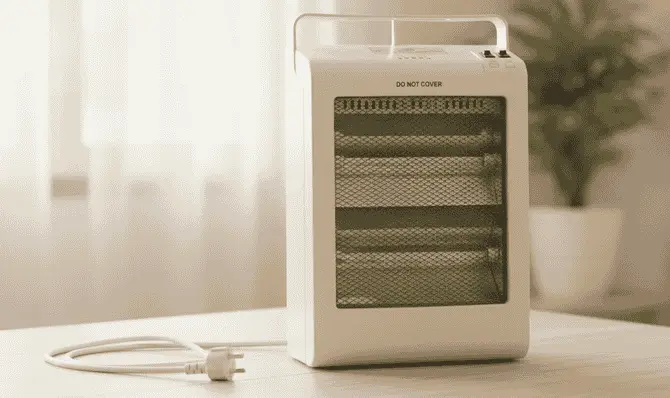
A good room heater is essential for comfort during the winter season. To help you beat the cold, a variety of electric room heaters are available on the market, which help keep your room warm while saving energy. Here, we’ll explore the various types of best room heaters available and determine which one is best suited for your needs.
1. Fan Heater for Room
A fan heater is a simple heater that heats air and then circulates it throughout the room. It has a fan that blows the hot air out.
Advantages:
- It heats the room quickly, as the heater instantly heats the air, and the fan circulates it throughout the room.
- Its size is convenient, allowing it to be easily moved from one room to another.
- The price is also lower than that of other types of heaters.
Demerit:
- Using it in a completely closed room can be harmful to health.
2. Oil-Filled Radiator Heater
This oil-field room heater uses oil, which heats up as the temperature rises and slowly radiates heat throughout the room. This heater provides a consistently comfortable heat level.
Advantages:
- Due to its use of oil, it retains the room’s heat for an extended period once heated.
- This heater heats the room evenly, so no spot remains cold.
- It makes very little noise.
Demerit:
- It may not be easy to carry it from one place to another, as it is pretty heavy.
- The price is also higher than that of other heaters.
3. Ceramic Room Heater
Ceramic room heaters are ideal for both safety and efficiency. Ceramic heaters feature special ceramic plates that generate heat and use it to warm the air. They are energy-efficient and use very little electricity. Ceramic electric room heaters heat a room very quickly and offer quiet operation.
Advantages:
- Ceramic plates heat up very quickly and spread the heat rapidly throughout the room.
- Being lightweight and compact in size, it can be easily carried and stored anywhere.
Demerit:
- These are more effective for smaller rooms, while their efficiency may be less in larger rooms.
4. Infrared Room Heater
Infrared room heaters are best suited for individuals who prefer the direct heat experience. These heaters heat a person or object directly through radiation. It means that the effect of these heaters is limited to the area directly exposed to the radiation, making them highly energy-efficient.
Advantages:
- It directly heats the body and objects, providing quick relief from cold.
- It consumes less electricity than other heaters.
Demerit:
- It is only effective in areas exposed to infrared radiation, so it is less effective in large rooms.
5. Convection Room Heater
Convection room heaters heat the air and distribute it evenly throughout the room. This heater maintains a consistent temperature control throughout the room. They are suitable for both small and large rooms and are also energy efficient.
Advantages:
- It heats the entire room evenly.
Demerit:
- It is slightly slower than other heaters, and it takes some time to heat the room thoroughly.
6. Space Heater for Room
Space heaters are a great electrical appliance for small rooms heating. They work well in tight spaces and are ideal for heating small spaces. Space heater models are often compact and user-friendly.
7. Programmable Room Heater
If you want a heater that automatically turns on and off, a programmable room heater may be right for you. These heaters are particularly suitable for individuals who require heat at specific times of the day. You can set a timer so that the heater turns on and off when you don’t need it.
8. Smart Heater for Rooms
Nowadays, smart heaters are also available on the market that connect to your smartphone. You can control smart heaters from your phone. These heaters feature internet connectivity, allowing you to control them remotely from anywhere.
9. Eco-Friendly Room Heater
If you’re looking for an eco-friendly room heater, this one might be right for you. These heaters are energy-efficient and environmentally friendly. Ceramic heaters and infrared heaters are considered energy-efficient and environmentally friendly.
10. Portable Heater for Room
Portable room heaters are ideal for those who want to use them in all rooms of the house. They can be easily moved from one room to another. They are small and lightweight, making them extremely easy to carry around. Fan heaters and convection heaters are two excellent examples, suitable for any size room.
11. Wall-Mounted Room Heater
Wall-mounted room heaters are mounted on the wall, creating a more spacious feel in the room. It is especially ideal for spaces with limited space. Wall mounting helps maximize space and makes using the heater safe and convenient.
12. Halogen room heaters
Halogen room heaters are very economical for small rooms and personal use. These heaters use halogen tubes for instant heat. They are lightweight and portable, making them easy to carry around. Halogen heaters are energy-efficient and reduce electricity bills. However, they only heat a limited area and are not suitable for long-term use.
Parts of Electric Room Heater
An electric room heater has several main parts:
- Heating Element: The heating element is made of Nichrome wire, which heats up to high temperatures when power is supplied.
- Reflector: Behind the heating element is a shiny metal surface that focuses the heat in one direction.
- Fan: Many heaters have a fan that helps circulate the warm air throughout the room.
- Thermostat: The thermostat prevents the heater from overheating and regulates the temperature.
- Body: Covers the heater to protect it from electricity and heating elements to prevent any untoward incident from occurring if touched.
- Switches and Control Knobs: These are useful switches for turning the heater on or off and controlling the temperature or heating level.
- Power Cable: It is used for power supply and is connected to the socket by a plug.
- Grill: It is called a safety grill placed in front of the heating element for safety, so that no one comes in direct contact.
Working Principle of Room Heater
An electric room heater converts electrical energy into thermal energy. Its primary purpose is to raise the temperature of a room or to warm a cold environment. It operates on the principle of Joule’s heating effect.
When an electric current is passed through an electrical conductor, which is mainly electric resistance, that conductor gets heated to a high temperature. The thermal energy produced is determined by Joule’s formula:
H = I²RT
Where
- H = Heat generated
- I = Current
- R = Resistance
- T = Time
Working Process of Electric Room Heater:
- The room heater is supplied with electricity through a plug.
- The power supply heats the heating element inside the heater, which is usually made of nichrome.
- The heating element heats up and produces heat which warms the room atmosphere.
- Electric room heaters spread heat in two main ways: conduction and convection. Conduction transfers heat directly to the surrounding air, while convection uses a fan to circulate the heated air throughout the room.
- A thermostat that controls the temperature.
How to Choose the Best Heater for Room?
As winter approaches, the first thing you need is a reliable room heater. But with so many heaters on the market, it’s common to get confused. Which one is right for you? Will it add to your electricity bill? Don’t worry! We’ll be here to help you resolve this dilemma. Let us understand how to choose the best electric room heater through some simple steps.
How to Choose a Heater for Your Room Size
If your room is small, you’ll need a heater with lower power. However, a larger room may require a higher power heater.
- For a small room of up to 100-150 square feet, a heater with a power rating of 800 to 1500 watts is sufficient.
- For a medium-sized room of 150-250 square feet, a heater with a power rating of 1,500 to 2,000 watts is sufficient.
- For rooms larger than 250 square feet, a heater with a capacity of more than 2000 watts works best.
Choosing the right size heater will not only heat the room quickly but also save electricity.
Understand the Type of Heater
There are mainly many types of heaters available in the market, such as.
- Fan Heater for Room
- Oil-Filled Radiator Heater
- Ceramic Room Heater
- Convection Room Heater
- Infrared Room Heater
- Space Heater for Room
- Programmable Room Heater
- Smart Heater for Rooms
- Eco-Friendly Room Heater
- Portable Heater for Room
- Wall-Mounted Room Heater
- Halogen room heaters
Pay Attention to Power Consumption
Before purchasing a heater, ensure you check its power rating (in watts). Higher watts mean higher power consumption. If you want to save on your electricity bill, consider the following:
- Thermostat: Choose a heater with a built-in thermostat. The thermostat will automatically turn the heater off when the room temperature reaches a certain level and turn it back on when the temperature drops.
- Timer: With the help of a timer, you can control the heater by setting it for a specific time.
- Star ratings: Models with higher star ratings consume less power.
Safety is most important!
It’s essential to exercise extra caution when using a heater, particularly if you have small children or pets. When purchasing a heater, be sure to check for these safety features:
- Overheat Protection: The overheating prevention feature detects overheating and automatically shuts off the heater to prevent damage.
- Tip-over switch: This is a handy feature. If the heater is accidentally dropped, it shuts off immediately, preventing the risk of fire.
- Cool-touch body: The outer surface of the heater should be heat-proof, so there is no fear of burns.
Conclusion: Which Heater Is Right for You?
- If you have a large room and want quiet, comfortable heat, an oil-filled radiator is the best option.
- If you need instant heat for a small or medium room, a fan heater or a ceramic heater is a good option.
- If you need to work from one place and want heat for yourself, an infrared/halogen heater will be the most economical option.
When selecting the best heater for a room, consider several key factors, including room size, heater type, power consumption, safety features, and budget. Only by considering these factors can you choose the most suitable heater for your room. Choosing the right heater will help keep your room cool and comfortable.

I am an electrical engineer and also a blogger. I write informative blog posts on topics related to electrical and electronics engineering. If you are interested in these topics, you are welcome to my site to read these articles.