Understand Lightning Arrester Importance in Electrical
Electrical lightning strikes cause a variety of damage. These damages can be extremely severe, affecting people, property, and equipment. Lightning causes millions of dollars in damage. To prevent the effects of lightning (lightning falling during a storm), lightning arrestor equipment is used. In this article, we will read the details of what a lightning arrester is, its working principle, types, advantages, and characteristics.
What is Lightning Arrester in Electrical
A device thunder arrester is used to protect buildings, electrical equipment, and structures from lightning or voltage surges. This device controls the excessive energy of lightning and safely channels it into the ground, preventing any significant damage.
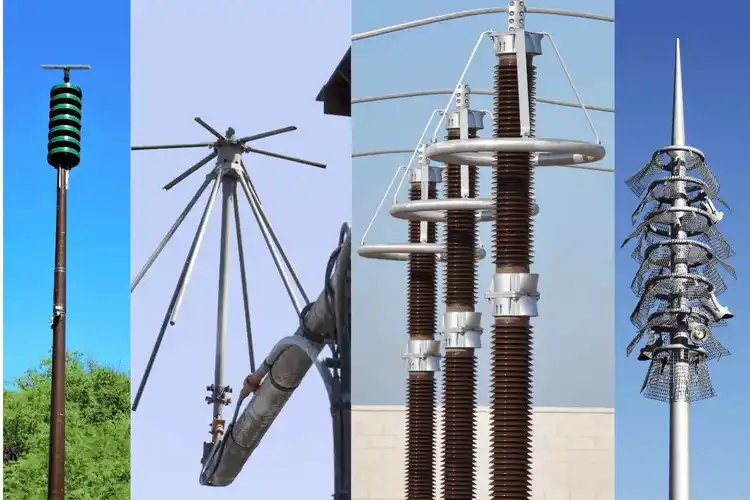
When lightning strikes in the sky and falls on the ground, it not only damages buildings but also damages electrical equipment. In such a situation, a lightning arrester acts as a protective shield. It is usually used on high-rise buildings, telephone towers, transformers, railway signalling systems, and power grids.
Many other names, such as lightning rod, thunder arrester, surge arrester, surge diverter, and lighting arrester, are also known by this name.
How Lightining Arrester Works
To understand the working of a lightning arrester, let us first look at the lightning arrestor image. It consists of a spark gap with one end connected in series with a nonlinear resistance, and the other end of the spark gap is connected to the equipment to be protected. The other end of the nonlinear resistance is a terminal of the arrester, which is solidly grounded.
The voltage-ampere graph of a non-linear resistance shows that as the voltage is increased, its resistance decreases and vice versa. In normal conditions, the electric resistance of the spark gap is very high due to non-linear resistance; hence, no electric current flows through the arrester. But at high voltage, the air insulation of the spark gap breaks down through an arc.
Then, a low-resistance path is created for this surge towards Earth. This excess charge in the line goes to ground through the arrester, and the equipment is saved from getting damaged. It is important to note that when a spark gap breakdown occurs, the system is short-circuited, due to which power flows in the arrester. But when the surge is over, the series resistance opposes the short circuit and stops the spark gap from conducting.
As soon as the surge ends, the arc must be stopped immediately, else the resistance installed in it may get damaged.
Why Are Lightning Arresters Important in Electrical Systems?
Power systems face a constant threat from weather uncertainties. A single lightning strike can carry millions of volts of electricity, easily overwhelming unprotected networks. Without proper defenses, this massive energy can destroy electrical infrastructure in milliseconds. Lightning arresters act as an essential shield for these critical systems. They intercept these massive electrical spikes and safely redirect them, proving indispensable for overall system reliability.
Protection Against High-Voltage Surges Caused by Lightning
When lightning strikes a power line, it causes a sudden, massive spike in voltage. This dangerous overvoltage travels rapidly through the network, aggressively seeking a path to ground. Lightning arresters provide vital surge protection by offering a deliberate, low-resistance path for this excess energy.
Instead of traveling through delicate wiring and sensitive electronics, the dangerous current flows directly into the grounding system. This rapid diversion stops the surge in its tracks before it can breach the main circuit. By controlling the voltage level, the arrester ensures that the internal electrical pressure never exceeds the system’s safe limit.
Prevention of Damage to Transformers and Substations
Transformers and substations form the backbone of any electrical distribution network. They are incredibly expensive, complex, and time-consuming to replace. A direct lightning hit or a severe voltage spike can cause catastrophic internal failures, melted insulation, or even fires in these units.
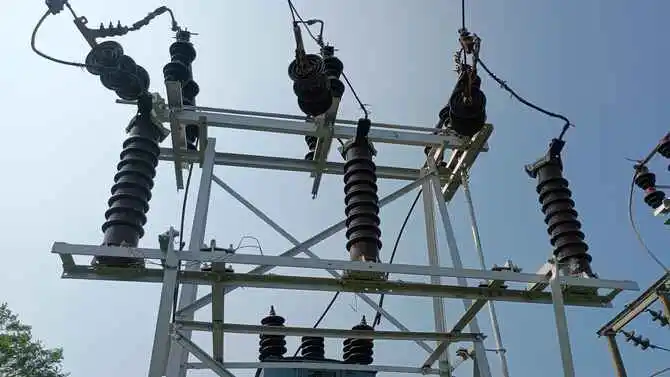
By strategically placing lightning arresters, engineers protect this high-value machinery from destruction. The arrester absorbs the brunt of the electrical assault, sparing the transformer’s fragile internal components. This proactive defense significantly improves equipment longevity. Ultimately, it saves utility companies millions of dollars in emergency replacement costs and severe structural repairs.
Ensuring Uninterrupted Power Supply and System Reliability
Power outages cause massive disruptions to homes, industrial plants, and critical care facilities such as hospitals. When a lightning strike knocks out a substation, entire communities can go dark for hours or even days. Lightning arresters maintain power grid stability by neutralizing these weather-related threats instantly.
Because they divert the shock so quickly, the protective breakers do not need to trip, and the rest of the electrical grid continues operating normally. This seamless defense mechanism ensures a steady, uninterrupted power supply. By preventing sudden blackouts, lightning arresters keep daily life and essential services running smoothly, regardless of severe storms overhead.
Applications of Lightning Arresters in Electrical Systems
Lightning arresters prevent sudden voltage surges in our electrical network from damaging valuable equipment. We rely on these devices across many different areas to keep electricity flowing without interruption. Let us look at where we use them most often to protect our daily power supply.
Use in Power Generation Plants
A power generation plant is where electricity is produced—something we rely on every day. These large facilities hold massive generators and highly sensitive control systems. A single lightning strike can easily cause millions of rupees in damage if the plant lacks proper defense. We use lightning arresters in these plants to catch dangerous voltage surges before they ever reach the core machinery.
The arresters connect directly to robust grounding systems. This smart setup safely pulls the extreme electrical charge away from the generators and deep into the earth. By doing this, they ensure the longevity of costly turbines and prevent complete shutdowns of the power plant.
Role in Transmission and Distribution Networks
After electricity leaves the plant, it travels across wide areas through overhead lines. These tall metal structures are easily struck by lightning during bad weather. Lightning arresters stand guard along the entire power grid to keep the current moving safely.
When a severe storm hits, these devices protect the transmission and distribution networks from sudden electrical spikes. They provide vital surge protection, keeping power flowing steadily to your town. If we did not have them, one strong lightning strike could cause massive regional blackouts. Instead, the arresters instantly isolate the fault and maintain grid stability, ensuring you do not lose power during a heavy storm.
Importance in Industrial and Residential Setups
The journey of electricity ends at your home or workplace. In industrial buildings, expensive heavy machinery needs clean, stable power to run safely. Lightning arresters protect this valuable factory equipment from severe weather damage, saving businesses from costly downtime.
In your home, they perform a similar and equally important job. They protect your televisions, computers, and kitchen appliances from sudden power spikes that can destroy internal circuits. More importantly, this vital part of your electrical infrastructure stops wall wires from overheating during a storm. By blocking these massive electrical surges, lightning arresters prevent serious fire hazards and keep your family safe.
What are the Different Types of Lightning Arresters
There are many types of lighting arresters, which are classified based on their use, structure, and functionality. Different types of overvoltage protector are used for protection:
- Rod Gap Arrester
- Horn Gap Arrester
- Sphere Gap Arrester
- Multiple Gap Arrester
- Metal Oxide Arrester
- Explulsion Type Arrester
- Electrolytic Arrester
- Valve Type Lightning Arrester
- Auto Valve Arrester
- Thyrite Arrester
- Oxide Film Arrester
- Impulse Protective Gap Arrester
Characteristic of Lightning Arrester
- No current should flow through it in the normal operating condition of the system. The spark overvoltage should always be higher than both normal and abnormal power frequencies.
- Any abnormal transient voltage above the breakdown value should be mitigated as quickly as possible to form a conducting path to ground.
- When a breakdown occurs, the lightning arrester must be able to immediately discharge the discharge current to earth without causing any damage.
- When the transient voltage drops below the breakdown rating, the power frequency current flowing through the arrester must stop immediately.
Which Locations are Lightning Arresters Used?
To protect equipment, lightning rod are usually located close to the equipment to be protected. There are two reasons for this. First, to prevent the high voltage surge from entering the protective equipment circuit.
Secondly, if the distance between the arrester and the protective device is significant, then after the sparkover, the sparkover voltage is also applied to the protective equipment, due to which a travelling wave enters the equipment and a fast leading wave is generated. Some common locations where arresters are commonly used for protection are:
- Lightning arresters should be installed near electrical equipment, such as transformers, circuit breakers, and switchgear. It effectively helps protect equipment from lightning storms.
- To protect a building or house, it is usually installed at the highest point of the building or structure so that it can catch the lightning first and discharge it safely into the ground.
- Lightning rod are also installed on power lines (high voltage transmission lines) to protect the line from excessive voltage falling on the line during a storm.
- It is always installed in open places to avoid significant hazards caused by lightning.
- Lightning arresters are installed with a strong grounding system so that the lightning current can be properly channelled into the ground, or the grounding does not fail during a lightning strike.
- If it is to be installed on a tower or pole, one has to ensure that it is located at the right height on the structure to attract lightning quickly.
- The arrester of correct rating must be selected according to the voltage and requirements of the power system so that it can be installed at the appropriate location.
Advantages of Lightning Arrester
There are many benefits to installing a surge arrester; let’s explore them in detail.
- A lighting arrester controls the effect of lightning. It prevents damage to both equipment and life.
- It also protects transformers, circuit breakers, switchgear, and other electrical equipment from high voltages, thereby maintaining both the efficiency and reliability of the system and increasing its life.
- A surge diverter also controls the voltage spikes (sudden voltage increase), which cause faults in the system. It provides stability to the system.
- Lightning arrester protects buildings, houses and other tall structures from damage. It safely channels the lightning that falls on it into the ground.
- It can be easily installed anywhere, and the installation process is relatively inexpensive. It fits easily into different types of systems.
- Arrester improves system downtime.
- It protects expensive equipment, thereby safeguarding property as well.
Disadvantages of Lightning Arrester
It is a common practice with numerous benefits, but it also has some disadvantages.
- The cost of high-quality lightning arrestor systems and their installation to protect specialized equipment becomes expensive.
- If done correctly, it requires the correct location, grounding, and equipment, which can sometimes get complicated.
- Lighting arresters only protect against lightning strikes. They do not protect against other electrical events such as short circuits, overloading or other types of voltage spikes.
- Installation of a lightning arrestor requires additional structural changes to the roof, tower or pole, which can be difficult or expensive.
- Lightning arresters lose efficiency after experiencing repeated lightning events.
- Some metals used in lightning arrestors corrode or rust over time, impacting their functionality.
Difference Between Lightning Arrester and Surge Arrester
| Lightning Arrester | Surge Arrester |
| Lightning arrester mainly functions to conduct the lightning safely into the ground, so that buildings, structures, and electrical equipment remain safe. | Surge arrester mainly controls high voltage surges (excess voltage) that suddenly occur in the power system, usually caused by appliances or transmission lines. |
| It is commonly used on the top of homes, buildings, towers or other structures to protect by discharging lightning to the ground. | It is done to protect electrical equipment or electronic systems, such as transformers, power lines, or other locations where voltage surges may occur. |
| It is mainly used to control the highest level of voltage shock. | It is used to deal with small voltage surges and serves as a general protection for electrical equipment. |
| It gives fast response at very high voltages | It gives a fast response at very high voltages |
| It is suitable for lightning stroke | It is suitable for transient overvoltages such as switching, insulation failure, and other surges. |
Conclusion
A lightning arrestor is a crucial safety device that protects against lightning hazards. It not only protects structures and electrical equipment from damage but also protects lives. It safely discharges the generated high voltage into the ground, minimizing the chances of damage during a lightning storm. The installation of a lightning arrester not only ensures the stability of the power system but also ensures the long-term functionality of the equipment. Therefore, it has become an essential device for modern safety systems, preventing large-scale damage and keeping the power system safe.
FAQ:
-
Which Type of Lighting Arrester used in Substation
Gas-insulated lightning arresters (GIS) and solid-state thunder arresters are commonly used in substations. These protect against both high voltages and surges. Gas-insulated lightning arrestors are more effective, while solid-state arresters are used in smaller equipment and transformers.
-
What is the Purpose of Lightning Arrester
Lightning arrester protects electrical equipment and buildings from high voltages caused by lightning. It conducts lightning safely to the ground during a storm without causing harm.
-
What is the Resistance of Lightning Arrester
Lightning arresters have very low resistance so that they can discharge lightning quickly and safely into the earth.
-
What is the Range of Lightning Arrester
The range of a lightning arrester depends on its application. For residential systems, it typically protects up to 1 kV, while industrial systems range between 1 kV and 36 kV. High-voltage arresters for power grids can handle over 36 kV, reaching up to 800 kV or more.

I am an electrical engineer and also a blogger. I write informative blog posts on topics related to electrical and electronics engineering. If you are interested in these topics, you are welcome to my site to read these articles.