
Where Circuit Breaker are Located
Electricity powers everything we do, enabling our modern lifestyles, industries, and critical infrastructure. But with this immense power comes significant responsibility—especially when it comes to ensuring the safety and reliability of the entire electrical system. One of the most vital safety devices in every electrical network is the circuit breaker. These automatic switching devices are not just found in home breaker boxes but are strategically deployed across the electrical grid, from homes to the largest power substations.
Understanding where circuit breakers are located and why they are placed in such spots is crucial for grasping how our power infrastructure remains protected from faults like overloads, short circuits, and unforeseen equipment failures. In this comprehensive guide, we’ll take a deep dive into the many environments where circuit breakers operate, explore the philosophy behind their placement, and explain their indispensable role in power system protection.
The Principle of Circuit Breaker Placement
The placement of a circuit breaker is never random; it is the result of careful engineering analysis and risk assessment. Electrical engineers aim for maximum safety and reliability with minimal disruption to the power supply, even during faults.
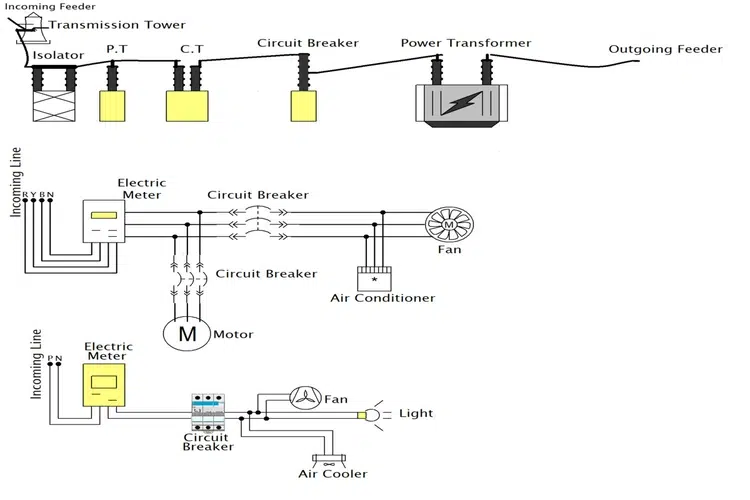
The primary purpose of these devices is to detect dangerous currents and isolate the affected section of the network as close to the source as possible. This approach, known as “selective coordination” or “protection selectivity,” ensures that a problem in one area does not cause a cascading failure across the grid.
Several factors influence circuit breaker location:
- Voltage Level: Higher voltage systems require more robust protection devices strategically placed at key transition points.
- Load Type and Sensitivity: Areas with sensitive or expensive equipment (like data centres or hospitals) often have additional breakers or specialised protection schemes.
- Maintenance Needs: Easily accessible breaker locations improve the safety and efficiency of repair and upgrade work.
- Regulatory Compliance: National Electric Code (NEC) and International Electrotechnical Commission (IEC) standards guide placement to ensure public safety.
By understanding these principles, we gain insight into why circuit breakers are found at every critical junction—protecting circuits, feeders, and equipment both upstream and downstream.
Why Strategic Circuit Breaker Placement is Essential
Electricity is a powerful force that demands absolute control. When a power surge or short circuit strikes, you do not want your entire facility or neighbourhood to go dark.
You want the system to stop the danger immediately while keeping everything else running smoothly. This level of precise control depends entirely on one critical engineering decision: where we physically install our safety devices.
Circuit breaker placement is never a random choice. Engineers spend countless hours calculating the exact locations for these devices to maximise safety and efficiency. A poorly placed breaker can allow dangerous electrical currents to travel too far, melting wires and sparking fires. Conversely, a perfectly positioned breaker acts as a vigilant guard, stopping hazards before they spread.
Securing Electrical Grid Reliability
We rely on a constant, uninterrupted flow of electricity to power our homes, businesses, and hospitals. Achieving long-term electrical grid reliability requires a layered defence system. Engineers achieve this by placing circuit breakers at specific intersections where power lines divide and distribute energy.
When electricity travels from a massive power plant to your local neighbourhood, it passes through several distribution points. If an engineer places a circuit breaker too far upstream from a potential hazard, a single fallen tree could knock out power to thousands of homes. By placing breakers closer to individual neighbourhoods or specific streets, utilities can localise the damage.
This strategic positioning prevents cascading failures across the network. If a fault occurs on one street, the local breaker trips, leaving the rest of the city completely unaffected. This geographic distribution of breakers ensures that the broader grid remains stable, even when localised accidents happen.
Enabling Rapid Fault Isolation
The core goal of any electrical safety system is immediate fault isolation. When a short circuit happens, the system must quarantine the massive spike in electrical current instantly. Proper circuit breaker placement makes this rapid quarantine possible by minimising the distance the fault current can travel.
Imagine a busy manufacturing plant operating dozens of heavy-duty machines. If one motor suddenly shorts out, the resulting power surge is violently destructive. If the closest circuit breaker sits at the main facility entrance, the fault current will travel through the entire factory wiring to reach it. This creates a massive risk of fire and collateral damage.
However, if engineers install a dedicated breaker directly next to that specific motor, the outcome changes completely. The local breaker detects the dangerous spike and physically breaks the circuit in a fraction of a second. The hazard is isolated to a single machine, allowing the rest of the factory floor to continue operating safely.
Prioritizing Equipment Safeguarding
Industrial power systems contain incredibly expensive assets. High-voltage transformers, massive induction motors, and complex automated production lines cost millions of dollars to build and maintain. Protecting these investments requires rigorous equipment safeguarding strategies.
Circuit breakers serve as the primary physical shield for these sensitive machines. Engineers purposefully install breakers immediately before the power enters a valuable piece of equipment. They also place breakers immediately after the equipment to monitor the outgoing current. This dual-placement strategy creates a protective bubble around the machinery.
If a massive lightning strike hits the external power lines, the upstream breaker trips before the surge can destroy the transformer. If the machine itself malfunctions and draws too much power, the local breaker cuts the feed before the motor burns itself out. By placing breakers right at the connection points of high-value assets, facilities avoid catastrophic hardware failures and devastating repair bills.
The Science of Selective Coordination
To maintain a smooth flow of electricity, safety systems must act intelligently. This brings us to the engineering principle of selective coordination. This concept dictates that when a fault occurs, only the circuit breaker physically closest to the problem should trip.
Electrical networks operate in a hierarchy. You have a main breaker that feeds several smaller branch breakers, which in turn feed individual outlets or machines. If you plug a faulty appliance into a wall outlet, you want the specific breaker for that room to trip. You certainly do not want the main breaker for the entire building to shut down.
Engineers achieve selective coordination through careful placement and precise calibration of trip settings. They calculate the resistance of the wires and the exact distance between each breaker in the chain. By spacing them correctly and adjusting their sensitivity, they guarantee that local problems trigger only local shutdowns. This strategic alignment drastically reduces the scope of power outages and makes troubleshooting much faster.
Areas Where Circuit Breaker are Located
To ensure comprehensive electrical safety, circuit breakers are not placed arbitrarily. Their locations are strategically chosen based on the environment they protect. From the panel in your garage to the massive switches in a power grid, each placement serves a specific purpose in managing power distribution and enabling immediate fault isolation. Let’s explore where these essential protective devices are located across four distinct settings.
Circuit Breaker Located in Electrical Substations
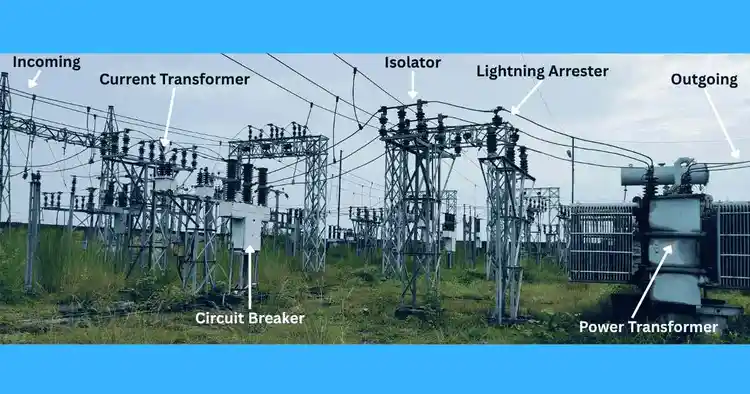
Substations are the critical junctions of the high-voltage electrical grid. Here, massive circuit breakers are positioned to manage the flow of power and protect the most expensive assets in the entire system, like power transformers. The location and type of breaker depend on the substation’s design.
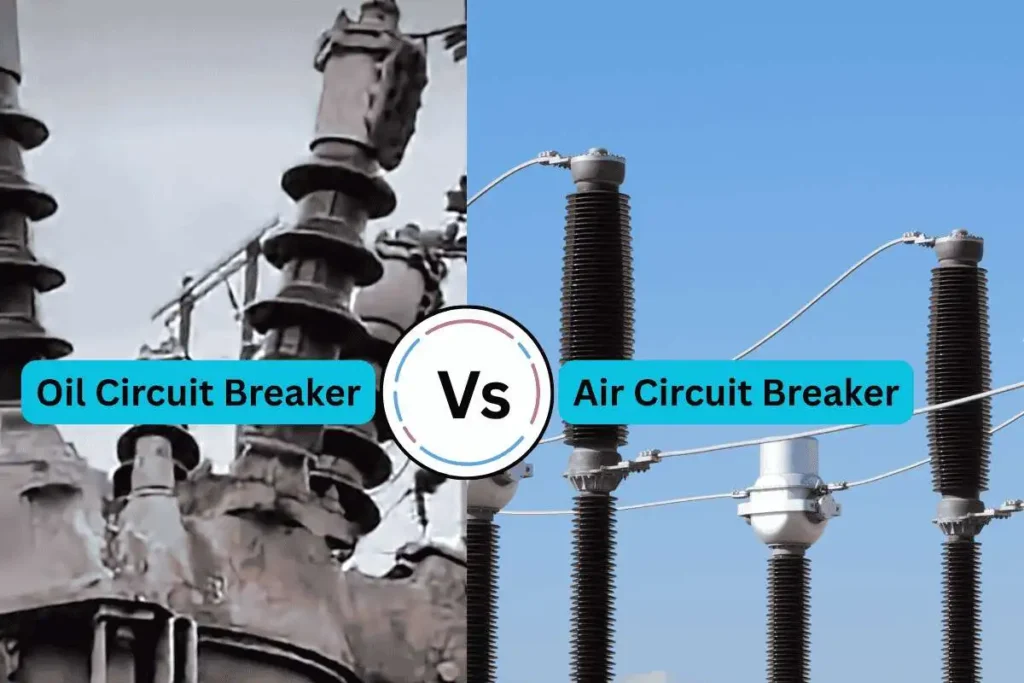
- Outdoor Switchyards: In these common, open-air substations, you will see large circuit breakers mounted on concrete pads or steel structures. These breakers, often using SF6 gas or a vacuum to extinguish arcs, are placed strategically. You will find them at the point where high-voltage transmission lines enter the yard and right before and after power transformers. This ensures a transformer can be completely isolated from both incoming surges and downstream faults on feeder circuits.
- Indoor Substations: In dense urban areas where space is limited and weather is a concern, utilities build indoor substations. Here, the breakers are part of a Gas-Insulated Switchgear (GIS) system. The breakers and other components are enclosed within sealed, grounded metal pipes filled with insulating SF6 gas. This compact design allows for safe, reliable power distribution in a much smaller footprint, with breakers performing the same crucial protective roles as their outdoor counterparts.
Key Locations for Maximum Protection
While circuit breakers are found throughout our electrical infrastructure, certain locations are more critical than others for ensuring safety and reliability. Engineers strategically place these protective devices at key junctions to stop faults at their source and shield the most valuable components of the power system. This precise positioning is fundamental to maintaining grid stability.
Let’s explore two of the most vital locations where circuit breakers are installed for maximum protection.
Protecting Feeder Circuits
A feeder circuit is an essential power line that distributes electricity from a substation to a local area, such as a neighbourhood or an industrial park. Placing a circuit breaker at the very beginning of each feeder circuit is a cornerstone of modern power system design. This placement serves one primary function: rapid and effective fault isolation.
When a fault occurs somewhere along the feeder line—perhaps due to a fallen tree branch or a vehicle collision with a utility pole—a massive surge of current is created. The breaker at the head of that specific feeder immediately detects this anomaly and trips, instantly cutting off power to that line only. This action achieves several critical goals:
- It contains the problem in a small, manageable geographical area.
- It prevents the fault current from travelling back into the substation, where it could damage more sensitive equipment.
- It keeps the rest of the electrical grid operational, ensuring that an isolated incident does not cause a widespread outage.
This strategic placement enhances power system reliability by creating a segmented, defensible grid. It allows utility crews to safely identify and repair the localised problem without impacting customers on other feeder circuits.
Safeguarding Power Transformers
Transformers are among the most expensive and vital assets in any power distribution network. They step the voltage up or down for efficient transmission and safe use. Protecting these high-value assets from damage is a top priority, and circuit breakers are the primary tool for this equipment safeguarding.
To provide complete protection, engineers install circuit breakers on both sides of a power transformer. This creates a dual-layered defence system.
- Upstream Protection (Primary Side): A breaker is placed on the high-voltage side, between the incoming transmission line and the transformer. Its job is to provide surge protection, shielding the transformer from external threats like lightning strikes or faults occurring further up the grid. If a dangerous voltage spike travels down the line, this breaker trips to disconnect the transformer before the surge can cause catastrophic damage to its internal windings.
- Downstream Protection (Secondary Side): Another breaker is installed on the low-voltage side, between the transformer and the outgoing distribution network. This breaker protects the transformer from faults that occur downstream, such as a short circuit on a local feeder line. If a fault on the distribution side draws an excessive amount of current, this secondary breaker trips. This action prevents the transformer from overheating and failing while trying to supply the uncontrolled current demand.
Circuit Breaker Located in Industrial Facilities
Industrial environments such as factories, data centres, and processing plants consume enormous amounts of electricity. The machinery here is powerful, expensive, and critical to operations. As such, the protective devices must be equally robust. In these settings, circuit breakers are housed in fortified enclosures known as switchgear.
These large metal cabinets are often located in dedicated, climate-controlled switchgear rooms to protect them from dust, moisture, and temperature fluctuations. Inside, you find heavy-duty circuit breakers like Air Circuit Breakers (ACBs) and Moulded Case Circuit Breakers (MCCs) that can handle extremely high currents.
Another key location is the Motor Control Centre (MCC). An MCC is a specialised assembly of breakers and starters designed specifically to protect and control large electric motors. By placing a dedicated breaker right at the motor connection, facilities ensure that a fault in a single piece of machinery is instantly contained, safeguarding both the equipment and the facility’s main power supply.
Circuit Breaker Located in Commercial Buildings
Commercial buildings like office towers, shopping malls, and hospitals have much more complex electrical needs than a typical home. Power is managed through a hierarchical system of switchboards and panels to ensure reliable distribution across multiple floors and specialised areas.
The system starts at the main switchboard, usually located in a dedicated electrical room in the basement or on the ground floor. This large-scale assembly receives the high-capacity feed from the utility and divides it among various sections of the building. From here, heavy-duty cables known as “risers” carry power vertically to each floor.
On every floor, you will find one or more electrical closets containing panelboards. These are similar to a residential breaker box but larger. They take the power from the main switchboard and distribute it to the lights, outlets, and equipment on that specific level.
This compartmentalised approach is crucial for both maintenance and fault isolation, as an electrical issue on one floor will not disrupt operations throughout the rest of the building.
Circuit Breaker Located in Home and Apartment
In any house or apartment, all electrical power flows through a central command centre known as the main distribution panel, or more commonly, the breaker box. This metal cabinet is the heart of your home’s electrical system.
You can typically find the distribution panel in an out-of-the-way but accessible location. Common placements include:
- Basements
- Garages
- Utility closets or rooms
- Exterior walls, particularly in warmer climates
Inside this panel, you will find two types of breakers working together. The main circuit breaker is the large, primary switch usually located at the top or bottom of the panel. It controls all the electricity entering your home from the utility line. In an emergency, switching this one breaker off cuts power to the entire house.
Below the main breaker are numerous smaller branch circuit breakers. Each of these controls a specific circuit within your home, such as the outlets in a bedroom, the kitchen lights, or a major appliance like a water heater. This setup ensures that if a single circuit overloads, only that specific branch loses power, leaving the rest of the house unaffected.
Conclusion
In conclusion, the strategic placement of circuit breakers is crucial for maintaining both the safety and reliability of our electrical systems. By positioning breakers at key locations such as feeder circuits and transformers, engineers are able to localize faults, protect vital equipment, and prevent widespread outages. This thoughtful approach not only safeguards valuable infrastructure but also ensures ongoing grid stability, keeping power flowing reliably to homes, businesses, and essential services.
FAQ
-
Where are circuit breakers typically located in residential homes?
Circuit breakers are usually found in the main distribution panel, often located in basements, garages, utility rooms, or on exterior walls.
-
Why are circuit breakers placed at the start of feeder circuits?
Breakers at the start of feeder circuits isolate faults in specific areas, preventing damage to the substation and maintaining grid stability.
-
How do circuit breakers protect transformers?
Breakers are placed on both the primary and secondary sides of transformers to shield them from surges and downstream faults.
-
How does strategic breaker placement enhance electrical safety?
Proper placement ensures rapid fault isolation, protects expensive equipment, and minimizes the impact of electrical failures on the broader system.

I am an electrical engineer and also a blogger. I write informative blog posts on topics related to electrical and electronics engineering. If you are interested in these topics, you are welcome to my site to read these articles.

An intriguing discussion is worth comment. I think that you ought to write more about this topic, it
might not be a taboo subject but usually folks don’t talk about these topics.
To the next! Cheers!!
Hmm is anyone else experiencing problems with the images on this blog
loading? I’m trying to find out if its a problem on my end or
if it’s the blog. Any responses would be greatly appreciated.