What are the Main Parts of Transformer and Its Function
Electricity powers almost every aspect of modern life, but getting that power from a generation station to your home safely requires a critical piece of equipment: the transformer. These static devices are the unsung heroes of the electrical power grid, responsible for stepping voltage levels up for efficient long-distance transmission line or stepping them down for safe domestic use. Without transformers, our electrical distribution systems would be inefficient and incredibly dangerous.
However, a transformer isn’t just a single block of metal; it is a complex assembly of specialized components working in harmony. For engineers, technicians, and students alike, understanding the internal architecture is essential for troubleshooting, maintenance, and efficient operation. If you are looking to deepen your technical knowledge, what are the main parts of a transformer and its function within the larger electrical network? This guide breaks down the anatomy of this vital machine to explain exactly how each component contributes to keeping the lights on.
Why Understanding the Parts and Its Functions
While a transformer might seem like a simple, static box from the outside, its interior is a sophisticated system of interconnected components. Understanding how these parts function is crucial for anyone working with electrical systems.

This knowledge is not just academic; it has practical importance for safety, efficiency, and longevity. Proper maintenance and effective troubleshooting are impossible without a solid grasp of what each component does and how it interacts with others.
Knowing the purpose of each element allows technicians to diagnose issues accurately, from overheating to voltage irregularities, preventing minor faults from becoming catastrophic failures.
Furthermore, we will delve deeper into the internal parts of a transformer, including the insulating oil, bushings, and cooling systems, to provide a complete picture of their individual roles and collective importance in ensuring reliable power distribution.
Main Parts of a Transformer and Their Function
Transformer Core
At the very heart of a transformer lies its core, an essential component for its operation. The primary function of the core is to provide a highly efficient, low-reluctance path for the magnetic flux generated by the primary winding to link with the secondary winding.
This concentration of the magnetic field ensures that nearly all the magnetic energy is transferred between the two sets of windings, which is the basis of the transformer’s ability to step up or step down voltage levels.
Without an effective core, the magnetic flux would dissipate into the surrounding air, drastically reducing the transformer’s efficiency and making it practically useless. As one of the most fundamental internal parts of a transformer, its design and material composition are critical to overall performance.
The material used for the core is carefully selected to maximize efficiency and minimize energy losses.
- Material: The core is typically constructed from high-grade silicon steel. This alloy is chosen for its high magnetic permeability, which enables it to support the formation of a magnetic field readily.
- Lamination: Instead of being a solid block of steel, the core is made of thin, stacked layers called laminations. This laminated construction is vital for reducing energy losses caused by “eddy currents.
Transformer Windings
If the core is the heart of the transformer, then the windings are its arteries and veins, responsible for the actual transfer of electrical energy. Wrapped around the core’s limbs, these coils of conductive wire are where the magic of electromagnetic induction happens.
When alternating current flows through the primary winding, it creates a fluctuating magnetic field in the core. This field then induces a voltage in the secondary winding, completing the energy transfer.
As the components that directly handle the electricity, the windings are considered the most active parts of a transformer. Their design, materials, and insulation are critical for handling electrical loads and thermal stress, making them among the most important parts of a transformer to understand for performance and safety.
- Primary Winding: This is the “input” coil. It is connected to the electrical Alternating current power source and generates magnetic flux in the core when energized.
- Secondary Winding: This is the “output” coil. It is connected to the electrical load. In a step-up transformer, the secondary winding has more turns than the primary, resulting in a higher output voltage. Conversely, in a step-down transformer, the secondary winding has fewer turns than the primary, resulting in a lower output voltage. This turn ratio is the principle that allows transformers to change voltage levels.
Insulation
While the core and windings handle the flow of power, insulation is the silent guardian that keeps everything contained and safe. Its primary function is to separate conducting parts from each other and from the grounded core and tank, ensuring the electricity flows only through its intended path.
Because they directly dictate the unit’s lifespan and reliability, insulation systems are considered important parts of transformer architecture that require careful selection and maintenance.
Without proper electrical insulation, the high voltages present in a transformer would jump across gaps, causing arcs and failures. Dielectric materials are essential components of transformer construction, providing the necessary barrier to maintain transformer safety.
Common types of insulation materials include:
- Insulating Oil: Acts as both a coolant and a liquid insulator, filling the tank to suppress arcs and dissipate heat.
- Paper and Pressboard: Made from high-quality cellulose, these are wrapped around conductors and used as spacers between windings.
- Wood and Laminates: Often used for structural support and spacing within the transformer tank due to their insulating properties.
- Varnish: Used to coat the core laminations and sometimes the windings to improve dielectric strength and reduce moisture absorption.
Transformer Oil
In a transformer, the transformer oil acts as the lifeblood. It is a highly refined mineral oil that fills the transformer tank, surrounding the core and windings.
This fluid serves a dual purpose: it acts as a liquid insulator and a coolant. Because it simultaneously prevents electrical arcs and dissipates the intense heat generated during operation, oil is considered one of the most important parts of transformer functionality.
While often overlooked compared to the solid metal components, it is just as critical as the other basic parts of transformer design for ensuring reliable power distribution.
Here is why maintaining high oil quality is non-negotiable:
- Oil Insulation: It permeates the paper insulation and fills gaps between components, providing a dielectric barrier stronger than air that prevents short circuits.
- Thermal Management: As the transformer operates, the core and windings generate heat. The oil absorbs this heat and circulates it to the cooling fins or radiators, keeping the internal temperature within safe limits.
- Arc Suppression: In the event of a minor fault or spark, the oil quickly quenches the arc, preventing extensive damage to the internal structure.
- Diagnostic Tool: The condition of the oil can tell technicians a lot about the transformer’s health. Dissolved Gas Analysis (DGA) of the oil can reveal overheating or arcing issues before they cause a failure.
Breather
The breather protects the transformer oil from external impurities. As the transformer operates, the oil inside expands and contracts with temperature changes, causing air to flow in and out of the conservator tank. This process is like the transformer “breathing.”
However, atmospheric air contains moisture, which is the enemy of insulation. The breather acts as a specialized filter, ensuring that only dry, clean air enters the system. Because it serves as the first line of defense against humidity, the breather is one of the most essential parts of transformer maintenance and reliability.
Visible on the exterior of the tank, it is one of the transformer’s key external parts that technicians regularly inspect. Here is how the breather functions to maintain optimal conditions:
- Moisture Control: The breather is typically filled with silica gel, a desiccant that absorbs moisture from the incoming air. As air passes through the gel, humidity is trapped, ensuring only dry air reaches the oil.
- Silica Gel Breather Indicator: The silica gel often changes color (e.g., from blue to pink or orange to green) when it becomes saturated with moisture, providing a clear visual signal to technicians that it needs to be replaced or dehydrated.
- Air Filtration: In addition to drying the air, many breathers include an oil cup at the bottom. This traps dust, debris, and other solid particles, filtering the air before it even reaches the desiccant.
Transformer Bushings
When you look at a transformer, the prominent ceramic or composite structures protruding from the top or sides are the bushings. These are not just simple connectors; they serve a critical dual purpose. Their primary function is to provide a safe path for the current to flow from the internal windings to the external power network, all while insulating the live conductor from the grounded metal tank.
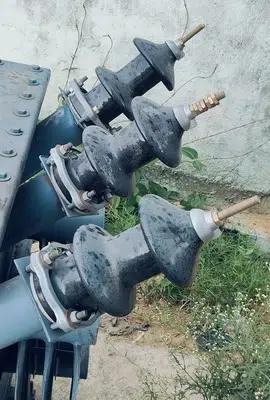
As one of the most visible components of transformer construction, bushings serve as the interface between the high-voltage interior and the outside world. Without them, the energized conductor would short-circuit against the tank, causing immediate failure.
Because they serve as the bridge for incoming and outgoing power, they are considered fundamental parts of transformer design that require precise engineering. Here is why bushings are indispensable for transformer safety and operation:
- Electrical Insulation: The bushing serves as an insulating sleeve, ensuring that high-voltage current flows only through the central conductor and does not jump to the grounded transformer tank.
- Mechanical Support: They provide rigid physical support for high-voltage terminals, holding the heavy external cables or busbars securely in place against wind and magnetic forces.
- Environmental Protection: Bushings are made from robust dielectric materials such as porcelain or silicone rubber to withstand harsh weather conditions, UV radiation, and pollution without tracking or flashing.
- Sealing: They play a vital role in sealing the transformer tank, preventing oil from leaking out and preventing moisture or air from entering at the connection points.
Tap Changer
In the dynamic world of power distribution system, voltage levels rarely stay constant. Fluctuations in load demand or changes in the input supply can cause the output voltage to drift away from the desired level. This is where the tap changer steps in as the transformer’s gearbox.
Its primary function is to regulate the output voltage by changing the number of active turns in one of the windings, effectively altering the turn ratio. Because it allows the transformer to adapt to changing conditions without interrupting the power supply (in many cases), the tap changer is one of the most sophisticated internal parts of transformer design.
It ensures that the voltage delivered to homes and industries remains stable, making it an important part of transformer operation for grid stability. Here is why the tap changer is vital for transformer efficiency and performance:
- Voltage Regulation: The core purpose of the tap changer is to maintain a steady output voltage despite variations in the input supply or load. It does this by “tapping” into different points of the winding to add or remove turns.
- Load Adjustment: As demand on the grid increases (peak hours) or decreases (nighttime), the voltage can drop or rise. The tap changer compensates for these swings, ensuring load adjustment is handled smoothly.
Types of Operation:
- Off-Circuit Tap Changer: This type requires the transformer to be de-energized before changing taps. It is used for seasonal adjustments where frequent changes aren’t needed.
- On-Load Tap Changer (OLTC): This more advanced version can change taps while the transformer is energized and carrying load. It is essential for networks that require constant, real-time voltage correction.
Cooling Tubes or Radiators
The job of the cooling tubes or radiators is to dissipate heat. These structures, typically a bank of fins attached to the main tank, serve as the transformer’s heat exchanger. The hot oil from inside the tank rises and flows into the radiators, where the large surface area allows the heat to transfer to the surrounding air.
As one of the most visible external components, they are a direct reflection of the health of the transformer’s internal components; if the internal components are overheating, the radiators work harder. Their role in thermal management makes them important parts of transformer design and maintenance.
Transformer Tank or Oil Tank
The transformer tank is the main external structure that houses the core, windings, and insulating oil. While it may look like a simple steel box, it performs multiple critical functions essential to the safe and reliable operation of the transformer.
Its primary role is to serve as a protective enclosure, shielding the delicate internal components from external factors such as rain, dust, and physical impact. It also serves as the container for the insulating oil and provides the structural support for mounting many other components, such as the bushings, radiators, and conservator.
Because it protects and supports nearly all parts of a transformer, the tank is one of the most important components for ensuring overall integrity and longevity. Here’s why the transformer tank is so important:
- Protective Enclosure: The tank’s robust construction safeguards the active internal components from mechanical damage, adverse weather conditions, and unauthorized access, ensuring the transformer operates reliably in various environments.
- Oil Containment: It is designed as a completely sealed vessel for insulating oil. This ensures proper oil containment, preventing leaks that could lead to environmental hazards and catastrophic equipment failure.
- Structural Support: The tank serves as the main frame to which other essential components are attached. Radiators, bushings, the breather, and monitoring devices are all mounted directly onto the tank, making it the backbone of the entire assembly.
- Heat Dissipation: While radiators are the primary cooling surfaces, the tank’s surface area also contributes to dissipating heat from the oil into the surrounding atmosphere, supporting thermal management.
Explosion Vent
In the event of a severe internal fault within a transformer, such as a major short circuit, the immense energy released can vaporize the surrounding oil almost instantly. This vaporization causes an enormous, rapid increase in internal pressure within the sealed tank.
The explosion vent is a critical safety mechanism that prevents a catastrophic rupture of the transformer tank under such extreme conditions. Its sole function is to provide an emergency pressure relief path. Quickly and safely expelling high-pressure gas and oil protects all internal transformer parts from the destructive force of an explosion.
This makes it one of the most important parts of a transformer for fault management and personnel safety. Here’s a breakdown of its crucial role:
- Emergency Pressure Relief: The vent is essentially a safety valve with a diaphragm or breakable seal that ruptures at a specific, predetermined pressure level. This level is well below the pressure that would cause the main tank to fail.
- Preventing Catastrophic Failure: Without an explosion vent, the rapidly rising pressure could cause the transformer tank to rupture violently, sending sharp metal fragments and hot oil flying over a wide area and posing a significant risk to people and surrounding equipment.
- Directing the Discharge: The vent is typically located on the top of the transformer and is often equipped with a pipe angled upwards and away from the main equipment. This design safely directs the explosive release of oil and gas away from other critical infrastructure and personnel pathways.
- Fault Indication: The activation of an explosion vent is a clear, undeniable sign of a severe internal fault, indicating the immediate need to de-energize the transformer and conduct a thorough internal inspection.
Buchholz Relay
The Buchholz relay is a sophisticated and highly sensitive protection mechanism exclusive to oil-filled transformers with a conservator tank. Located in the pipe connecting the main tank to the conservator, this gas-actuated device acts as a vigilant watchdog, providing early warning for a wide range of developing faults.
Its primary function is to detect faults by sensing the effects of dielectric faults within the equipment. Because it can detect minor issues like slow gas accumulation from insulation overheating, as well as major faults like short circuits, it is considered one of the most important parts of a transformer for preventing catastrophic failure.
This relay provides a crucial layer of transformer safety by monitoring all internal components for signs of distress. It typically operates in two stages:
- Alarm Stage: If a minor fault occurs, gas bubbles are generated slowly and accumulate in the relay’s upper chamber. This triggers a float switch, which activates an alarm, alerting operators to a potential issue long before it becomes critical.
- Trip Stage: In the case of a severe fault, a rapid surge of oil and gas rushes from the main tank toward the conservator. This powerful flow activates a second, lower float switch, which immediately sends a signal to trip the circuit breaker, disconnecting the transformer from the power supply to prevent major damage.
Oil Conservator
Perched atop the main tank like a small reservoir, the oil conservator plays a vital role in managing the transformer’s lifeblood—its insulating oil. As the transformer operates, the oil temperature fluctuates with the electrical load and ambient conditions.
When the oil heats up, it expands; when it cools, it contracts. The conservator tank provides the necessary space for this oil expansion and contraction without exposing the main tank to dangerous pressure build-up or vacuums.
Because it is one of the most distinct outer parts of transformer anatomy, it serves as a critical interface between the internal oil and the external environment.
The conservator is a fundamental componentof transformer design, ensuring long-term reliability and safety. Its functions are essential for transformer maintenance and operation:
- Oil Expansion Management: It acts as a buffer zone, allowing the oil level to rise and fall freely as the temperature changes, keeping the main tank full at all times.
- Moisture Prevention: By reducing the surface area of oil exposed to air (often via a rubber bladder or diaphragm), it minimizes the risk of oxidation and moisture absorption, preserving the oil’s insulating properties.
- Oil Level Monitoring: The conservator is typically equipped with a magnetic oil gauge that provides a clear visual indication of the oil level. This allows technicians to easily check if the system has enough fluid or if there is a leak.
- Sediment Collection: It also provides a space for sludge and impurities to settle to the bottom, preventing them from circulating back into the transformer’s main active parts.
Winding Taps
Winding taps are specific connection points along a transformer’s winding that allow fine-tuning of its performance. Their primary function is to adjust the voltage by altering the number of turns in the winding, thereby changing the transformer’s turn ratio.
By selecting different taps, operators can slightly increase or decrease the output voltage to match grid requirements or compensate for voltage drops under load. These connection points are fundamental internal parts of transformer design that provide crucial operational flexibility.
While the core and windings form the basic structure, taps are essential components of transformer operation, ensuring efficiency and grid stability. They are the mechanism that allows a tap changer to perform its function.
Here’s why they are important for load regulation:
- Voltage Control: Taps provide the physical means to adjust the turn ratio, enabling utilities to control the voltage supplied to consumers precisely.
- Flexibility: They allow a single transformer to be adapted to slightly different voltage conditions without replacing the entire unit.
- Integration with Tap Changers: Winding taps are the points at which an on-load or off-load tap changer physically connects. The tap changer is the device that moves between these taps, but the taps themselves are the pre-engineered points on the winding that enable this adjustment.
Conclusion
In summary, a transformer is far more than just a core and windings. Each component, from the visible bushings and radiators to the hidden internal parts of a transformer, like the tap changer, plays a specific and crucial role. Understanding these important parts of a transformer reveals a complex system designed for safety, durability, and performance.
The seamless integration of protective devices, such as the Buchholz relay, with functional elements, such as the conservator tank, ensures the efficient operation of the entire unit. Ultimately, the careful design and maintenance of every part are what guarantee overall transformer reliability and the stable power distribution we depend on daily.
FAQ
What are the Main Parts of an Auto Transformer?
The primary auto-transformer parts include a laminated magnetic core, a single continuous winding that serves as both the primary and secondary, and the terminals for input and output connections. This shared-winding design distinguishes it from isolation transformers.
What are the Main Parts of a Distribution Transformer?
The primary distribution transformer parts include the magnetic core, primary and secondary windings, insulation materials, the tank, bushings, and the cooling oil. Each component works in unison to ensure safe and efficient energy delivery.
What are the Main Parts of a Power Transformer
The main parts of a power transformer include the core, which provides a path for magnetic flux; windings (primary and secondary) for voltage transformation; insulation to prevent electrical faults; bushings for safe conductor entry/exit; and a cooling system (like oil or radiators) to manage heat.
What are the Main Parts of a Current Transformer
The most important components of a current transformer include a primary winding (which can be a single conductor passing through the center), a toroidal magnetic core, a multi-turn secondary winding, and robust insulation. These components work together to step down high currents to a safe, measurable level for monitoring and protection equipment.
What are the Main Parts of a Potential Transformer
The main components of a potential transformer include a high-turn primary winding connected to the high-voltage line, a low-turn secondary winding connected to meters, and a magnetic core that facilitates induction. High-quality insulation is also one of the most important components of potential transformer design, preventing electrical breakdown under high voltage stress while ensuring accurate voltage measurement.
What are the Main Parts of Transformer
(i) Core
(ii) Windings
(iii) Insulation
(iv) Bushings
(v) Cooling System
(vi) Tap Changer
(vii) Tank
(viii) Oil Conservator
(ix) Explosion Vent
(x) Buchholz Relay

I am an electrical engineer and also a blogger. I write informative blog posts on topics related to electrical and electronics engineering. If you are interested in these topics, you are welcome to my site to read these articles.