Different Types of Circuit Breakers and Their Uses
Circuit breaker is one of the most reliable protectors of our electrical system. It not only protects the expensive appliances in our home but also prevents major and dangerous accidents like fire in big power grid substations and industries. A circuit breaker maintains the current flowing through a circuit within a safe limit; when the current exceeds this safety threshold, it intelligently and immediately cuts off the power supply, thereby keeping everything safe.
But did you know that the same type of circuit breaker is not used everywhere? Different types of circuit breakers are designed for your home, large factories, and high-voltage transmission lines. In this blog post, we will explore “Different Types of Circuit Breakers” in detail, so that you can easily understand which breaker is used where and why.
What is Circuit Breaker?
A circuit breaker operates automatically to stop damage to electrical circuits from overcurrent, short circuits, or overloads. It is mainly used to interrupt the flow of current when a fault is detected. While a fuse must be replaced every time to ensure circuit protection, a circuit breaker can be repeatedly switched on or off without needing to be replaced.
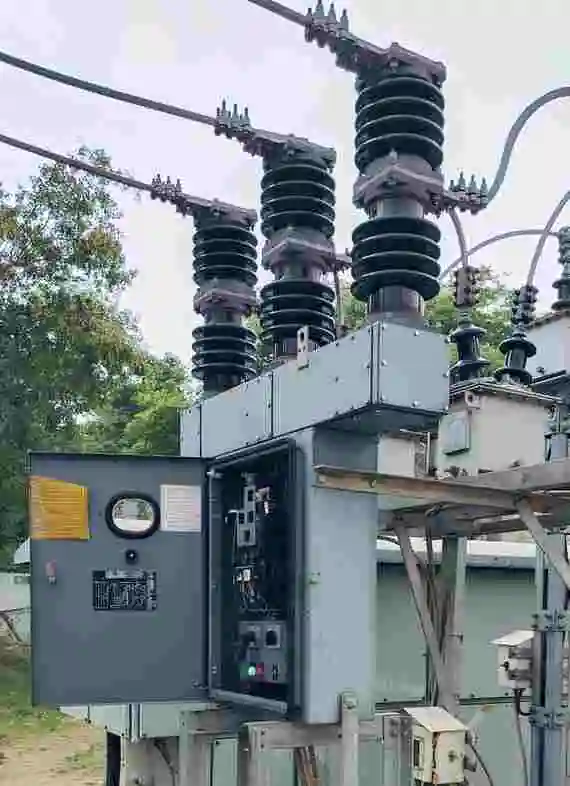
Ckt breaker are important for the safety and smooth running of electric systems. Some fuses shield home appliances and other smaller ones, as well as giant switchgear meant to look after powerful circuits in the grid.
Types of Circuit Breaker and Their Application
Having the right equipment is absolutely essential to protect an electrical system from overloads and short circuits. Various types of breakers are designed specifically to meet these distinct safety requirements. Whether it is your home, a large factory, or a substation supplying electricity to an entire city, a specific type of power breaker operates in every setting.
Small circuit breakers are used for domestic purposes to protect our home’s expensive appliances from burning out. In industries, robust industrial breakers are employed to safeguard heavy and complex machinery. Furthermore, massive substation breakers are installed to safely control high-voltage currents on a large scale. Further in this post, we will learn in detail about all types of circuit breakers and their specific applications.
Which Type of Circuit Breaker Used in Substation
Electricity has become an integral part of our lives. But have you ever wondered who protects an entire city from blackouts—and safeguards appliances from destruction—when a fault occurs in major power grids or transmission lines? This task falls to the ‘substation circuit breaker.
The voltage level in a substation is very high. Therefore, high-voltage breakers, specifically designed for safety purposes, are used there. Let’s explore the major types of circuit breakers used in substations—their significance and how they function.
The Importance of Circuit Breakers in Substations
A power substation is a facility where electricity is generated, distributed, and its voltage is stepped up or down. Here, circuit breakers play the following crucial roles:
- Protection against Fault Currents: In the event of a short circuit or overload, it trips instantly to interrupt the faulty circuit.
- Equipment Protection: It safeguards expensive transformers and switchgear from damage.
- Power Grid Stability: If a fault occurs in a specific section, it isolates that section from the main grid, thereby ensuring that power supply continues uninterrupted in the remaining areas.
- Arc Quenching: When a circuit is interrupted under high-voltage conditions, an intense spark (arc) is generated. Substation circuit breakers function to safely extinguish this arc.
Major Types of Breakers Used in Substations
In a substation, different types of circuit breakers are primarily used based on their voltage capacity and arc-quenching medium.
SF6 Circuit Breakers
Nowadays, SF6 (Sulfur Hexafluoride) circuit breakers are the most widely used type in substations. These utilize SF6 gas to extinguish the arc.
- Feature: SF6 gas is an excellent insulator, and its arc-quenching capability is several times greater than that of air.
- Application: It is used in Extra-High Voltage (EHV) substations ranging from 33kV to 800kV.
- Advantages: They are compact in size, easy to maintain, and completely fire-resistant.
Vacuum Circuit Breakers
In a vacuum circuit breaker, a vacuum is used to extinguish the arc. Since there is no gas or air in a vacuum, the arc is extinguished very rapidly.
- Feature: This is one of the fastest-acting circuit breakers.
- Application: It is primarily used in distribution substations operating at medium voltages (11kV to 33kV).
- Advantages: They have a very long lifespan and do not require frequent maintenance.
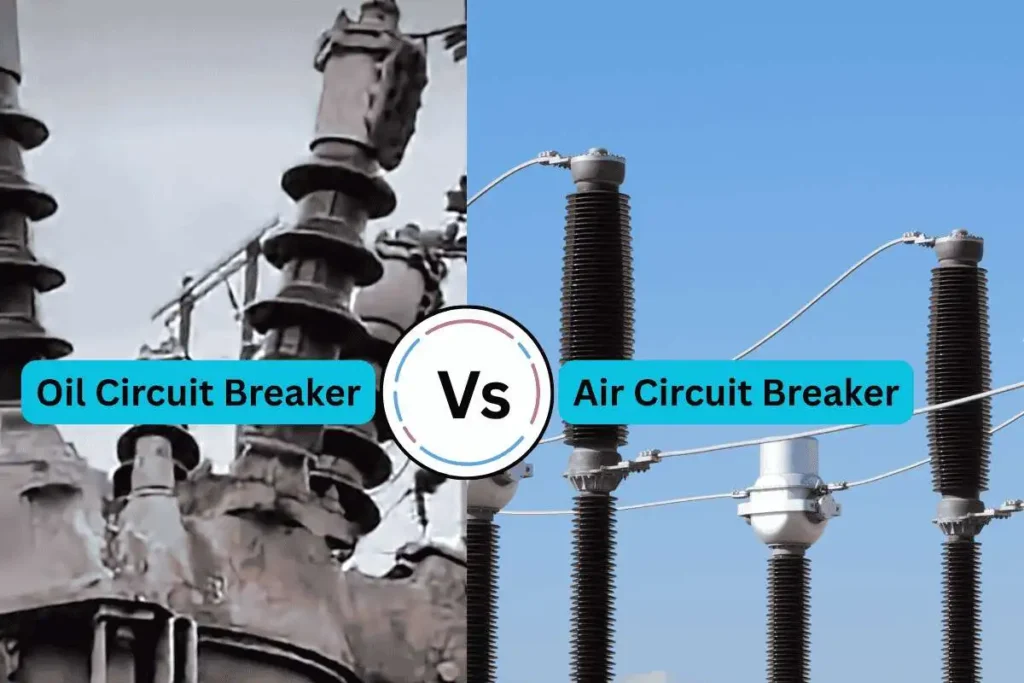
Air Blast Circuit Breaker
In this breaker, the arc is extinguished by utilizing a blast of high-pressure air (compressed air).
- Feature: It can interrupt large fault currents within a very short span of time.
- Application: In the past, it was widely used in 132kV to 400kV substations.
- Advantages: It poses no risk of fire; however, its compressor system is quite expensive and noisy. Consequently, these have now been replaced by SF6 breakers.
Oil Circuit Breaker
Oil circuit breaker are the oldest type of circuit breakers. Transformer oil is used in them to extinguish the arc.
- Feature: In addition to serving as an effective insulator, the oil also performs a cooling function.
- Usage: These were historically used in older 33kV and 66kV switchyards. They continue to be utilized in many locations today.
- Advantages and Disadvantages: They are cost-effective; however, due to the flammability of the oil, there is a constant risk of fire.
Circuit Breaker Types for Power and Utility Systems
Various types of circuit breakers are selected based on their application and voltage rating.
- Generating Substation: Extra-High Voltage (EHV) breakers are utilized to safely transmit the massive electrical output from a power plant into the transmission lines.
- Receiving Substation: SF6 or air-blast breakers are installed to safeguard transformers while stepping down the voltage at substations located on the outskirts of a city.
- Distribution Substation: Vacuum circuit breakers are considered the most suitable choice for local substations responsible for supplying electricity to residential colonies and industrial factories.
- Railway Traction: Single-phase vacuum circuit breakers are extensively employed to ensure the safety and protection of railway overhead lines.
Which Types of Circuit Breakers Used in Industries
Any large industry or manufacturing plant utilizes heavy machinery and equipment. Operating these heavy machines requires a significant amount of power and voltage. But what happens when there is a sudden surge in voltage or a short circuit occurs?
In such situations, an ‘industrial circuit breaker’ serves the crucial function of protecting machinery worth millions of rupees from burning out and preventing major accidents. To ensure safety within industrial settings, specially designed high-capacity breakers are installed. Let’s explore the major ‘types of circuit breakers’ used in industries, their significance, and how they function.
The Importance of Industrial Circuit Breakers
Electricity consumption in industries is many times higher than that in ordinary homes or offices. Consequently, standard breakers cannot function effectively in such settings. In industries, circuit breakers play the following crucial roles:
- Overload Protection: When machines draw current exceeding their capacity, the breaker trips the circuit to interrupt the power supply.
- Short-Circuit Protection: During any electrical fault, it instantly interrupts the flow of current, thereby averting the risk of fire.
- Protection of Expensive Equipment: It safeguards equipment such as heavy-duty motors, generators, and transformers against high-voltage surges.
- Continuous Production: By isolating the faulty section, it ensures that the power supply to the rest of the plant continues to flow uninterrupted.
Major Types of Breakers Used in Industries
Various types of circuit breakers are used based on industrial requirements, voltage capacity, and the method of arc quenching. Let us explore them in detail:
Air Circuit Breaker
The Air Circuit Breaker is one of the most widely used breakers in industries. It utilizes ordinary air to extinguish the arc (spark) generated during a fault.
- Features: It is ideal for low-voltage (LV) systems involving high currents (ranging from 800 Amps to 10,000 Amps).
- Applications: Its primary application is in the plant’s Main Power Distribution Board (PDB) and Motor Control Center (MCC).
- Advantages: It is very easy to maintain, and the risk of fire is negligible.
Vacuum Circuit Breaker
In industrial settings, the vacuum circuit breaker is considered the most reliable option for medium-voltage applications. It utilizes a vacuum to extinguish the arc, thereby eliminating it instantaneously.
- Features: It operates at a very high speed and poses no risk of sparking, making it ideal for industrial applications.
- Applications: It is used in industries to protect power supply systems ranging from 11kV to 33kV, as well as large transformers.
- Advantages: It offers a long service life, is environmentally friendly, and requires minimal maintenance.
Molded Case Circuit Breaker – MCCB
The MCCB is an extremely popular industrial circuit breaker. It is enclosed in a casing made of sturdy plastic (Molded Case), which protects it from dust and moisture.
- Features: It provides protection against both overloads and short circuits. Its tripping settings can be adjusted according to specific requirements.
- Applications: It is extensively used in factories for small and medium-sized machinery, panel boards, and feeder pillars.
- Advantages: It features a compact design and is readily available in current ratings ranging from 100 Amps to 1000 Amps.
Motor Protection Circuit Breaker (MPCB)
As the name itself suggests, it is specifically designed for the protection of industrial motors.
- Feature: A motor draws a very high current during startup. The MPCB is designed to withstand this starting current and trips only in the event of a genuine fault.
- Application: To protect motors installed in conveyor belts, pumps, compressors, and industrial fans.
- Benefits: It safeguards the motor against issues such as overload, short circuits, and phase failure.
SF6 Circuit Breakers
Although they are primarily used in substations, they are also utilized in very large and heavy industries (such as steel plants or power generation plants).
- Feature: It utilizes Sulfur Hexafluoride (SF6) gas, which is an excellent insulator.
- Application: It is commonly used in large-scale industrial plants operating at high voltages (exceeding 33kV).
- Advantages: It is an excellent high-capacity breaker capable of easily interrupting even the most massive short-circuit currents.
Circuit Breaker Types for Industrial Applications
Various types of circuit breakers are selected based on the specific needs of the industry. Some of their key applications are as follows:
- Automobile Manufacturing: To provide continuous power to robotics and assembly lines, and to protect them against voltage fluctuations.
- Textile Industry: MPCB and MCCB units are utilized to safeguard large weaving machines and spinning motors.
- Chemical and Oil Refineries: As these facilities house flammable substances, the use of spark-free Vacuum Circuit Breakers (VCB) is considered the safest option.
- Steel Plants: Air Circuit Breakers (ACB) are installed to control heavy furnaces and rolling mills.
Which Types of Breakers used in Residential and Commercial Areas.
Whether it is your home, a large apartment complex, or a busy commercial building, electrical safety remains the top priority. In the event of a fault or overload, a proper circuit breaker immediately cuts off the power supply, thereby safeguarding the premises against hazardous accidents such as fires.
Let’s explore the major circuit breakers used in homes, apartments, and commercial areas—their significance, and how they function.
The Importance of Circuit Breakers in Homes and Commercial Areas
In such areas, having the right breaker is absolutely essential to ensure the safe and smooth operation of the electrical system. Its key benefits are as follows:
- Overload Protection: When you operate multiple heavy-duty appliances (such as ACs, heaters, or microwaves) simultaneously, it detects the overload and trips the circuit.
- Short Circuit Protection: It instantly interrupts the flow of current in the event of a short circuit caused by damaged wiring—specifically when wires come into contact or get severed.
- Personal Safety: Certain specialized breakers (such as RCCBs) trip immediately upon detecting a current leakage, thereby preventing electric shocks.
- Extending Appliance Lifespan: It safeguards expensive electronic appliances against voltage fluctuations.
Major Types of Breakers Used Residential and Commercial Areas
Different types of circuit breakers are used to meet the specific needs of homes, apartments, and commercial establishments. Let’s understand them in detail:
Miniature Circuit Breaker (MCB)
This is the most common circuit breaker, found in the distribution boards (MCB boxes) of almost every home and office. It has replaced the old-fashioned fuse.
- Features: It operates at low voltage (230V – 415V) and trips in the event of an overload or short circuit within the circuit. Once tripped, it can be easily reset.
- Capacity: These are typically available in ratings ranging from 1 Amp to 63 Amps or 100 Amps.
- Usage: It is used to protect circuits for household lighting, fans, TVs, and ACs.
Residual Current Circuit Breaker ( RCCB / ELCB )
It is commonly referred to as an Earth Leakage Circuit Breaker (ELCB). It is the most essential device for protecting humans from electric shocks.
- Feature: This device measures the difference between the current flowing into a circuit and the current returning from it. If even a minute amount of current (such as 30mA) leaks into a human body or water, it instantly cuts off the power supply within milliseconds.
- Application: Bathrooms (for geysers), kitchens, and other areas where water and electricity may come into contact. It is mandatory to have a main RCCB installed in the circuit breaker panel of every apartment.
Residual Current Breaker with Overcurrent(RCBO)
This device performs the functions of both an MCB and an RCCB on its own.
- Feature: It provides simultaneous protection against short circuits, overloads, and earth leakage (electric shocks).
- Benefits: It saves space and keeps the electrical panel neat and tidy. The adoption of these devices is now rapidly increasing in premium homes and commercial spaces.
Molded Case Circuit Breaker ( MCCB)
The function of an MCCB begins where the capacity of an MCB ends. It is a larger and higher-capacity version of an MCB.
- Features: It can easily handle high currents (ranging from 100 Amps to 1000 Amps). It offers the flexibility to adjust the tripping settings according to specific requirements.
- Usage: It is primarily utilized as a commercial circuit breaker within the main power supply lines (Main Panels) of large offices, shopping malls, hospitals, and apartment complexes.
Arc Fault Circuit Interrupter (AFCI)
This is a modern breaker that specializes in preventing fires.
- Feature: Often, loose or severed wires generate minor sparks (arcs) that standard MCBs fail to detect. An AFCI instantly identifies these hazardous sparks and trips the circuit.
- Application: It is highly useful in bedrooms, living rooms, and commercial areas containing wooden furniture.
Circuit Breaker Types for Residential and Commercial Use
Circuit breakers are selected based on the power demand of various locations.
Home Circuit Breaker
In a typical household, the electrical load is relatively low. Here, an RCCB (30mA) is installed downstream of the main meter. Following this, separate MCBs ranging from 6A to 32A are installed for individual rooms and appliances (such as ACs and washing machines).
Apartment Circuit Breaker
In a large apartment complex, every flat has its own Distribution Board (DB)—which houses MCBs and RCCBs. However, to supply power to the entire building, there is a large panel located in the basement or on the ground floor, where high-capacity MCCBs are utilized to handle heavy loads.
Commercial Circuit Breaker
Malls, offices, and hospitals utilize central air conditioning, large server rooms, and extensive lighting systems. In such environments, there can be no compromise on safety. For the main power supply, Air Circuit Breakers (ACBs) or large Molded Case Circuit Breakers (MCCBs) are installed. Additionally, Arc Fault Circuit Interrupters (AFCIs) are employed for fire prevention, while specialized sensitive breakers are used to safeguard expensive servers.
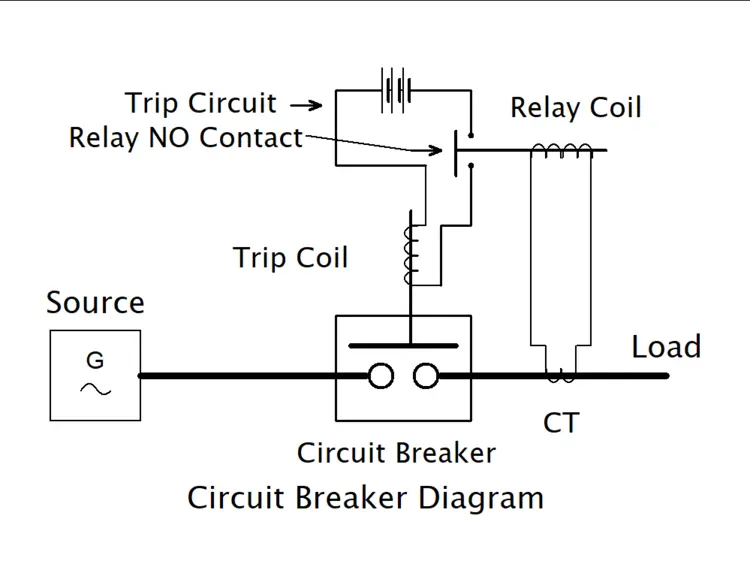
Detailed Circuit Breaker Symbol with Internal Diagram
Circuit Breaker Symbol

Circuit Breaker diagram
Advantages and Disadvantages of Circuit Breaker
Advantage
- Quick Response: Should an overcurrent or short circuit happen, they respond right away by protecting the equipment.
- Automatic Operation: Circuit breakers find issues by themselves and cut off the electricity supply automatically, keeping things safe.
- Reusability: Unlike fuses, you can reset circuit breakers after they trip, and they do not have to be replaced every time.
- High Reliability: Electrical circuits in homes and factories are well protected by the reliability of circuit breakers.
- Wide Application: Thanks to their flexibility, they may be used in homes, factories and for generating electricity in plants.
- Maintenance-Friendly: Circuit breakers found now often do not need much attention and can keep working for years.
- Safe choices for the environment can be found: Things like vacuum and SF₆ circuit breaker types are built to reduce challenges to the environment.
- They have programmable functions and are quick to respond to several different mistakes.
Disadvantage
There are some challenges related to using Circuit Breaker.
- Higher Cost: Circuit breakers are costlier than normal fuses when it comes to high-voltage situations.
- Complex Mechanism: The process of building and running these power plants is detailed, so it takes skilled people to assemble and look after them.
- Failure Possibility: If maintained incorrectly, circuit breakers might not protect the equipment and provide safety, resulting in problems or harm.
- Environmental Concerns: Some circuit breaker types use SF₆, a dangerous greenhouse gas, and it should be treated with great care.
- Size and space: Because high voltage type of circuit breakers can be dangerous, they need more room and attention when housing them.
Conclusion
Through this comprehensive article titled “Different Types of Circuit Breakers and Their Uses,” you can understand just how crucial the selection of the right equipment is for our electrical safety. Whether it involves expensive electronic appliances in your home, heavy-duty machinery in factories, or a massive substation supplying power to an entire city, a specific type of circuit breaker plays a vital role in every setting. Always choose the correct and certified circuit breaker best suited to your specific needs, ensuring that your life and property remain completely safeguarded against any major accidents.
FAQ
-
What is the main technical difference between a circuit breaker and a fuse?
A fuse burns out when overloaded and must be replaced every time. In contrast, a circuit breaker functions like an automatic switch, which can be easily reset (turned back on) after tripping without needing to be replaced.
-
Why are SF6 circuit breakers predominantly used for high-voltage applications in substations?
At high voltages (33kV to 800kV), extremely intense arcs are generated. The arc-quenching capability of SF6 (Sulfur Hexafluoride) gas is significantly higher than that of air. It is an excellent insulator, making the system compact, safe, and fire-resistant.
-
Why is the Vacuum Circuit Breaker (VCB) the most preferred choice for industrial applications?
VCBs utilize a vacuum to extinguish the arc (spark), thereby eliminating it instantly. They operate very rapidly, are spark-free, and do not require frequent maintenance at medium voltage levels (11kV to 33kV).
-
How to Choose the Right High-Capacity Breaker for Your Factory or Plant?
To select the right breaker, always keep three factors in mind:
a. The total current and voltage load of your machinery.
b. The potential fault level (Breaking Capacity)—that is, the maximum current that could occur during a short circuit.
c. The factory environment (dust, moisture, or chemicals).

I am an electrical engineer and also a blogger. I write informative blog posts on topics related to electrical and electronics engineering. If you are interested in these topics, you are welcome to my site to read these articles.