
Difference Between VCB and OCB
Circuit breakers are like the guardians of our electrical systems. They step in instantly to cut off the flow of electricity when something goes wrong, protecting expensive equipment from damage and stopping dangerous power surges before they cause harm. But here’s the thing—not all circuit breakers are created equal.
If you’re involved in designing or managing electrical systems, it’s crucial to understand the key differences between oil circuit breakers and vacuum circuit breakers. While both serve the same purpose—interrupting the flow of electricity during a fault—they go about it in completely different ways.
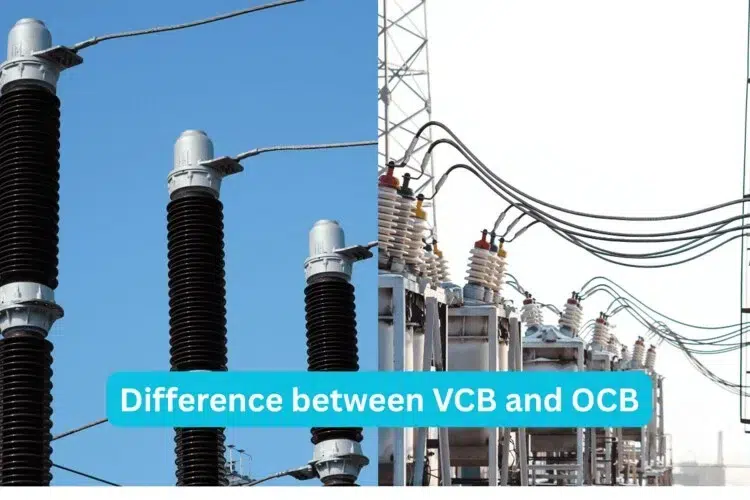
Oil circuit breakers use oil as a medium to extinguish the electrical arc that forms when the breaker trips. On the other hand, vacuum circuit breakers rely on a vacuum to do the same job. Each type has its own pros and cons when it comes to performance, cost, and maintenance.
Choosing the right circuit breaker for your system isn’t just about knowing how they work—it’s about understanding which one fits your specific needs.
Oil Vs. Vacuum Circuit Breakers
Let’s break down the differences so you can make an informed decision and keep your power system running smoothly.
Working Principle
The biggest difference between these two types of circuit breakers lies in how they stop the flow of electricity. When the breaker’s contacts separate under load, a large electrical arc forms. To safely break the circuit, the breaker must extinguish this arc as quickly as possible.
How Oil Circuit Breakers Work
In an oil circuit breaker, the contacts are completely submerged in insulating oil. When a fault occurs and the contacts separate, the intense heat from the electrical arc vaporizes the surrounding oil. This creates a high-pressure bubble of hydrogen gas around the arc. The gas bubble cools the arc and forces the surrounding oil to rush back into the gap, effectively extinguishing the arc and breaking the circuit.
How Vacuum Circuit Breakers Work
Vacuum circuit breakers working principle in a completely different way. The contacts are enclosed in a sealed vacuum chamber. When a fault happens and the contacts separate, there’s no gas or fluid to sustain the arc. For a brief moment, the arc is supported by metal vapor from the contacts, but it condenses almost instantly. The vacuum quickly regains its insulating strength, extinguishing the arc at the first zero-current point.
Arc Extinguishing Medium
The material used to extinguish the electrical arc plays a key role in the efficiency and safety of a circuit breaker.
Oil as a Medium
Transformer oil has been a trusted insulator in electrical engineering for over a century. It’s great at cooling and extinguishing arcs, but it does have its drawbacks. When the arc burns the oil to create gas, the oil starts to degrade over time. This process leaves behind carbon particles, which reduce the insulating strength of the remaining oil. On top of that, oil is highly flammable, which adds a fire risk to electrical substations.
Vacuum as a Medium
A vacuum, on the other hand, is considered the ideal arc extinguishing medium. Since there’s no gas to ionize, a vacuum has a much higher insulating strength than oil or even compressed air. It doesn’t degrade, doesn’t leave behind any residue, and completely eliminates the risk of fire. In terms of performance and safety, the vacuum medium is far superior to oil.
Design and Construction
The size and build of these circuit breakers are very different, mainly because of the materials they use to extinguish arcs.
Oil Circuit Breaker Design
Oil circuit breakers are big, heavy, and bulky because they need large amounts of oil to work. They are built with massive steel tanks to hold the oil and withstand the high pressure created by gas bubbles during a fault. Installing these breakers requires strong foundations and heavy lifting equipment, making them more suitable for outdoor setups.
Vacuum Circuit Breaker Construction
Vacuum circuit breakers, on the other hand, are compact, lightweight, and modern in design. Their main component is a small vacuum interrupter bottle made of glass or ceramic. Since they don’t need large tanks for insulating fluid, they can easily fit into tight indoor spaces or sleek metal-clad switchgear cabinets. This makes them a great choice for modern electrical systems.
Maintenance Requirements
Keeping operational costs low means paying close attention to maintenance needs. Here’s how the two breakers compare:
High Maintenance Needs of OCBs
Oil circuit breakers require a lot of upkeep. Every time the breaker trips, a small amount of oil gets carbonized. To keep it working safely, you need to regularly test the oil’s insulating strength, filter out carbon particles, and replace the oil on a strict schedule. On top of that, you have to check for leaks, inspect gaskets, and clean the internal contacts. All of this adds up to significant downtime and labor costs.
Minimal Maintenance of VCBs
Vacuum circuit breakers, on the other hand, are almost maintenance-free. The vacuum interrupter is a sealed unit, so there’s no need to clean internal parts or replace any medium. All you need to do is perform basic visual inspections and occasionally lubricate the external mechanical parts. This simplicity saves a lot of time and money over the equipment’s lifespan.
Performance and Efficiency
When it comes to speed and reliability, these two breakers perform very differently.
Vacuum Circuit Breakers
VCBs are incredibly fast. The vacuum instantly regains its insulating strength, allowing the breaker to clear a fault in just a few milliseconds. This makes them ideal for systems that require frequent switching, like industrial motor controls or arc furnaces.
Oil Circuit Breakers
OCBs are slower because it takes time for the gas bubble to form and cool the arc. However, they are highly reliable for high-voltage transmission lines where switching happens less often. But if used in applications requiring frequent switching, they wear out quickly.
Environmental Impact
Modern electrical systems prioritize environmental safety and responsibility, and this is where the two breakers differ significantly.
Oil Circuit Breakers
Oil circuit breakers have a notable environmental downside. Each breaker can hold hundreds of gallons of oil, and if the tank cracks or a seal fails, the oil can leak into the soil or groundwater. Cleaning up such spills is not only expensive but also harmful to the environment. In the event of a catastrophic failure, the oil can catch fire, leading to massive blazes and releasing toxic smoke into the air.
Vacuum Circuit Breakers
Vacuum circuit breakers are far more eco-friendly. They don’t use any toxic fluids, don’t emit greenhouse gases, and pose no risk of soil or water contamination. At the end of their lifecycle, the metal and ceramic components can be safely and easily recycled, making them a much greener choice for modern infrastructure.
Cost Comparison
When it comes to engineering decisions, budget is always a key factor—but it’s important to look beyond just the upfront cost.
Oil Circuit Breakers
Oil circuit breakers are usually cheaper to buy initially. The technology is older and simpler to produce, which keeps the purchase price low. However, the ongoing costs quickly add up. You’ll need to buy replacement oil, hire specialized technicians for regular maintenance, and deal with longer downtime during repairs. Over time, these expenses make oil circuit breakers much more costly to operate.
Vacuum Circuit Breakers
Vacuum circuit breakers have a higher upfront cost because creating the sealed vacuum interrupter requires advanced engineering and specialized facilities. But in the long run, they’re far more cost-effective. With almost no maintenance needs and a much longer lifespan, the total cost of ownership for a vacuum circuit breaker is significantly lower, making it a smarter investment for the future.
Conclusion
Choosing between an oil circuit breaker and a vacuum circuit breaker depends on your operational needs and priorities.
Oil circuit breakers are still a good fit for older, high-voltage outdoor substations. They’re reliable and have a lower upfront cost, but they come with high maintenance demands and significant environmental risks.
Vacuum circuit breakers, on the other hand, are the clear choice for modern electrical systems. Their advanced arc extinguishing technology, compact design, and virtually maintenance-free operation make them the safest and most cost-effective option for today’s power distribution needs.
Ultimately, the right breaker will depend on your specific application, but for most modern setups, vacuum circuit breakers are the smarter, more sustainable investment.
FAQ
-
Can oil circuit breakers handle frequent switching operations?
No, oil circuit breakers are not suitable for frequent switching as the oil degrades quickly, requiring constant maintenance.
-
Why is hydrogen gas important in oil circuit breakers?
Hydrogen gas, formed when the oil vaporizes, helps cool the arc and extinguish it effectively.
-
Do vacuum circuit breakers require any periodic replacement?
No, the vacuum interrupter is a sealed unit and does not require replacement during its operational lifespan.
-
How does altitude affect vacuum circuit breakers?
Vacuum circuit breakers perform well at high altitudes since the vacuum medium is unaffected by atmospheric pressure changes.
-
Are oil circuit breakers still manufactured today?
Yes, but they are primarily used in older systems or specific high-voltage outdoor applications.
-
Can vacuum circuit breakers operate in extreme temperatures?
Yes, they are highly reliable in both very high and very low temperatures due to their sealed design.
-
What happens if a vacuum interrupter loses its seal?
If the seal is compromised, the vacuum loses its insulating properties, and the breaker must be replaced.
-
Are oil circuit breakers recyclable?
Partially. The steel tanks can be recycled, but the contaminated oil requires special disposal methods.

I am an electrical engineer and also a blogger. I write informative blog posts on topics related to electrical and electronics engineering. If you are interested in these topics, you are welcome to my site to read these articles.