High Voltage Power Lines: Basics, and Challenges
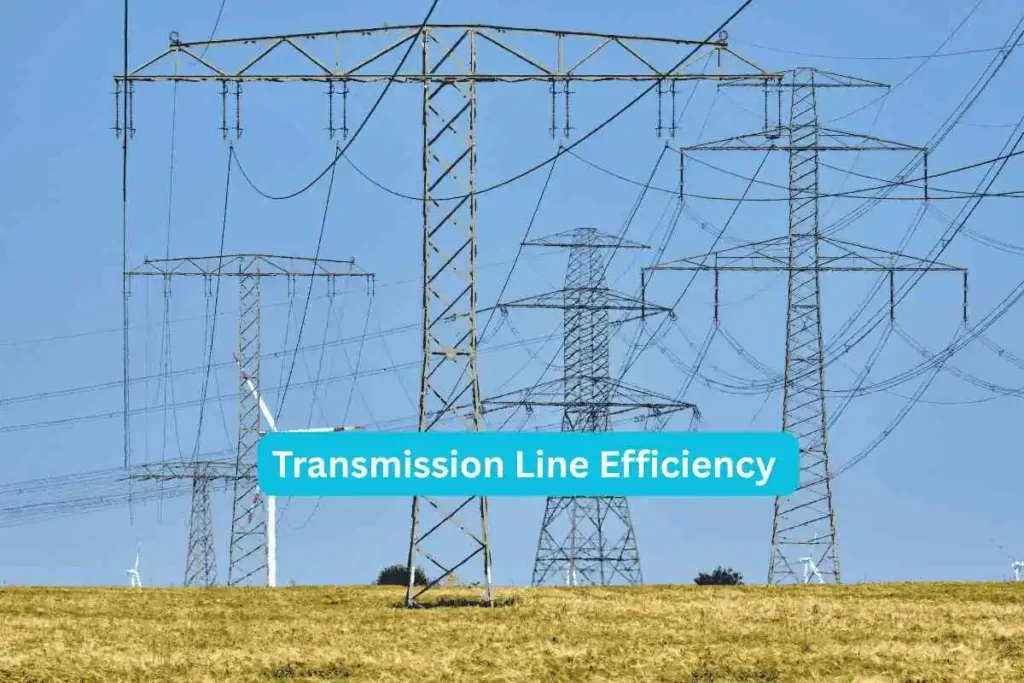
High-voltage power lines are the backbone of modern electricity transmission, serving as the conduit for power from power plants (such as steam, hydroelectric, and nuclear plants) to homes, businesses, and industries. High voltage powerlines are engineered to transport electricity over long distances to minimize AT&C losses and deliver electricity with high efficiency, enabling power to reach even the most isolated regions. In this article, we will read the basics of high voltage power lines, including their design and components, operational principles, benefits, challenges, and the safety protocols in place to protect people and the environment.
What are High Voltage Power Lines?
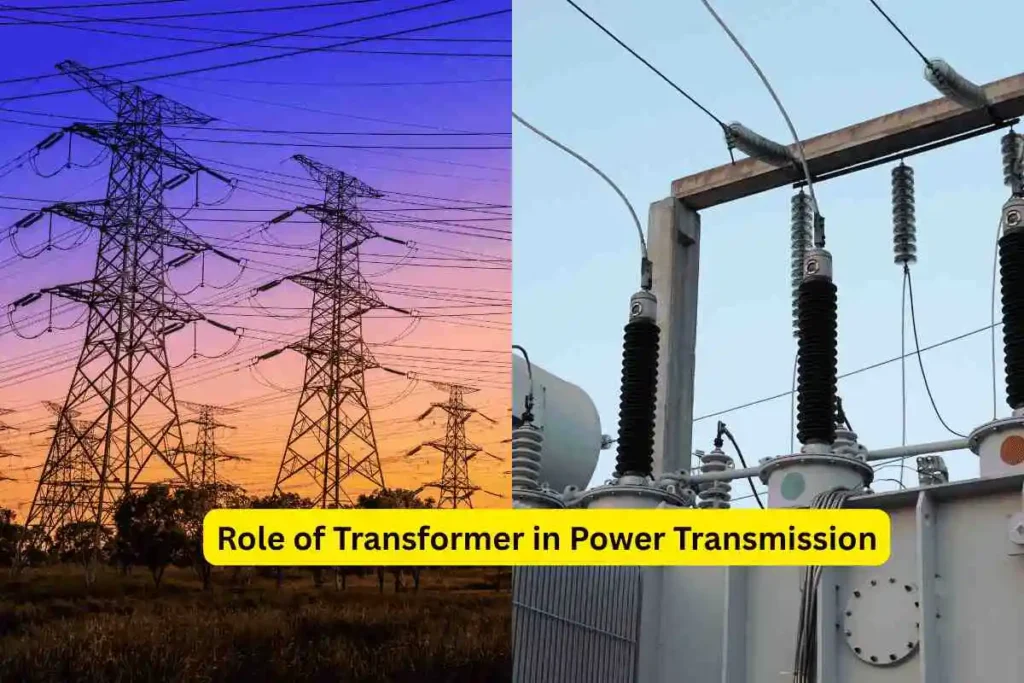
High-voltage power lines are a vital part of our electrical grid, transmitting large amounts of electricity over long distances. You can think of them as the superhighways for electrical energy. After electricity is generated at a power plant, these lines transport it to substations, where a Transformer lowers the voltage before being sent to homes and businesses.

Often referred to as high tension power lines, they are designed to handle extremely high voltages to minimize energy loss during transport. These power transmission lines are usually suspended high above the ground on large towers, which is why they are also commonly known as overhead power lines. Their primary purpose is to ensure a reliable and efficient flow of electricity from where it’s made to where it’s needed.
Why High Voltage used in High Voltage Lines?
High voltage is used in high-tension lines primarily to minimize energy loss over long distances. When electricity travels through a wire, some energy is lost as heat. The amount of energy lost is directly related to the electric current—the higher the current, the more heat is generated, and the more power is wasted. To solve this problem, utility companies increase the voltage to extremely high levels before sending electricity through the grid.
By increasing the voltage, they can significantly reduce current while still delivering the same total power. This method is incredibly efficient for transporting electricity from power plants to towns and cities. As a result, the overhead power lines you see stretching across the landscape can carry vast amounts of energy with minimal loss, ensuring that electricity is delivered reliably and cost-effectively.
Voltage and Current Relationship
Voltage and current have an inverse relationship, a key principle in how high-voltage power lines operate. Think of electrical power as a combination of voltage (the force) and current (the flow rate of electrons). To transmit a large amount of power over long distances, you can either use a high current or a high voltage. However, high current generates significant heat, resulting in substantial energy loss along the wire. To avoid this waste, electricity is transmitted over transmission power lines at extremely high voltages.
When increasing the voltage, the current can be dramatically reduced while maintaining the same power output. That is why high-tension power lines are so effective; they minimize energy loss by using high voltage, allowing electricity to travel efficiently across the country through the network of overhead power lines.
Design and Components of High Voltage Power Lines
High-voltage power lines, which we often see near villages and highways, represent a vast yet complex engineering feat. Understanding their design and the components involved is fascinating. The structure of an overhead power line comprises many essential parts, whose mutual coordination ensures the delivery of electricity to us.
Design of Towers and Poles
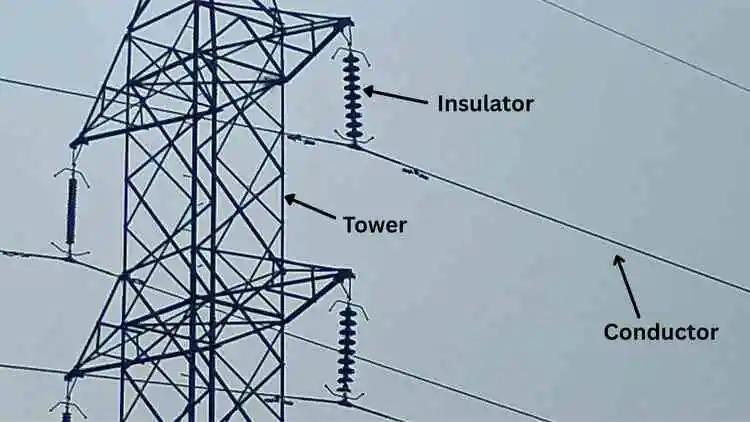
The design of towers and poles is critical to the operation and safety of high tension power lines. These structures must be strong enough to support the heavy conductors and withstand environmental stresses like high winds, ice, and extreme temperatures. For long-distance power transmission lines, you will typically see massive steel lattice towers. Their open, web-like construction provides exceptional strength while using materials efficiently.
For shorter distances or lines carrying slightly lower voltages, single poles made of wood, steel, or concrete are often used. The height of these structures is a key design feature for all overhead power lines, as it keeps the high-voltage conductors safely away from the ground, buildings, and vegetation, minimizing the risk of electrical accidents.
These towers or poles are the backbone of all high-voltage power line transmission and distribution systems. Their primary purpose is to safely support wires over long distances and keep them elevated above the ground, ensuring people’s safety. Towers are mostly made of steel lattice (a net-like structure) that has to withstand heavy loads and harsh weather conditions. Lattice towers are designed with multiple angles and cross-bracing, which increase their strength and keep the entire structure stable even during wind or storms.
Tubular steel or concrete poles are also used in some places, especially when space is limited, or lines have to be laid within cities. The height and span of the poles depend on the line voltage and the area’s topology. The design and materials of towers and poles are customized to suit the location of a metropolis, village, or hilly area. Another vital role is to securely mount the various components of the power line—conductors, insulators, ground wires—so that the transmission system remains safe and reliable.
Role of Conductors and Insulators in Powerlines
Overhead conductors are the main parts of a power lines that transfer electrical energy from one place to another. Most high tension wires are made of high-purity aluminum or aluminum alloys because they are lightweight, highly conductive, and cheaper than copper.
Occasionally, copper conductors are also used in very high-load situations, but aluminum is more commonly used. Conductors are twisted into strands, which increases flexibility and strength, so that the wire does not break even over long spans. The role of insulators is equally essential.
These are mostly made of toughened glass, high-grade ceramic (porcelain), or polymer materials. Insulators create electrical separation between towers and conductors, preventing high voltage from reaching the tower or the ground. Insulator strings are connected in multiple pieces, increasing their voltage withstand capacity.
Without insulators, excessive leakage current can flow through power lines, increasing the risk of short circuits and compromising the reliability of the entire transmission line. Therefore, efficient and durable conductors and insulators are essential for the safety and performance of overhead power lines.
Safety Measures and Protective Equipment in Powerlines
Safety is the most crucial aspect of high-voltage power line systems. Warning signs reading “Danger” or “High Voltage” are always installed around these lines to keep the general public alert and away from them, even by mistake.
On the other hand, for safety, a ‘ground wire’ or ‘shield wire’ is installed at the top of the overhead power line. Its job is to transmit the shock of lightning directly to the ground, preventing damage or outages to the system.
During maintenance or repairs, linemen and technical staff must follow strict safety protocols. Specifically, some essential safety measures are used:
- Insulated Protective Clothing: Workers are fitted with special flame-resistant (FR) suits, jackets, and trousers to reduce the risk of electric arc-flash.
- Insulated Gloves and Boots: Insulated gloves and shoes made of rubber or composite materials are worn to prevent current from entering the body during accidental contact.
- Safety Helmets and Face Shields: Hard hats and visors are essential for protection from head injuries and electric arcs.
- Live Line Tools: Hot sticks, insulated pliers, and testers are used to allow engineers to work on high voltage lines from a distance without direct contact.
- Fall Protection Equipment: When workers climb towers or poles, harnesses, safety belts, and lanyards are used to protect against slips and falls.
How do Power Lines Work
High-tension power lines, which we see stretching across vast distances with conductors dangling from large towers, are a modern means of delivering electricity to our homes and industries. Their job is not only to carry electricity, but also to transport it efficiently and safely. An overhead power line system follows a well-planned process from the power generation station to our switches. understand its working step by step.
- Process of Electric Transmission: First, electricity is generated in power plants. After generation, it is sent to substations, from where it is distributed to different areas. The generated electricity travels through a network of electric lines. This entire process is part of a grid system that balances demand and supply to ensure continuous power.
- How Long-Distance Power Transmission is Achieved: A significant challenge in sending electricity over long distances is power loss, which occurs as heat. To reduce this loss, electricity is transmitted at very high voltage. When the voltage is higher, then the current is lower, and the power loss is lower. This is why high tension power lines are installed on tall towers, so that high voltage can be handled safely.
- The Concept of Voltage Step-Up and Step-Down: After electricity is generated at a power plant, a step-up transformer increases its voltage many times (e.g. from 11,000 volts to 400kv volts). At this high voltage, electricity is transmitted over long distances by a high-voltage transmission line. When this electricity reaches your city, a step-down transformer reduces the high voltage. It is then further reduced for local distribution, so that a safe 220-240 volt supply reaches our homes.
Advantages of High Voltage Power Lines
There are several primary advantages of using high-voltage power lines for electricity transmission, which are as follows:
- Reduced Power Loss: One of the most significant benefits is reduced energy loss during transmission. When electricity travels through a transmission wire, some energy is lost as heat. By increasing the powerline voltage, the current is lowered for the same amount of power delivered. Lower current significantly minimises this heat loss, making the entire system more efficient. This is a core principle behind the use of high tension power lines for long-distance transport.
- Increased Transmission Capacity: High voltage allows more power to be transmitted through a single overhead wire. It means that existing infrastructure can handle greater electrical loads without needing a complete overhaul. This is crucial for meeting the growing energy demands of cities and industrial areas.
- Cost-Effective for Long Distances: While the initial setup for high voltage systems can be expensive, it is the most economical solution for transmitting power over long distances. Because power loss is minimal, less electricity needs to be generated to meet demand at the other end. This efficiency translates into long-term cost savings.
- Smaller Conductor Size: Since high voltage reduces the required current, the transmission wire or overhead conductor can be thinner and lighter. Using less material for the conductors reduces the overall cost of the overhead power line and also lessens the structural load on the supporting towers.
Challenges of Power Transmission Line
High voltage power lines have several main challenges:
- Environmental Impact: The construction of high-tension power lines often requires clearing large tracts of land, which can lead to deforestation and wildlife habitat fragmentation. These clearings can disrupt ecosystems and affect local biodiversity. The physical presence of the towers and lines can also be seen as visual pollution, altering natural landscapes, especially in scenic or rural areas.
- Health Concerns (EMF Exposure): A significant public concern surrounding any high-voltage power line is the emission of extremely low-frequency (ELF) electromagnetic fields (EMF). While extensive research has been conducted, there is ongoing debate and public anxiety about the potential long-term health effects of continuous exposure to EMF, even though scientific consensus has not established a direct causal link to specific health problems.
- Maintenance and Operational Challenges: Maintaining these extensive networks is complex and hazardous. The high powerline voltage makes any repair work dangerous, requiring specialized teams and equipment. Furthermore, these lines are exposed to extreme worst weather conditions such as lightning strikes, high winds, ice storms, tornado, and cyclone, which can cause significant damage and power blackouts. Implementing effective power line protection systems against such natural threats is a constant operational challenge.
- High Initial Cost and Land Acquisition: Building new high tension power lines involves substantial upfront investment in materials, towers, and labor. Additionally, obtaining the legal right to pass a tower or line over a stretch of land can be costly and time-consuming, often involving complex negotiations with numerous landowners and government agencies.
Conclusion
In conclusion, high voltage power lines are the fundamental arteries of our modern world. They form the critical link that transports vast amounts of electrical energy from distant power generation facilities to the towns and cities where it is consumed. By enabling the efficient transmission of power over long distances, they ensure that our homes, schools, hospitals, and industries have the reliable electricity needed to function and thrive. While they come with challenges related to environmental impact, safety, and maintenance, their role is irreplaceable.
FAQ:
Are High Voltage Power Lines Dangerous to Live Near?
Living near high-voltage power lines has raised concerns about potential health risks from electromagnetic fields (EMF). While studies have not conclusively linked EMF exposure to severe health issues, prolonged exposure remains a topic of ongoing research. Additionally, safety measures and proper distance from the lines can minimize risks.
Why do High Voltage Power Lines Buzz or Hum?
High-voltage power lines buzz or hum due to a phenomenon called corona discharge. It occurs when the electric field around the conductors ionizes the surrounding air, especially in humid or wet conditions, creating a buzzing or crackling sound.
What are Common Causes of Damage or Failure in High Voltage Transmission Systems?
Common causes of damage or failure in high voltage transmission systems include:
- Severe Weather: High winds, lightning, ice storms, and heavy rain can damage towers, lines, and insulators.
- Equipment Failure: Aging infrastructure or faulty components like transformers and conductors.
- Vegetation: Overgrown trees can interfere with lines, causing outages.
- Human Activity: Accidental damage from construction or vandalism.
- Overloading: Excessive power demand can strain the system, leading to failures.
Who is responsible for the upkeep of high voltage power lines?
The maintenance of high-voltage power lines is typically the responsibility of utility companies or transmission system operators. They handle maintenance, repairs, and inspections to ensure safe and reliable electricity transmission.

I am an electrical engineer and also a blogger. I write informative blog posts on topics related to electrical and electronics engineering. If you are interested in these topics, you are welcome to my site to read these articles.