
Oil vs SF6 Gas Circuit Breakers: Core Differences
Electrical networks rely on massive circuit breakers as a primary safeguard against sudden, hazardous faults. When a power grid experiences a sudden surge or short circuit, these devices instantly interrupt the current flow, protecting expensive substation equipment and preventing catastrophic damage. However, not all breakers manage this intense task the same way.
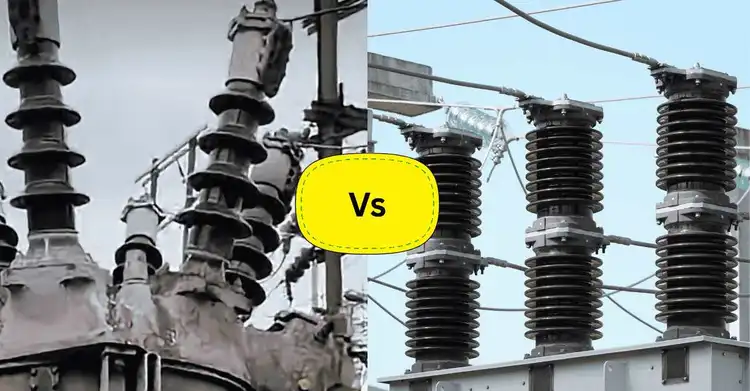
Engineers and facility managers frequently need to evaluate the oil circuit breaker vs sf6 gas circuit breaker to secure their infrastructure. While both devices serve the exact same protective purpose, they achieve it using completely different materials and mechanisms. Understanding the specific differences between these two types is critical for designing safe, efficient, and cost-effective power distribution systems. This comprehensive guide breaks down exactly how oil and SF6 breakers differ in design, performance, and environmental impact.
Working Principles: How They Quench Arcs
The most fundamental difference between these two devices lies in how they react when a fault occurs. When a breaker’s contacts pull apart under high voltage, an intense, destructive electrical arc forms across the gap; the breaker must extinguish it in a fraction of a second.
How Does an Oil Circuit Breaker Work
An oil circuit breaker relies on the rapid vaporization of oil to extinguish an electrical fire. When the contacts separate inside the breaker, the intense heat of the electrical arc vaporizes the surrounding insulating oil. This dramatic reaction creates a highly pressurized bubble of hydrogen gas.
The gas bubble surrounding the arc rapidly cools the plasma. As the alternating electrical current reaches its natural zero point, the gas bubble violently forces fresh, cool oil back into the gap. This influx of fluid successfully breaks the circuit and stops the power flow. If you want detailed information about oil circuit breakers, you can read my article What is Oil Circuit Breaker
How SF6 Breaker Works
The working of SF6 breaker systems relies on chemical absorption rather than fluid displacement. When the contacts separate inside an SF6 breaker, the arc forms in a chamber filled with pressurized Sulfur Hexafluoride (SF6) gas. SF6 is highly electronegative, meaning it loves to grab onto free electrons.
As the arc burns, the gas rapidly absorbs the free electrons carrying the electrical current, converting them into heavy negative ions. These heavy ions severely limit the mobility of the electrical charge. This essentially starves the arc of its fuel, causing it to snuff out almost instantly.
The Arc Quenching Medium: Oil vs SF6 Gas
The material a breaker uses to extinguish the electrical arc heavily dictates its performance, size, and limits. We refer to this material as the arc quenching medium.
Arc Quenching Method of Oil Circuit Breaker
An oil circuit breaker uses highly refined mineral oil, commonly known as transformer oil. This liquid serves as an excellent electrical insulator. It withstands electrical breakdown much better than standard atmospheric air, allowing it to handle high-voltage loads. However, the arcing process physically degrades the oil. Every time the breaker trips, the intense heat burns a small amount of the fluid. This leaves behind floating carbon particles that slowly degrade the oil’s insulating properties.
Arc Quenching in SF6 Circuit Breaker
An SF6 circuit breaker uses Sulfur Hexafluoride gas as its arc-quenching medium. SF6 boasts an incredible dielectric strength, meaning it can withstand incredibly high voltages without conducting electricity. In fact, its dielectric strength is nearly three times that of air. Furthermore, the arcing process does not permanently ruin the gas. While the extreme heat temporarily breaks the SF6 molecules apart, they quickly recombine into their original state once the arc dies. This self-healing property means the gas never leaves behind carbon residue.
Design and Construction Differences
Because these breakers use entirely different materials to extinguish electrical arcs, manufacturers must design their enclosures very differently.
Oil Circuit Breaker Construction and Design
Oil circuit breakers feature heavy, rugged, and completely enclosed designs. Because they must hold massive volumes of insulating liquid, they require thick, heavy steel tanks. These bulkheads must be exceptionally strong to safely contain the violent pressure spikes created by the expanding hydrogen gas bubbles during a fault. Because of this reliance on large liquid volumes and heavy steel plating, oil breakers are exceptionally bulky. You will almost always find these installed outdoors, on a thick concrete foundation.
SF6 Circuit Breaker Construction and Design
SF6 breakers look vastly different and feature a much more streamlined construction. Because they use a highly pressurized gas instead of heavy liquids, they lack the massive steel tanks found on oil breakers. Instead, SF6 breakers utilize compact, gas-tight sealed units made from specialized aluminum or composite materials. These enclosures must prevent the highly pressurized gas from escaping into the atmosphere. Because of their lighter weight and smaller physical footprint, you can easily install SF6 breakers both outdoors and indoors in modern metal-clad switchgear.
Maintenance Requirements and Upkeep
Routine maintenance dictates your long-term labor costs and system downtime. The maintenance needs of these two technologies highlight a massive operational divide.
Oil Circuit Breaker Maintenance
Oil breakers demand a rigorous, frequent, and messy maintenance schedule. Because the arcing process carbonizes the oil, facility teams must constantly monitor the fluid quality. Technicians have to draw regular oil samples, test the liquid’s dielectric strength, and use expensive machinery to filter out the accumulated carbon sludge. Eventually, the entire heavy tank must be drained and refilled with fresh transformer oil. Workers must also frequently replace degraded rubber gaskets to prevent messy leaks.
SF6 Circuit Breaker Maintenance
SF6 breakers offer a much simpler maintenance routine. Because the SF6 gas perfectly recombines after a fault, technicians never have to filter or clean the medium. The primary maintenance task is simply monitoring the gas pressure using the built-in gauges. As long as the sealed unit maintains its pressure, the internal contacts remain pristine. Facilities save countless labor hours because teams rarely have to open the breaker enclosure or handle messy fluids.
Environmental Impact and Safety
Modern grid planning places a massive emphasis on environmental protection and worker safety. Both of these breakers present unique challenges in this area.
Fire Risks and Oil Leaks
Oil breakers carry significant traditional safety hazards. Mineral oil is highly flammable. If the breaker fails to clear a severe fault properly, the extreme heat can ignite the liquid, causing massive explosions and catastrophic fires. Additionally, aging equipment can crack easily, allowing toxic oil to leak into the surrounding soil and local groundwater. This creates severe environmental contamination that requires highly expensive cleanup operations.
The Greenhouse Gas Concerns of SF6
SF6 breakers eliminate the risk of fire and toxic soil leaks. The gas is totally non-flammable and non-toxic to humans. However, SF6 carries a completely different environmental burden. It is one of the most potent greenhouse gases ever discovered. A single pound of SF6 traps vastly more heat in the atmosphere than a pound of carbon dioxide. If the breaker’s sealed unit develops a leak, the escaping gas heavily contributes to global warming. As a result, facilities face strict regulations regarding the handling and recycling of SF6 gas.
Performance and Efficiency
When securing high-voltage power grids, speed and reliability are paramount. The operational efficiency varies greatly between these two options.
Performance with SF6 Breakers
SF6 breakers deliver unmatched speed and performance. Because the highly electronegative gas rapidly absorbs free electrons, the dielectric recovery happens in mere milliseconds. The gas regains its full insulating strength almost exactly at the instant the arc extinguishes. This rapid recovery allows SF6 breakers to clear incredibly severe faults faster than almost any other technology on the market.
Performance with Oil Circuit Breaker
Oil breakers perform much more slowly in comparison. They rely on the physical movement of fluid to cool the arc and break the circuit. It takes valuable milliseconds for the hydrogen gas bubble to form, expand, and force the fresh oil back into the contact gap. While this method remains highly reliable for general power transmission, it cannot match the lightning-fast switching speeds required by modern, more complex electrical grids.
Conclusion
Understanding the oil circuit breaker vs. SF6 gas circuit breaker debate empowers you to build safer, more reliable electrical infrastructure. Oil breakers leverage a proven, heavy-duty liquid medium to handle extreme outdoor voltages, but they entail significant maintenance burdens and pose a significant fire risk. On the other hand, SF6 breakers use an advanced, self-healing gas to deliver lightning-fast protection in a compact, maintenance-friendly package. When upgrading your power distribution system, it is essential to evaluate your long-term goals carefully. To select the breaker technology best suited to your specific requirements, you must consider your available maintenance budget, space constraints, and your facility’s environmental policies.
FAQ
What makes SF6 gas more efficient than oil in circuit breakers?
SF6 gas has superior dielectric strength and faster arc quenching capabilities compared to oil.
Why is SF6 gas preferred for high-voltage applications?
Its electronegative properties ensure rapid dielectric recovery, making it ideal for severe fault conditions.
How does the maintenance of SF6 breakers differ from oil breakers?
SF6 breakers require less frequent maintenance due to their sealed design, unlike oil breakers that need regular oil checks.
What are the main types of oil circuit breakers?
Bulk oil circuit breakers (BOCB) and minimum oil circuit breakers (MOCB).
What are the safety concerns with oil circuit breakers?
Risks include oil leakage, fire hazards, and explosions during faults.
In what applications are oil circuit breakers still used?
They are used in older installations and some medium-voltage applications where cost is a concern.

I am an electrical engineer and also a blogger. I write informative blog posts on topics related to electrical and electronics engineering. If you are interested in these topics, you are welcome to my site to read these articles.