What are Rechargeable Batteries
Rechargeable batteries have become an essential part of modern technology. These devices store electrical energy as chemical energy and convert it back to electrical energy when needed. Once the charge is depleted, they can be recharged by supplying an electric current.
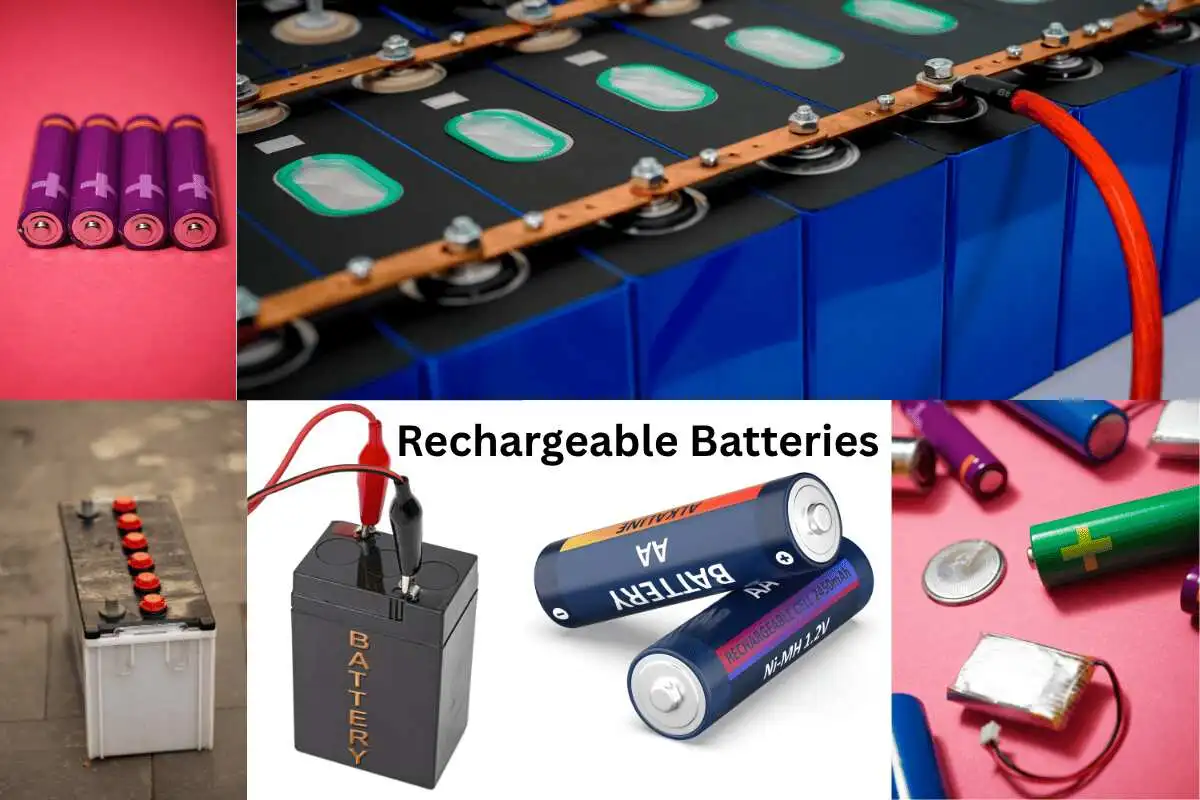
These batteries are superior energy storage solutions powering our smartphones, laptops, and electric vehicles (EVs). In today’s world—as the entire globe rapidly shifts toward sustainability—the usage of rechargeable batteries is on the rise everywhere. Not only do they help reduce electronic waste (e-waste), but they also prove to be an extremely cost-effective option in the long run. Instead of repeatedly purchasing new batteries, a high-quality rechargeable battery serves you faithfully for years.
How Do Rechargeable Batteries Work?
To understand the working mechanism of rechargeable batteries, it is essential first to examine their key internal components—such as electrodes, electrolytes, and separators—in detail, as these are the very parts that collectively facilitate energy storage and transfer.
Key Components use of Rechargeable Batteries
For a battery to function correctly, it requires three main parts:
Electrodes
A battery consists of two main electrodes: the Anode (negative electrode) and the Cathode (positive electrode). Both of these provide the essential foundation for the passage of electricity and the conduction of chemical reactions. During discharge, electrons flow from the Anode toward the Cathode.
Electrolyte
An electrolyte is a chemical medium (in a liquid, gel, or solid state) situated between the Anode and the Cathode. Its primary function is to facilitate the easy flow of ions (charged particles) between the electrodes. It blocks electrons, compelling them to travel through the external circuit (the device).
Separator
A separator is a thin, porous membrane that physically separates the anode from the cathode. Its function is to prevent short circuits. However, it contains small pores to allow ions to pass through it easily via the electrolyte.
Working Process
The working mechanism of rechargeable batteries is based on a simple yet effective scientific process.
Charging and Discharging Process
Chemical reactions drive the flow of energy inside a battery. This process consists of two parts: charging (storing energy) and discharging (using energy).
Role of Chemical Reactions
A rechargeable battery undergoes an oxidation-reduction (redox) reaction. When the battery is supplying power (discharging), electrons flow from the negative terminal toward the positive terminal, thereby generating an electric current. When we plug the battery into a power source (charging), an external electric current reverses this chemical reaction.
Energy Storage Mechanism
Rechargeable batteries do not store energy directly in an electrical form. Instead, they store electricity as chemical potential energy. When you turn on this device, its stored chemical energy quickly converts into an electrical current. This chemical reaction delivers a steady DC power supply that you can apply directly to run everyday electronic circuits.
While many small gadgets utilize this direct current directly for various tasks as needed, we can easily extend its utility for larger-scale applications. By using an inverter, you can convert this steady DC power into Alternating Current (AC). With the help of this simple conversion, you can power large household appliances, lighting fixtures, and heavy-duty tools across a wide range of locations.
Types of Rechargeable Batteries
After understanding the working mechanism of rechargeable batteries and their internal components, it is essential to know the various types of batteries available in the market. Each battery possesses a distinct chemical composition that determines its capacity, power output, and lifespan.
Lead-Acid Batteries
Lead-acid batteries are one of the oldest rechargeable battery technologies. They were invented in 1859, yet they remain highly popular today due to their reliability and low cost. They consist of electrodes made of spongy lead and lead dioxide, and utilize sulfuric acid as the electrolyte.
The basic chemical reaction inside a lead-acid battery is as follows:
Pb + PbO2 + 2H2SO4 (Charge)⇌ 2PbSO4 + 2H2O(Discharge)
Advantages
- Cost-Effective: Compared to all other battery types, these are the most affordable and readily available.
- High Surge Current: These batteries can deliver a very high current (surge power) in a single burst, which is essential for starting an engine.
- Reliability: Their performance is quite stable and reliable, particularly under tough environmental conditions.
- Highly Recyclable: Lead-acid batteries have the highest recycling rate globally (approximately 99%), making them a significant component of the circular economy.
Limitations
- Heavy Weight: Due to the presence of lead and acid, these batteries are quite heavy, which makes them unsuitable for use in portable devices.
- Low Energy Density: They possess a relatively low energy density. Despite their large size and weight, they store less energy compared to Li-ion batteries.
- Shorter Cycle Life: If subjected to regular deep discharge (completely draining the battery), their lifespan diminishes rapidly.
- Maintenance Issues: Some lead-acid batteries (such as flooded types) require the regular addition of distilled water. However, modern Sealed Lead-Acid (SLA) batteries are now available that require no maintenance.
Lithium-Ion (Li-ion) Batteries
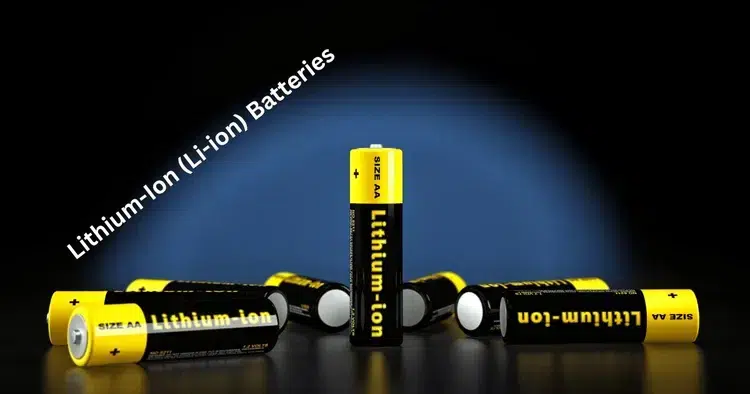
Lithium-ion (Li-ion) batteries are currently among the most advanced and popular types of rechargeable batteries. They are used in everything from small gadgets to large machines. In these batteries, lithium ions travel between the anode and the cathode, which makes them highly efficient.
Features and Benefits
- High Energy Density: Their greatest advantage is their high energy density. This means they can store a significant amount of energy even within a compact size, making them perfect for portable devices.
- Low Self-Discharge Rate: Li-ion batteries have a very low self-discharge rate. If you charge them and set them aside, they retain their power for months.
- Long Cycle Life: These batteries possess a remarkably long cycle life. They continue to deliver excellent performance even after being charged and discharged thousands of times.
- Lightweight: Compared to other types of batteries, they are quite lightweight, which helps keep the overall weight of devices low.
- No Memory Effect: There is no need to fully discharge them before recharging.
Common Applications
- Smartphones, tablets, and laptops.
- They are most widely used in modern EV (Electric Vehicle) batteries, as they provide vehicles with extended range and power.
- Drones and digital cameras.
- Power banks and portable medical devices.
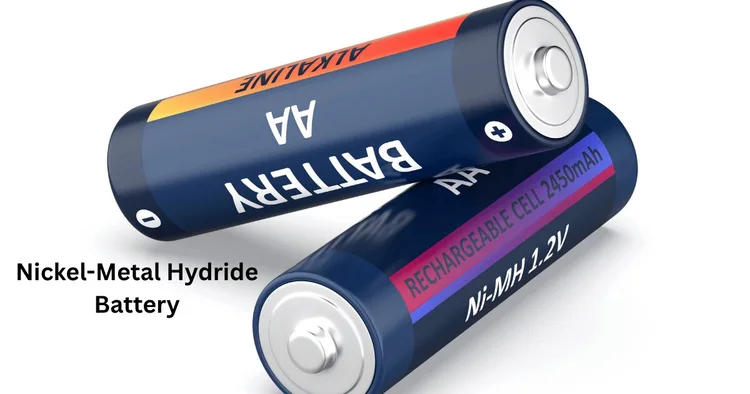
Nickel-Metal Hydride (NiMH) Batteries
Nickel-Metal Hydride (NiMH) batteries are a superior and eco-friendly alternative to older Nickel-Cadmium (NiCd) batteries. Instead of toxic cadmium, they utilize a hydrogen-absorbing alloy.
Characteristics
- Memory Effect: NiMH batteries exhibit a minimal memory effect, which improves their performance and lifespan.
- Self-Discharge Rate: They have a high self-discharge rate, meaning they can lose their charge relatively quickly after being charged if left unused.
- Temperature Sensitivity: These batteries do not perform well in extreme temperatures.
- Voltage: Their nominal voltage is 1.2 volts, which is suitable for consumer electronics.
Application
- Consumer Electronics: Used in remote controls, digital cameras, cordless phones, and toys.
- Hybrid Electric Vehicles (HEVs): NiMH batteries are utilized in hybrid cars such as the Toyota Prius.
- Portable Devices: They are also employed in flashlights, portable fans, and medical devices.
- Renewable Energy Storage: Used as energy storage solutions for solar and wind energy systems.
- Power Tools: NiMH batteries are also quite common in cordless drills and other power tools.
- If you would like further details on any specific point, please let me know!
Advantages of Rechargeable Batteries
Cost-effectiveness over time
Although the initial purchase price of secondary batteries is higher than that of disposable (single-use) batteries, they prove to be a highly economical option in the long run. Since you can recharge and reuse them repeatedly, you save on the recurring expense of purchasing new batteries.
Environmental benefits
Disposable batteries are discarded immediately after use, leading to an increase in e-waste and the accumulation of hazardous chemical waste in landfills. In contrast, the use of rechargeable batteries significantly reduces waste. This is an excellent eco-friendly alternative that plays a crucial role in protecting our environment.
High energy efficiency
Modern rechargeable batteries offer excellent energy density. This means that, despite their small and compact size, they can store a large amount of energy. Their power delivery is stable, making them highly efficient for high-drain devices.
Versatility in applications
The applications of these batteries are extensive. From everyday consumer electronics (smartphones, laptops, cameras) to electric vehicles (EVs) and sustainable energy systems (such as solar and wind energy storage), rechargeable batteries are utilized everywhere.
Challenges and Limitations of Rechargeable Batteries
Initial cost
The biggest challenge associated with these batteries is their upfront investment. The initial cost of rechargeable batteries—along with the chargers required for them—is significantly higher compared to ordinary alkaline batteries.
Limited lifespan and degradation
No battery is invincible or immortal; every battery has a finite number of designated charging cycles. As these cycles are fully utilised, the battery’s capacity—its ability to store energy—begins to degrade. Eventually, the battery ages, and replacing it becomes necessary.
Safety concerns
If rechargeable batteries (particularly lithium-ion) are not charged or stored correctly, safety risks may arise. These include issues such as overheating and chemical leakage. Furthermore, exposure to extreme temperatures or physical damage poses a risk of fire.
Recycling and disposal issues
Although these batteries have a long lifespan, once they reach the end of their useful life, safely disposing of them becomes a major challenge. They contain heavy metals and chemicals such as cobalt, lead, and lithium. If not recycled properly, they can cause severe damage to the environment and the soil. Currently, the process for recycling them is quite complex.
Reduction in Waste
Disposable or single-use batteries (such as AA or AAA alkaline batteries) are discarded directly into the trash after being used just once. As a result, millions of batteries accumulate in landfills every year, which is extremely harmful to the environment.
In contrast, rechargeable batteries can be charged and reused hundreds or even thousands of times. A single rechargeable battery can replace thousands of single-use batteries. This shift leads to a significant reduction in the waste sent to landfills. The use of rechargeable batteries constitutes a major and positive step toward a proper e-waste management system, helping to control solid waste.
Challenges in Battery Recycling and Safe Disposal
Once rechargeable batteries complete their life cycle, their safe disposal becomes crucial. If discarded improperly, they can leak toxic chemicals into the soil and groundwater, thereby increasing pollution and health risks. Currently, the most significant challenge is the lack of widespread battery recycling infrastructure. Safely extracting valuable metals from these batteries is a complex and costly process. Therefore, improving and making recycling facilities globally accessible should be a major priority.
Development of sustainable energy solutions
Despite these challenges, the greatest advantage of rechargeable batteries is their contribution to sustainable energy solutions. To combat climate change, the world is rapidly shifting towards renewable energy, and batteries play a pivotal role in this transition.
- Renewable Energy Storage: Solar panels and wind turbines generate power only when sunlight or wind is available. High-capacity rechargeable batteries are utilised to store this generated energy within the grid. This stored energy proves invaluable during periods of peak demand or when weather conditions are unfavourable.
- Electric Vehicles (EVs): The revolution of EVs within the automotive industry relies entirely on Lithium-ion and other advanced rechargeable batteries. These vehicles reduce our dependence on fossil fuels (petrol/diesel), leading to a significant decline in greenhouse gas emissions and our overall carbon footprint.
Conclusion
In this article, we have seen that rechargeable batteries are not merely a convenience but a necessity. Their advantages—such as long-term cost-effectiveness and a significant reduction in electronic waste—make them a superior and smarter option compared to single-use (disposable) batteries. However, we also acknowledged their challenges, which include the initial cost, limited degradation cycles, and difficulties associated with disposal. Nevertheless, when we consider their overall environmental impact, it becomes clear that their benefits far outweigh these challenges in both magnitude and importance.
Achieving a ‘sustainable future’ has become a global priority, and rechargeable batteries lie at the very heart of this mission. To reduce carbon emissions, the world is rapidly shifting towards ‘green energy.’ Renewable sources—such as solar panels and wind turbines—can only be effective if the energy they generate can be stored efficiently.
FAQ
-
What is the difference between NiMH and lithium-ion batteries?
NiMH batteries are inexpensive and are commonly found in remotes, clocks, and toys. Lithium-ion batteries are lightweight and possess high energy density; they are used in smartphones, laptops, and EVs.
-
How to extend the battery life of a rechargeable battery?
Avoid overcharging or completely discharging the battery, do not expose it to extreme temperatures, and keep its charge level between 20% and 80%. This will extend the battery’s lifespan.
-
Can we use rechargeable batteries in all devices?
Rechargeable batteries are often used in consumer electronics such as remotes, toys, and cameras. However, disposable batteries perform better in low-drain devices like smoke detectors or wall clocks.
-
Are rechargeable batteries environment-friendly?
Yes, these are often generated and serve their purpose; however, their proper recycling is also essential.
-
What are Rechargeable Batteries, and can you use them safely in extreme freezing temperatures?
They are reusable power cells, but standard versions often lose their charge very quickly in the cold. If you need to run your devices in freezing weather, we suggest using specialized Low Self-Discharge (LSD) models, because they hold onto their energy much better in harsh winter conditions.

I am an electrical engineer and also a blogger. I write informative blog posts on topics related to electrical and electronics engineering. If you are interested in these topics, you are welcome to my site to read these articles.