What are Miniature Circuit Breakers and How Does it Work?
Have you ever wondered how your home’s expensive electronic appliances remain safe in the event of sudden voltage surges or wiring faults? This is precisely where a small yet incredibly vital device comes into play—the Miniature Circuit Breaker (MCB).
In today’s world, electrical safety is of paramount importance for any home, office, or factory. Whether you wish to safeguard your home, are a professional electrician or engineer, or own a business, having accurate knowledge about MCBs is highly beneficial. This device acts as a silent guardian for your electrical system.
Whenever a hazardous situation—such as an overload or a short circuit—arises within the wiring, it instantly cuts off the power supply, thereby averting major accidents and eliminating the risk of fire. In this article, you will gain an in-depth understanding of what an MCB is, its key features, and exactly how it functions.
What is Miniature Circuit Breaker
A Miniature Circuit Breaker (MCB) is an electromechanical device—commonly referred to as an “automatic switch.” Its primary function is to protect the electrical wiring in your home or office from damage caused by excessive current. Whenever the electric current flowing through the circuit exceeds a predetermined limit, the device immediately “trips” (shuts off) to interrupt the circuit, thereby providing protection.
Key Features of an MCB
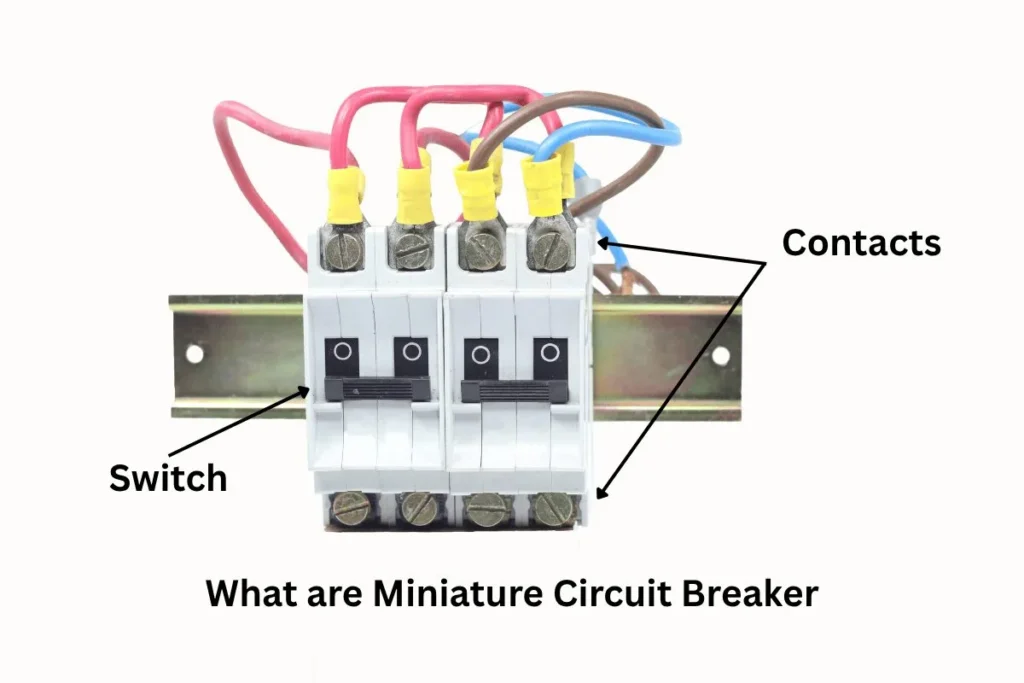
- Compact Size: The MCB features a very small form factor and a smart design, allowing it to be easily fitted into any distribution board (electrical panel).
- Automatic Operation: You do not need to monitor it constantly. As soon as a fault occurs, its automatic mechanism activates instantly and cuts off the power supply.
- Quick Detection: It rapidly detects even the slightest fluctuations in current and reacts within a fraction of a second.
Compare MCBs vs. Traditional Electric Fuses
In the past, traditional fuses were used to protect electrical wiring. A electric fuse contains a thin wire; when the current exceeds a safe limit, this wire melts and breaks. Consequently, you have to remove the fuse and install a new wire—a task that is both cumbersome and hazardous.
In contrast, an MCB is far more convenient and safe. In the event of an overcurrent or short circuit, the internal wire of an MCB does not melt; instead, its switch simply trips (flips down) to cut off the power supply. Once the fault has been rectified, you simply need to flip the switch back up (to the ‘ON’ position) to restore the electricity. This feature makes the MCB significantly safer, reusable, and more user-friendly than traditional fuses.
Components of a Miniature Circuit Breaker (MCB)
Outwardly, an MCB appears to be nothing more than a small plastic switch; however, it houses numerous complex and critical internal components. All these parts work in unison to ensure electrical safety in your home or office. Let us explore each of the main components of an MCB and understand their respective functions in detail:
Frame (The Outer Casing)
The frame constitutes the outer body of the MCB, typically constructed from a moulded insulating material (such as a specialised plastic or ceramic). Its primary function is to shield all internal sensitive and moving components from dust, moisture, and external damage. This casing is robust enough to easily withstand the high pressure and heat generated during a short circuit, thereby providing superior protection to the circuit.
Incoming and Outgoing Terminals
To connect an MCB to your electrical circuit, two terminals are provided—one at the top and one at the bottom. One side features an Incoming Terminal, through which the main power supply enters, while the other side serves as the Outgoing Terminal, through which electricity flows to your appliances. These terminals are designed to ensure a secure grip on the wires and eliminate any risk of sparking.
Switch and Operating Mechanism
This is the component you use to manually switch the device ON or OFF. The Operating Mechanism serves as the control center of the MCB. When a fault occurs, this mechanism triggers automatically and instantly trips the switch to the ‘OFF’ position. It is designed in such a way that even if you forcibly hold the switch in the ‘ON’ position, the internal mechanism will still break the circuit in the event of a fault.
Contacts (Fixed and Moving)
Inside an MCB, there are two types of contacts designed to maintain the flow of electricity: a Fixed Contact (which remains stationary) and a Moving Contact (which moves when necessary). When the MCB is in the ‘ON’ position, the Moving Contact connects with the Fixed Contact, allowing current to flow. As soon as the MCB trips—whether due to overload protection or a fault—the Moving Contact rapidly separates, thereby breaking the circuit and cutting off the power supply.
Tripping Mechanism (Thermal and Magnetic)
This is the most essential and intelligent component of an MCB. The tripping mechanism operates in two distinct ways to safeguard you against every type of hazard:
- Thermal Tripping: This mechanism protects against sustained overloads (when current flowing through the wiring exceeds its capacity).
- Magnetic Tripping: This mechanism provides instantaneous protection against sudden, heavy short circuits.
Bi-metallic Strip and Carrier
A bi-metallic strip is used for thermal tripping. It consists of a strip formed by joining two different metals. When a current slightly higher than the normal level flows continuously through the circuit (an overload), this strip heats up and bends. This bending action causes the MCB to trip. A bi-metallic strip carrier is utilized to hold this strip securely and precisely in its designated position.
Solenoid, Plunger, and Latch
For magnetic tripping, an MCB contains a solenoid (coil) and a plunger (a metal rod) situated inside it. When a sudden, severe short circuit occurs, a very strong magnetic field is generated within the solenoid. This field rapidly propels the plunger forward. The plunger strikes the latch (locking mechanism) directly, and as the latch disengages, the contacts separate. This entire process is completed in less than one-hundredth of a second.
Arc Chute and Arc Chute Holder
When the moving and fixed contacts suddenly separate, a heavy spark or ‘arc’ is generated between them. If this arc is not immediately suppressed, a fire could erupt inside the MCB. This is where the Arc Chute comes into play. It consists of several thin metal plates (splitters) that divide the arc into multiple smaller segments, rapidly cooling and extinguishing it. The Arc Chute Holder securely holds this entire assembly in place.
DIN Rail Holder
Inside an electrical panel or distribution board, an MCB is mounted on a standard metal strip known as a DIN rail. The back of the MCB features a clip or lock, referred to as a DIN rail holder. With the aid of this mechanism, the MCB can be securely and effortlessly fixed to the board without the use of any screws. This makes the installation process extremely simple and rapid.
How Does a Miniature Circuit Breaker Work?
The working mechanism of an MCB is highly sophisticated and reliable. It acts like an automatic watchdog to ensure the electrical safety of your home, office, or factory. In the event of any electrical fault, take immediate action. Let us understand, step-by-step, exactly how a Miniature Circuit Breaker works.
Normal Operation: Allowing Current to Flow
When everything in your home is normal, and electricity usage remains within safe limits, the MCB functions like a standard switch. In this situation:
- Current enters through the incoming terminal of the MCB.
- This current flows through the internal moving and fixed contacts to reach the outgoing terminal.
- Throughout this entire process, the flow of current remains uninterrupted, and all your appliances (TV, fridge, Air Conditioner) continue to function properly.
Overload Condition: Thermal Tripping Mechanism
An overload occurs when you simultaneously switch on multiple high-power appliances (such as ACs, heaters, and geysers) on a single circuit. This causes current to flow through the wires in excess of their rated capacity (overcurrent). To handle this situation, a Thermal Tripping Mechanism is utilized within the MCB.
- The Role of the Bi-metallic Strip: Inside an MCB, there is a specialised strip known as a bi-metallic strip. When a continuous overcurrent flows through the circuit, this strip gradually begins to heat up.
- Bending of the Strip: Since this strip is composed of two different metals, the excessive heat causes it to start bending in one direction.
- Tripping Action: As soon as the strip bends, it pulls on the internal latch (the locking mechanism). Upon being pulled, the switch trips (the MCB trips), and the power supply is immediately interrupted. This process serves to prevent damage caused by electrical overloads.
Short Circuit Condition: Magnetic Tripping Mechanism
A short circuit occurs when the live and neutral wires suddenly come into contact with each other. In this situation, the current surges to thousands of times its normal level, creating an immediate risk of fire. To avert this grave danger in the blink of an eye, the Magnetic Tripping Mechanism comes into play:
- The Role of the Solenoid and Plunger: Inside an MCB, there is a coil (Solenoid). As soon as a short circuit occurs, a very powerful magnetic field is generated within this coil.
- Immediate Action: This magnetic field propels an internal iron rod (Plunger) forward with immense force.
- Instantaneous Protection: The plunger strikes the latch directly, causing the contacts to separate instantly. This entire process takes place within a few thousandths of a second (milliseconds), thereby preventing the wires from melting.
Automatic Disconnection: Preventing Damage
Whether the fault is due to an overload or a short circuit, the primary function of an MCB is to break the circuit through automatic disconnection.
- As soon as a fault is detected, the MCB’s tripping mechanism separates the moving contact from the fixed contact.
- The intense spark (arc) generated during the separation of the contacts is instantly extinguished by the internal arc chute.
- Thanks to this entire process, your expensive machinery, house wiring, and—most importantly—your life remain safe.
Types of Miniature Circuit Breakers
Did you know that a single type of MCB is not suitable for every electrical wiring application? Your home television and the heavy machinery in a factory require different levels of protection. Selecting the right MCB is essential for ensuring optimal overcurrent protection.
Various types of MCBs are available in the market, categorized based on their capacity and intended application. Primarily, Miniature Circuit Breakers are classified in two ways: based on their Tripping Characteristics and the Number of Poles. Let us understand these in detail.
Classification Based on Tripping Characteristics
How quickly an MCB trips depends on its tripping curve and response characteristics. Various types of MCBs are available for different electrical loads and applications. Let us understand all the main types in detail:
Type A MCB: Ultra Sensitive Applications
The Type A MCB is the most sensitive (ultra-sensitive) type, and it trips when the current exceeds 2–3 times the full load current.
- Applications: Electronic circuits, highly sensitive equipment, laboratories, or environments where very low currents flow.
- Advantage: This type reacts instantly even to small and rapid current surges, making it suitable for protecting electronic devices.
Type B MCB: Residential Use
A Type B MCB trips when the current reaches 3 to 5 times the full load.
- Application: Domestic wiring and common appliances such as TVs, refrigerators, and fans.
- Advantage: Rapid protection against minor surges and overcurrents.
Type C MCB: Commercial and Motor Loads
A Type C MCB trips at 5–10 times the full load current.
- Applications: Commercial spaces, motors, pumps, AC units, inductive loads, and fluorescent light.
- Advantage: Designed to handle the inrush current of appliances such as motors, thereby preventing nuisance tripping.
Type D MCB: Industrial Use
A Type D MCB trips when the current reaches 10 to 20 times the full load.
- Applications: Heavy industrial machinery, welding machines, transformers, and large motors.
- Advantage: It can withstand even very high inrush currents, thereby ensuring the safety of heavy-duty applications.
Type K MCB: Motor and Transformer Protection
A Type K MCB is more tolerant of starting currents, tripping at 8–12 times the full-load current.
- Applications: Motors, transformers, and inductive loads that may experience long-duration inrush currents.
- Advantage: Protection against nuisance tripping in installations with heavy motor loads.
Type Z MCB: Highly Sensitive for Electronics
The Type Z MCB is designed for a very low tripping range (2–3 times).
- Applications: Highly sensitive electronic instruments, medical equipment, etc.
- Advantage: Protection even against the lowest possible overcurrents.
Type H MCB: High Break Capacity
The Type H MCB is designed for high rupturing capacity. It is officially known as the “High Break Capacity MCB.”
- Application: Applications where there is a likelihood of very high fault currents.
Classification Based on Number of Poles
Proper management of Phase and Neutral wires is essential in any electrical circuit. The number of poles for an MCB is determined based on the number of phases in your system:
Single-pole (SP) MCB
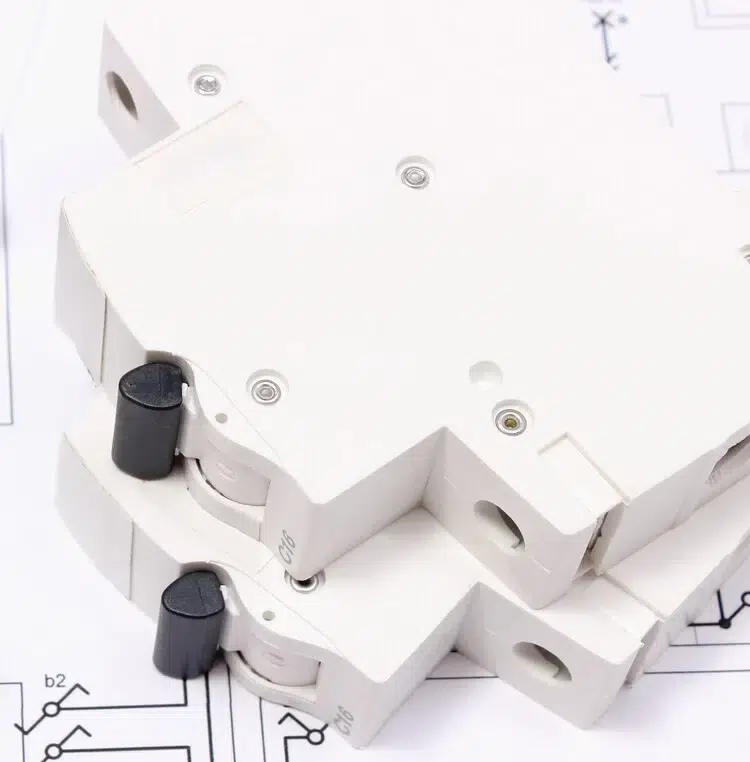
This is the most basic type of MCB, featuring a connection point for only one wire. It provides overcurrent protection to a single-phase wire. It is used in single-phase 230V circuits to protect small appliances and lighting circuits.
Double-pole (DP) MCB
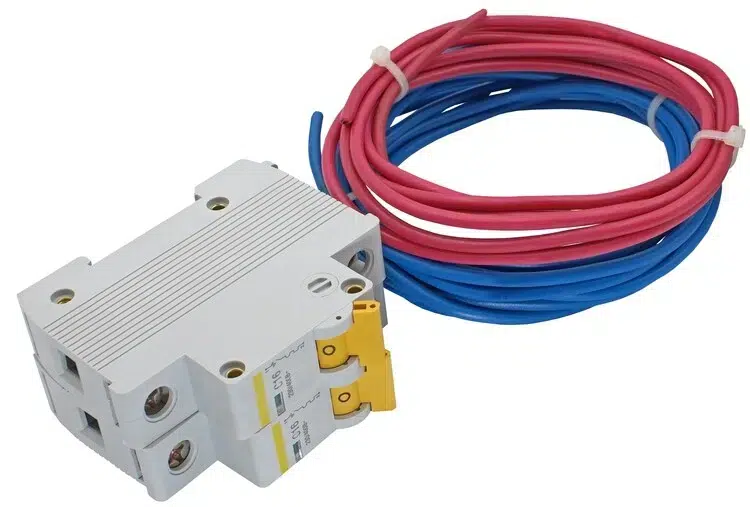
A Double-pole MCB features two terminals, providing simultaneous protection to both the Phase and Neutral wires. In the event of a fault, it simultaneously interrupts the supply of both the Phase and Neutral lines. It is most commonly utilized in residential main switchboards (Main Distribution Boards) to ensure comprehensive safety.
Triple-pole (TP) MCB
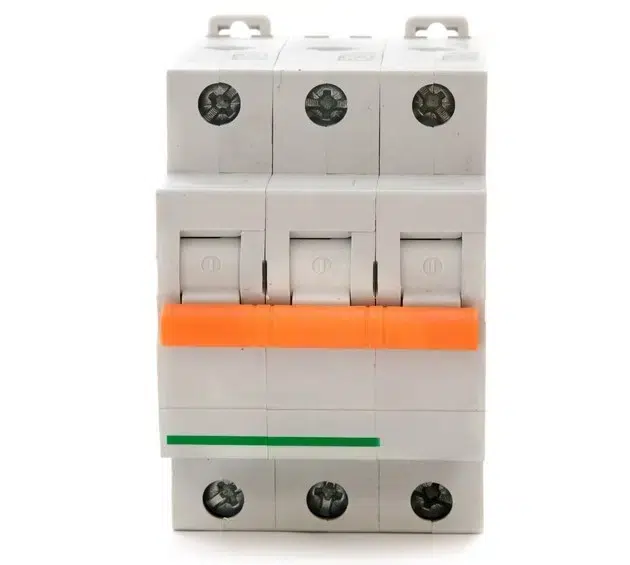
This MCB is designed for three-phase (3-Phase) supply systems. It connects three separate phase wires (R, Y, B). If a fault occurs in any one of the phases or if the electrical load suddenly increases, it immediately cuts off the supply to all three phases. This is essential for industrial and commercial three-phase motors.
Four-pole (FP) MCB
A four-pole MCB provides protection to the neutral wire in addition to the three-phase system. It connects three phase lines and one neutral line (R, Y, B, N). It is utilized when there is a risk of a fault occurring in the neutral wire due to an unbalanced load within the system. This device offers the highest level of protection for a three-phase system.
Applications of Each Type
To ensure proper safety and superior breaking capacity, it is essential to understand which type of MCB to use in specific applications. Listed below are the primary applications for each type of MCB:
- In Homes and Apartments: For general household wiring and small appliances, always use Type B and Single-pole / Double-pole MCBs. These provide immediate protection for appliances such as televisions and refrigerators.
- In Offices and Shops: In commercial buildings where numerous computers, servers, and air conditioners operate simultaneously, Type C MCBs should be installed. For commercial meters utilizing a three-phase supply, a combination involving a Triple-pole (TP) MCB is the optimal choice.
- In Factories and Heavy Industries: In settings equipped with large machinery, welding equipment, and industrial motors, always utilize Type D MCBs. In heavy industrial environments, Four-pole (FP) MCBs are prioritized to ensure comprehensive protection for both the three-phase supply and the neutral line.
What is the Advantages of Miniature Circuit Breaker
Replacing the traditional fuses of yesteryear, MCBs are now being utilised in every home, office, and factory. There are several significant reasons behind this shift. Not only does an MCB enhance your electrical safety, but it is also extremely safe and convenient to use. Let us explore in detail the key benefits of circuit breakers that make them so exceptional.
Enhanced Safety and Protection
The greatest advantage of an MCB is its superior circuit protection. Whenever an overcurrent or a dangerous short-circuit condition arises within your electrical system, the MCB immediately cuts off the power supply. This ensures excellent overload protection, thereby safeguarding your expensive electronic appliances—such as refrigerators, TVs, ACs, and industrial machinery—from damage. By breaking the circuit promptly, the risk of wiring melting and fires breaking out is completely averted—a factor of paramount importance in terms of electrical safety.
Reusability
The biggest problem with traditional fuses was that their wire would melt in the event of an overload. Consequently, you would have to replace the wire—or the entire fuse—in the dark, which was a hazardous task. In contrast, an MCB functions as an exceptionally smart automatic switch. In the event of any electrical fault, it simply ‘trips’ (switches off by dropping down). Once the fault has been rectified, you simply need to flip the switch back up to the ‘ON’ position. It requires no component replacement, making it 100% reusable and user-friendly.
Quick Response to Electrical Faults
The sensitivity of an MCB is far greater than that of traditional fuses. It instantly detects even the slightest fluctuations in current. As soon as a fault occurs, the internal thermal and magnetic tripping mechanisms activate within a fraction of a second (milliseconds). Due to this rapid response speed, the circuit breaks before the current can even reach the fault location, thereby preventing any major damage.
Compact Design and Ease of Installation
MCBs feature a highly compact design, allowing them to occupy very little space within any electrical panel (distribution board). Furthermore, they are extremely easy to install and replace. An MCB can be easily mounted directly onto a DIN rail—a standard metal strip. Thanks to the clip-on mechanism located on the back, it can be securely fitted without the need for numerous screws, thereby saving both time and effort for electricians.
How to Choose the Right MCB?
The electrical safety of your home or office depends entirely on whether or not you have selected the correct Miniature Circuit Breaker (MCB). If you install an MCB with a capacity lower than your requirements, it will repeatedly trip, causing you constant inconvenience. Conversely, if you install an MCB with a capacity exceeding your needs, it will fail to trip even in the event of a fault, thereby increasing the risk of electrical fires.
To ensure optimal circuit protection and safety, it is crucial to keep certain technical specifications in mind when purchasing an MCB from the market. Let us explore in detail the six key factors that will assist you in selecting the right MCB.
Current Rating
When selecting an MCB, the first and most critical factor is its Current Rating, or “rated current.” This is denoted by the symbol ‘In‘. It signifies the maximum amount of current that the MCB can allow to flow through itself under normal operating conditions without tripping.
- How to Make the Right Choice: You must calculate the Total Electrical Load of all the appliances connected to your circuit. For instance, if the total load in a specific room is 15 Amperes, you should select a 16A MCB.
- Overload Protection: If you install a 32A MCB for a load of 15 Amperes, the MCB will not trip even in the event of an overload. Consequently, the overload protection mechanism will fail, and the wiring could burn out. Therefore, the rated current should always be selected in accordance with the capacity of your wiring and the specific load requirements (e.g., 6A, 10A, 16A, 20A, 32A, 40A, 63A, etc.).
Voltage Rating
The voltage rating of your MCB must match the voltage of your electrical supply system. Primarily, two types of voltage systems operate in India:
- Single-Phase Supply: If you are selecting an MCB (Single-pole or Double-pole) for residential use, its operating voltage is typically 230V (Volts).
- Three-Phase Supply: If you are selecting an MCB (Triple-pole or Four-pole) for commercial or industrial use, the system voltage is 415V.
Installing a device with an incorrect voltage rating can result in the MCB itself sustaining damage during a short circuit.
Tripping Curve
The tripping curve of an MCB is selected based on the type of equipment (load type) connected to the circuit. This determines how quickly the MCB will trip in the event of a sudden surge in current:
- Type B: This is best suited for equipment with resistive loads, where the current does not rise drastically or suddenly. It is used for household lighting, fans, televisions, and heaters.
- Type C: This is appropriate for inductive loads, where equipment draws a slightly higher current during startup. It is chosen for home air conditioners, refrigerators, motors, and commercial offices.
- Type D: This is designed for highly inductive loads. Type D MCBs should be used for welding machines, X-ray machines, and heavy-duty industrial three phase induction motors.
Number of Poles
Based on your wiring setup, you must determine the number of poles required for your MCB:
- Single-pole (SP): To control a single-phase wire (e.g., a room lighting circuit).
- Double-pole (DP): To simultaneously disconnect both the phase and neutral wires (typically for the main distribution board of a home).
- Triple-pole (TP): For industrial and commercial motors utilising a 3-phase supply (covering only the R, Y, and B phases).
- Four-pole (FP): To protect the neutral wire in addition to the 3-phase supply.
Breaking Capacity
Breaking capacity refers to the maximum fault current that an MCB can withstand during a severe short circuit—when the current surges to thousands of amperes—without burning out or rupturing. It is measured in kA (Kiloamperes).
- For homes and small offices, an MCB with a breaking capacity of 10 kA is typically sufficient.
- For large commercial and industrial setups—where transformers are located in proximity and fault currents can be significantly higher—an MCB with a breaking capacity of 25 kA or greater is required.
Importance of Consulting a Qualified Electrician
Selecting an MCB based on YouTube videos or mere guesswork can pose a significant risk to both your life and property. Electrical safety is not a subject where a ‘hit-and-trial’ approach should be employed.
- A qualified electrician performs a precise load calculation for your home or factory.
- By assessing the condition of your existing wiring, they determine the maximum rated current that your wires can safely withstand.
- Professional expertise is required to determine the correct combination of poles, tripping curves, and breaking capacity.
Therefore, to ensure your electrical system is 100% safe and fire-proof, always consult a licensed electrician before purchasing and installing an MCB.
MCB Installation and Maintenance Tips
An MCB functions correctly only when it is properly installed in the distribution board. Incorrect wiring or loose connections increase the risk of overloads and short circuits.
Steps for Safe Installation of an MCB
Installing an MCB on a DIN rail is straightforward, but safety must always be prioritised. Follow these steps:
- Turn Off Main Power: Before beginning the installation, always completely switch off the main power supply. This is essential for your personal safety.
- Prepare the Distribution Board: Open your distribution board and verify that the DIN rail (the metal strip) is clean and in good condition.
- Mounting on the DIN Rail: There is a spring-loaded clip located on the back of the MCB. Hook the upper part of the MCB onto the DIN rail and press down gently on the lower part until you hear a distinct ‘click.’ This ensures that the MCB is securely locked in place.
- Connecting the Wires: Connect the incoming (main power) wire to the lower terminal of the MCB and the outgoing (load) wire to the upper terminal. Strip the ends of the wires, insert them into the terminals, and tighten them firmly using a screwdriver.
- Testing the Connection: Switch the power back on and toggle the MCB switch to the ‘ON’ position. Verify that all connected appliances are functioning correctly.
Regular Maintenance Practices
It is not advisable to simply install an MCB and forget about it. To ensure optimal performance, some routine maintenance is essential:
- Check for Loose Connections: Over time, and due to the continuous flow of current, the terminal screws may become loose. Have an electrician inspect and tighten these connections once every six months.
- Visual Inspection: Keep a close watch on the MCB’s outer casing. If you notice any burn marks, discolouration, or detect the smell of melting plastic, replace the MCB immediately.
- Manual Trip Test: Many MCBs feature a test button; alternatively, you can manually toggle the switch up and down to verify that the tripping mechanism operates smoothly.
Common Myths and Misconceptions About MCBs
People harbor various misconceptions regarding MCBs and electrical safety. Let’s uncover the truth behind these myths:
Myth 1: “MCBs Never Fail”
The Reality: It is a major misconception that MCBs last a lifetime. MCBs contain internal mechanical parts and springs. Repeated tripping or prolonged usage can cause these components to wear out. Therefore, it is essential to replace old MCBs or those exhibiting poor responsiveness.
Myth 2: “Any MCB Works for Any Load”
The Reality: This is absolutely not the case. If you install a Type B MCB—typically used for lighting circuits—for your home AC (an inductive load), it will trip the moment the unit switches on. You must select an MCB with the correct tripping curve (Type B, C, or D) based on the specific type of load (resistive or inductive).
Myth 3: “Quality Doesn’t Matter”
The Truth: Cheap, unbranded MCBs available in the market pose the greatest threat to your circuit protection. Always purchase high-quality MCBs that adhere to certified standards (such as the ISI mark and IEC standards), as inexpensive MCBs often fail to trip during an overload.
Future Trends in Miniature Circuit Breakers
Technology is evolving rapidly, and MCBs are no exception. In the times to come, electrical safety is set to become even smarter and more secure.
Smart MCBs with IoT Integration
The future belongs to ‘Smart MCBs.’ Thanks to Internet of Things (IoT) technology, MCBs can now connect directly to your Wi-Fi network. This means you can remotely monitor your home’s power load from any corner of the world using a smartphone app. You will also be able to switch any circuit on or off directly through the app.
Energy-Efficient and Eco-Friendly Designs
Emphasis is being placed on energy conservation worldwide. New MCBs are being designed in such a way as to minimise internal power loss. Furthermore, recyclable and eco-friendly materials are being utilised in their manufacturing to ensure that no harm is caused to the environment.
Advancements in Fault Detection Technology
Future MCBs will utilize Artificial Intelligence (AI) and advanced sensors. These sensors will be able to detect even the slightest sparking in the wiring or predict potential overloads in advance. You will receive an alert before a fault actually occurs, thereby virtually eliminating incidents of fire.
Conclusion
In short, a Miniature Circuit Breaker (MCB) is not merely a simple switch; rather, it serves as the most robust shield for the electrical safety of your home, office, and factory. In this article, we have explained in detail how an MCB—through its smart tripping mechanisms (thermal and magnetic) and advanced components—instantly protects us from the hazardous conditions caused by overloads and short circuits.
In conclusion, our advice is never to compromise on safety when it comes to electrical matters. To ensure a completely fail-safe electrical system, always use certified, high-quality MCBs.
FAQ
-
Can an MCB trip without a short circuit or overload?
Yes, absolutely! If the wiring at the MCB terminals is not tightened properly (a loose connection), it generates sparks and excessive heat. This heat activates the MCB’s tripping mechanism, causing it to trip even in the absence of any actual fault.
-
Why do some MCBs make a humming or buzzing sound?
A buzzing sound emanating from an MCB is not a good sign. This typically occurs when the device is operating at its maximum capacity or when its internal mechanical components have become loose. For optimal electrical safety, such an MCB should be immediately inspected or replaced by an electrician.
-
Does room temperature affect MCB performance?
Yes, it does have an effect. Inside an MCB, there is a bi-metallic strip for thermal protection that bends due to heat, causing the device to trip. If the ambient temperature surrounding your distribution board is excessively high, the MCB may trip prematurely—that is, before reaching its rated capacity.
-
Can an MCB be installed upside down?
Technically, current will still flow through; however, doing so is strictly against safety regulations. MCBs are designed in such a way that, upon tripping, their switch falls downward (to the OFF position) with the aid of gravity. If installed upside down, this mechanism will not function correctly, potentially compromising your circuit protection.
-
What happens if I forcefully hold the MCB switch ‘ON’ during a fault?
There is no need for you to panic. Modern MCBs come equipped with a ‘Trip-Free’ feature. This means that even if a severe short circuit occurs in the system—and you forcibly hold the switch in the ‘on’ position—the internal mechanism will still break the circuit, thereby cutting off the power supply.

I am an electrical engineer and also a blogger. I write informative blog posts on topics related to electrical and electronics engineering. If you are interested in these topics, you are welcome to my site to read these articles.