Components of Overhead Transmission Line
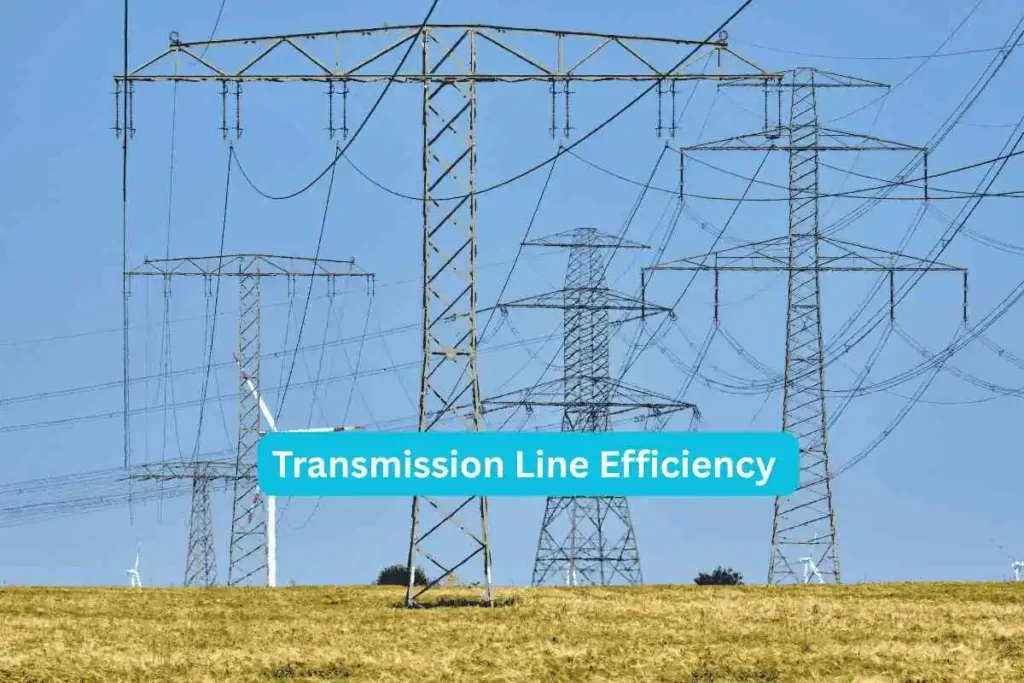
Overhead transmission lines are the lifelines of modern power systems, ensuring electricity travels efficiently from power plants to substations and, ultimately, to our homes and workplaces. These are designed with the reliability of the electrical grid in mind, ensuring that power supply continues even during storms or periods of high demand. By focusing on electrical transmission efficiency, these lines reduce energy losses, making power delivery more sustainable and cost-effective.
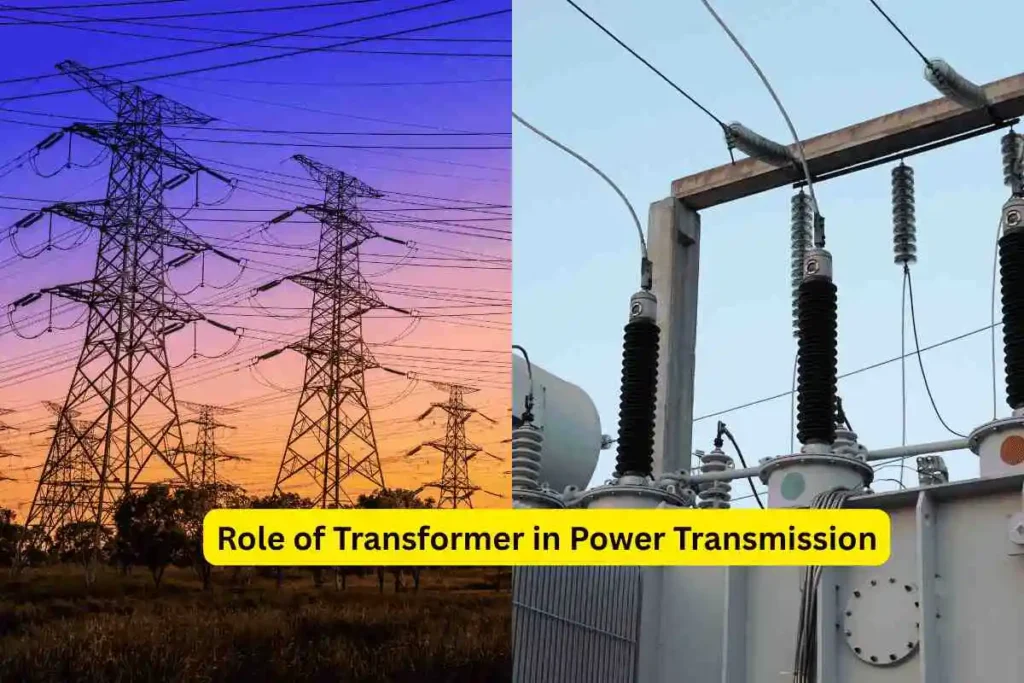
The critical substation connection to high tension transmission lines acts as a bridge, distributing electricity seamlessly to local networks. This article discusses in detail the components of an overhead transmission line, their unique functions, and how they work together to ensure the efficient and reliable operation of the entire system.
Main Components of Overhead Transmission Line
Overhead transmission lines are made up of several key components, each playing a crucial role in ensuring the safe and efficient transfer of electricity over long distances. From conductors that carry the current to insulators that provide support and safety, every component is designed to work in harmony for optimal performance. Let us explore these components one by one.
Conductors in Power Lines
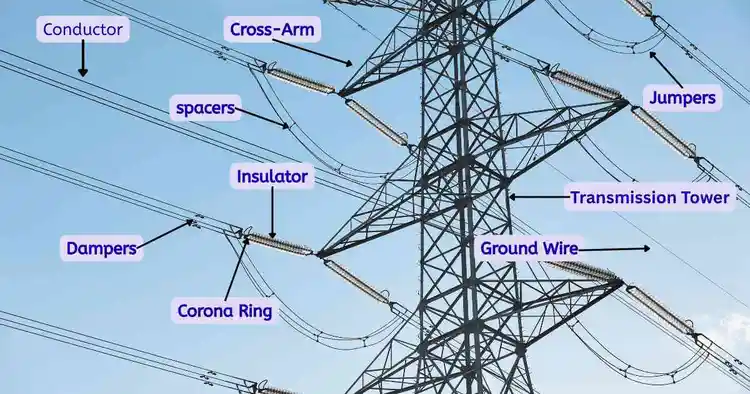
Conductors are one of the most critical electrical transmission line components, as they are responsible for carrying electrical power from one point to another. These conductors are designed to efficiently transmit electricity over long distances while minimizing energy losses.
Common materials used for conductors include aluminum, copper, and ACSR (Aluminum Conductor Steel Reinforced), each chosen for their excellent conductivity and mechanical strength. Aluminum is widely preferred due to its lightweight and cost-effectiveness, while copper is valued for its superior conductivity.
There are various types of conductors used in overhead transmission lines, such as solid conductors, stranded conductors, and bundled conductors, each tailored for specific applications.
For instance, stranded conductors are commonly used in high-voltage lines due to their flexibility and durability, while bundled conductors are employed to reduce corona discharge and increase transmission capacity. Together, these conductors form the backbone of the components of overhead transmission line, ensuring reliable and efficient power delivery across the grid.
Insulators in Overhead Transmission Lines
Insulators are among the main components of overhead lines, playing a vital role in preventing current leakage from the power conductor to the supporting structures, such as towers or poles.
They ensure the safe and efficient operation of the transmission line by providing electrical isolation between the energized conductors and the grounded structures. Insulators are designed to withstand high voltages, mechanical stress, and environmental factors like rain, wind, and pollution.
There are several types of insulators used in overhead lines, including pin type, suspension type, and strain type, each suited for specific applications. For instance, pin-type insulators are commonly used in low-voltage lines, while suspension insulators are ideal for high-voltage systems due to their flexibility and ability to handle greater mechanical loads.
Strain insulators, on the other hand, are used at points where the conductor experiences significant tension, such as at sharp turns or dead ends. The materials used for insulators include porcelain, glass, and polymer, each offering unique advantages.
Porcelain is known for its durability and resistance to weathering, glass provides excellent visibility for damage detection, and polymer insulators are lightweight and resistant to vandalism. Together, these insulators ensure the reliability and safety of the components of overhead transmission line, making them indispensable in modern power systems.
Transmission Line Tower
Transmission line towers are critical power line accessories that support conductors at a safe height, ensuring the uninterrupted flow of electricity across long distances. These towers are designed to maintain proper clearance from the ground, buildings, and vegetation, safeguarding both the transmission system and the surrounding environment.
The transmission tower design is influenced by factors such as voltage levels, terrain type (flat, hilly, or coastal), and environmental conditions like wind pressure, ice loading, and seismic activity. The stability of these towers also depends on the foundation types for transmission tower, which are chosen based on soil conditions and load requirements.
Important Point About Transmission Line Towers:
Function:
- Support conductors at a safe height to ensure efficient and uninterrupted power transmission.
Types of Towers:
- Lattice Towers: Widely used for their strength, flexibility, and ability to span long distances.
- Tubular Towers: Sleek and modern, ideal for urban areas with reduced maintenance needs.
- Monopoles: Compact and space-efficient, perfect for congested or limited-space areas.
Factors Influencing Tower Design:
- Voltage Level: Higher voltages require taller and stronger towers.
- Terrain: Flat plains, hilly regions, or coastal areas dictate the type of tower and foundation.
- Environmental Conditions: Wind pressure, ice loading, and seismic activity impact design choices.
Foundation Types for Transmission Towers:
- Pile Foundations: Suitable for soft or waterlogged soils.
- Raft Foundations: Used for uniform load distribution.
- Grillage Foundations: Ideal for rocky terrains.
Cross-Arms in Overhead Transmission Lines
Cross-arms are essential transmission line components mounted on the transmission tower, designed to hold conductors at proper spacing to prevent electrical faults and ensure safe power transmission.
Their primary role of cross arm in power line is to maintain the required clearance between conductors and the tower structure, which is critical for the efficient and reliable operation of the system. Additionally, cross-arms contribute to the mechanical stability of the transmission line by withstanding the tension and weight of the conductors.
These components are made from materials such as steel, wood, and composite, each chosen based on specific requirements. Steel cross-arms are highly durable and ideal for high-voltage lines, while wooden cross-arms, though less common, are still used in low-voltage applications for their insulating properties.
Composite cross-arms, made from advanced materials, are lightweight, corrosion-resistant, and suitable for harsh environmental conditions. Together, cross-arms ensure proper conductor alignment and stability, making them a critical part of the components of overhead transmission line.
Important Point About Cross-Arms:
Role in Power Lines:
- Maintain proper spacing between conductors to prevent electrical faults.
- Provide mechanical stability by supporting the tension and weight of conductors.
Materials Used:
- Steel: Durable and ideal for high-voltage applications.
- Wood: Cost-effective and insulating, used in low-voltage systems.
- Composite: Lightweight, corrosion-resistant, and suitable for harsh environments.
Importance:
- Ensures safe and efficient power transmission.
- Contributes to the overall stability and reliability of the transmission system.
Ground Wires (Earth Wires) in Overhead Transmission Lines
Ground wires, also known as earth wires, are critical components of transmission line systems, designed to protect the line from lightning strikes and ensure the safety and reliability of the power grid. Placed at the top of the transmission towers, these wires act as a shield, intercepting lightning and safely directing its high-voltage current into the ground.
This ground wire purpose is vital in preventing damage to the conductors, insulators, and other transmission line components, thereby reducing the risk of power outages and equipment failure.
Ground wires are typically made from materials like galvanized steel, aluminum-clad steel, or composite materials, chosen for their strength, conductivity, and corrosion resistance. Their placement at the highest point of the transmission tower ensures maximum protection by creating a barrier against lightning strikes.
Additionally, ground wires play a crucial role in maintaining the overall stability of the system by reducing electromagnetic interference and ensuring proper grounding. By safeguarding the transmission line from external electrical surges, ground wires contribute significantly to the efficiency and reliability of the components of overhead transmission line, making them indispensable for modern power systems.
Lightning Arresters in Overhead Transmission Lines
Lightning arresters are essential main components of transmission line systems, designed to protect the network from voltage surges caused by lightning strikes or switching operations. These devices are critical for transmission line safety, as they prevent damage to conductors, insulators, transformers, and other vital equipment.
Strategically placed near substations or at vulnerable points along the transmission line, lightning arresters act as a shield against high-voltage surges. The operation of lightning arresters is straightforward yet highly effective.
When a surge occurs, the arrester provides a low-resistance path, allowing the excess voltage to bypass the transmission line components and flow safely into the ground. Once the surge dissipates, the arrester returns to its normal high-resistance state, ensuring the system continues to operate without interruption.
These devices are indispensable for lightning protection for power lines, enhancing the reliability and longevity of the transmission system. By minimizing outages and equipment failures, lightning arresters play a vital role in ensuring the safety and efficiency of the components of overhead transmission line.
Importance Point About Lightning Arresters:
Function:
- Protect the transmission system from voltage surges caused by lightning or switching operations.
- Prevent damage to critical components like conductors, insulators, and transformers.
Placement:
- It is installed near substations or at sensitive points along transmission lines.
- These are installed in such a way as to provide maximum protection against surges.
How They Work:
- When a sudden voltage surge occurs, a lightning arrester provides a low-resistance path for the excess voltage and safely diverts it to the ground.
- After the voltage surge subsides, the lightning arrester returns to a high-resistance state, allowing the flow of electricity to continue without interruption.
Importance:
- It enhances the safety of transmission lines by reducing outages and equipment malfunctions.
- Ensuring reliable electrical safety for power lines is essential to contribute to the overall efficiency of the system.
To gain a deeper understanding of lightning arresters, their importance, and applications, check out the article “Understanding Lightning Arrester Importance in Electrical“.
Dampers in Overhead Transmission Lines
Dampers are crucial power line accessories used in overhead transmission lines to reduce vibrations caused by wind, particularly Aeolian vibrations.
These vibrations, if not controlled, can lead to conductor fatigue, damage to fittings, and even failure of the transmission line. To mitigate these vibrations and maintain the reliability of the power system, dampers play a crucial role in ensuring the protection of transmission conductors.
There are different types of vibration dampers used in transmission lines, with the most common being Stockbridge dampers and spacer dampers. Stockbridge dampers consist of a messenger cable with weights at both ends, designed to absorb and dissipate the energy of vibrations.
Spacer dampers, on the other hand, are used in bundled conductors to maintain proper spacing while simultaneously reducing vibrations. These dampers are strategically installed along the transmission line to provide maximum protection against wind-induced oscillations.
The significance of dampers lies in their ability to prevent conductor fatigue—a phenomenon that impacts both the operational efficiency and the longevity of the transmission system.
By safeguarding conductors and fittings, dampers make a substantial contribution to the overall safety and performance of the various components within an overhead transmission line. This not only ensures an uninterrupted flow of electricity but also helps to reduce maintenance costs.
Some Details About Dampers:
Purpose:
- A damper reduces vibrations caused by wind, particularly Aeolian vibrations.
- It also prevents conductor fatigue and damage to the fittings.
Types of Dampers:
- Stockbridge Dampers: It consists of a messenger cable with weights attached to both ends. It effectively absorbs and dissipates vibrational energy.
- Spacer Dampers: This damper is used to maintain proper spacing between bundled conductors. Additionally, it reduces vibration and improves stability.
Importance:
- Ensure the safety of transmission conductors by preventing fatigue and damage.
- This enhances the reliability and longevity of the components of overhead transmission lines.
- This reduces maintenance costs and also ensures an uninterrupted flow of electricity.
Spacers in Overhead Transmission Lines
Spacers are critical overhead line components used in bundled conductors to maintain proper spacing between individual conductors. Their primary role is to prevent clashing caused by wind, vibrations, or other external forces, ensuring the stability and reliability of the transmission system.
By maintaining uniform spacing, spacers also promote oh line safety by reducing the risk of electrical faults and ensuring uniform current distribution across all conductors in the bundle.
A specialized type of spacer, known as spacer dampers, serves a dual purpose. In addition to maintaining conductor spacing, they also mitigate vibrations caused by wind or other environmental factors, enhancing the overall performance and longevity of the transmission line.
Spacers are typically made from durable materials like aluminum alloys or composites, chosen for their strength, lightweight properties, and resistance to environmental wear.
The importance of spacers lies in their ability to ensure the efficient operation of the components of overhead transmission line. By preventing conductor clashing and maintaining uniform current flow, spacers contribute significantly to the safety, reliability, and efficiency of modern power systems.
Jumpers in Transmission Lines
Jumpers are essential overhead power line components that play a critical role in connecting power conductors at various points along the transmission line.
These flexible conductors are used to maintain electrical continuity between different sections of the line, such as at dead-end towers, angle towers, or switchgear connections. By ensuring seamless power flow, jumpers contribute significantly to the efficiency and reliability of the transmission system.
The primary function of jumpers is to act as a connecting power conductor, allowing electricity to flow uninterrupted across mechanical breaks or structural changes in the line.
They are designed to withstand mechanical stress, thermal expansion, and environmental factors like wind and ice loading. Jumpers are typically made from materials like aluminum or aluminum alloy, which offer excellent conductivity, lightweight properties, and resistance to corrosion.
The importance of jumpers lies in their ability to ensure the smooth operation of the components of overhead transmission line. By maintaining electrical continuity and accommodating structural variations, jumpers enhance the overall performance and safety of the transmission system.
Power Line Markers in Overhead Transmission Lines
Power line markers are essential transmission power line components designed to enhance the visibility of overhead transmission lines, particularly in areas where they pose a risk to low-flying aircraft or other aerial operations. These markers are typically spherical or cylindrical in shape and are installed on the conductors or ground wires to make the lines more noticeable.
By improving visibility, power line markers play a crucial role in preventing accidents and ensuring the safety of both the transmission system and external entities. These markers are made from durable materials like UV-resistant plastic or fiberglass, ensuring they can withstand harsh environmental conditions such as extreme temperatures, wind, and sunlight.
They are often brightly colored (red, orange, or white) to maximize visibility during both day and night. Power line markers are strategically placed in areas such as near airports, river crossings, or densely populated regions where the risk of collision is higher.
The importance of power line markers lies in their ability to enhance the safety and reliability of the components of overhead transmission line. By reducing the risk of accidents and ensuring compliance with aviation safety regulations, these markers contribute significantly to the overall performance of the power grid.
Danger Plates in Transmission Line Components
Danger plates are critical transmission line components designed to ensure public safety by warning individuals about the potential hazards associated with high-voltage power lines.
These plates are typically installed on transmission towers, poles, or other visible structures to alert people to the presence of live electrical equipment and the risks of coming into contact with it. By serving as a clear visual warning, danger plates play a vital role in preventing accidents and ensuring compliance with safety regulations.
Danger plates are usually made from durable materials like metal or weather-resistant plastic, ensuring they can withstand harsh environmental conditions such as rain, wind, and sunlight. They are prominently displayed with bold text, symbols, or pictograms, often accompanied by phrases like “Danger: High Voltage” or “Keep Away.”
These plates are standardized in design and placement to ensure they are easily recognizable and effective in conveying the safety message. The importance of danger plates lies in their ability to enhance the safety of the components of overhead transmission line by reducing the risk of accidental contact or unauthorized access. They are a simple yet effective measure to protect both the public and the integrity of the power system.
Anti-Climbing Fence in Transmission Line Components
Purpose:
Anti-climbing fences are essential transmission line components designed to enhance the safety and security of overhead transmission systems. These fences are installed at the base of transmission towers to prevent unauthorized access or climbing, thereby reducing the risk of accidents, vandalism, and theft. By acting as a physical barrier, anti-climbing fences play a crucial role in protecting both the public and the integrity of the power infrastructure.
Materials Used:
Typically made from durable materials like galvanized steel or reinforced mesh, anti-climbing fences are designed to withstand harsh environmental conditions and tampering.
They are often equipped with sharp edges or barbed wire at the top to further deter climbing attempts. These fences are strategically placed around the tower base and are secured with locks or other mechanisms to ensure restricted access.
Importance:
The importance of anti-climbing fences lies in their ability to safeguard the components of overhead transmission line by preventing unauthorized interference. They are a vital part of the overall safety measures implemented in transmission systems, ensuring the reliability and longevity of the power grid.
Corona Ring in Transmission Line Components
Purpose:
Corona rings, also known as grading rings, are critical transmission line components used to minimize the effects of corona discharge in high-voltage systems.
Placement:
These metallic rings are installed around insulators or at the terminals of high-voltage equipment to evenly distribute the electric field and reduce the intensity of localized electric stress. By controlling corona discharge, corona rings enhance the efficiency, reliability, and lifespan of the transmission system.
Design Features:
Corona discharge occurs when the electric field intensity around a conductor exceeds the breakdown strength of the surrounding air, leading to ionization and energy loss in the form of heat, light, and sound. Corona rings mitigate this by spreading the electric field uniformly, preventing sharp points of high stress that could lead to discharge.
Materials Used:
They are typically made from conductive materials like aluminum or galvanized steel, chosen for their durability and ability to withstand harsh environmental conditions.
Importance:
The importance of corona rings lies in their ability to protect the components of overhead transmission line from energy losses, noise, and potential damage caused by corona discharge. They are especially crucial in ultra-high voltage (UHV) and extra-high voltage (EHV) systems, where the risk of corona discharge is significantly higher.
Conclusion
The components of overhead transmission line form the backbone of modern power systems, ensuring the efficient and reliable delivery of electricity across vast distances.
From conductors and insulators to dampers, spacers, and safety features like danger plates and anti-climbing fences, each component plays a unique and indispensable role in maintaining the stability, safety, and performance of the transmission network. Advanced elements like corona rings and power line markers further enhance the system’s efficiency and compliance with safety standards.
By working together, these components not only safeguard the infrastructure but also ensure uninterrupted power supply to industries, businesses, and homes. Understanding and optimizing these components is essential for building a robust and sustainable power grid that meets the growing energy demands of the future.
FAQ
-
What are the main components of an overhead transmission line?
The main components include conductors, insulators, towers, dampers, spacers, ground wires, and safety features like danger plates and anti-climbing fences.
-
What is the role of conductors in transmission lines?
Conductors carry electrical power from generating stations to substations and distribution networks.
-
Why are insulators used in transmission lines?
Insulators prevent the flow of current to the supporting structures, ensuring electrical isolation and safety.
-
What is the purpose of dampers in transmission lines?
Dampers reduce wind-induced vibrations, preventing conductor fatigue and enhancing system reliability.
-
How do spacers contribute to transmission line safety?
Spacers maintain proper spacing in bundled conductors, preventing clashing and ensuring uniform current distribution.
-
What is a corona ring, and why is it important?
A corona ring minimizes corona discharge by evenly distributing the electric field, reducing energy losses and protecting the system.
-
What are danger plates used for in transmission lines?
Danger plates warn the public about high-voltage hazards, ensuring safety and compliance with regulations.
-
Why are anti-climbing fences installed on transmission towers?
Anti-climbing fences prevent unauthorized access or climbing, reducing the risk of accidents and vandalism.
-
What is the function of power line markers?
Power line markers enhance the visibility of transmission lines, preventing collisions with low-flying aircraft.
-
How do these components work together in a transmission line?
Each component plays a specific role in ensuring the safety, efficiency, and reliability of the power transmission system. Together, they form a robust network for uninterrupted power delivery.

I am an electrical engineer and also a blogger. I write informative blog posts on topics related to electrical and electronics engineering. If you are interested in these topics, you are welcome to my site to read these articles.