What is the Role of an Electron in an Atom and Electricity
An electron is a particle which is located in the outer region of an atom and has a negative electric charge. The participation of electrons is essential in atomic structure and chemical bonding, such as for the stability of molecules and their chemical reactions. In this article, we will understand the role of electrons in atoms, chemical bonding, electricity and their place in atomic structure.
What is an Electron

An electron is a subatomic particle of an atom, which is located in the outer orbit of the atom, which is called the electron shell. Electrons revolve around the atom in a fixed orbit in the electron shell.
An electron located in an atom has a negative charge of 1.6 x 10 ^ -19. An electron is many times lighter than other particles located in the atom. Based on Cavendish laboratory research, an electron is 1/1836 times lighter than the mass of a proton/neutron. The mass of an electron is 9.11 × 10^{-31} kg.
What is the Speed of an Electron in an Atom
The speed of an electron in an atom is not a fixed value. Its speed depends on the energy level and the type of atom. Before knowing about the speed of an electron, let us know about the energy level, what exactly it is.
The electrons situated in front of and away from the nucleus of the atom are measured by energy levels. When the electrons are in front of the nucleus, their energy level is low, but their speed increases. And when the electrons are in the outer orbit away from the nucleus, their energy level is high, but their speed decreases.
Electrons do not move in simple circular orbits like planets move around the sun. It is located in an orbit, but its path is not fixed. It revolves around the nucleus in a changing path while staying in a fixed orbit. The exact position and speed of the electron cannot be detected; it can only be understood by estimation. If understood in general terms, the speed of an electron can be 1 to 10% of the speed of light. Still, the speed of electrons is breakneck.
What is the Location of an Electron in an Atom
The electron is located around the nucleus of the atom, and to understand its position, we have to understand quantum mechanics and energy levels. Let us know this in detail:
Energy Levels and Shells
Electrons are found revolving around the nucleus of the atom in energy levels or shells. Electrons are found revolving around the nucleus of the atom in energy levels or orbits. These energy levels are divided into K, L, M, N.. etc. Each energy level can accommodate a certain number of electrons:
- K-shell: maximum 2 electrons.
- L-shell: maximum 8 electrons.
- M-shell: maximum 18 electrons.
- N-shell: maximum 32 electrons.
What is Electron Configuration and Why is it Important
Electron configuration describes how the electrons of an atom are arranged in different energy levels and orbitals around its nucleus. This configuration describes in detail how the electrons of an atom are divided into energy levels and orbitals.
Importance of Electron Configuration
Electron configuration helps in understanding the properties of an atom and some of its importance.
- The electron configuration of an element tells us what type of chemical reaction it will have and with what.
- The electron configuration determines whether a substance will be magnetic or not.
- Electron configuration also tells about the chemical bonding of an element.
- Electron configuration tells us whether a component will lose electrons to form a cation or gain electrons to form an anion.
- Electron configuration tells in which group and period an element will be located in the Periodic Table.
Location and Energy of the Electron
The position of the electron depends on its energy. When the electron absorbs energy, it moves to the outer energy level. And when it releases energy, it returns to the lower energy level.
What is an Electron Role in Chemical Bonding
Electrons are responsible for the formation of chemical bonding. Chemical bonds are formed when two or more atoms share, lose, or gain electrons from their outer orbit (valence shell). Through this, atoms get stability, and they are found in nature in the form of molecules or compounds.
- The electrons present in the outer orbit (valence shell) of the atom are called valence electrons. They play an essential role in forming chemical bonds.
- An atom tries to fill its outer orbit to achieve stability. According to the octet rule, atoms try to reach a stable configuration with 8 electrons.
Types of Chemical Bond
There are mainly three types of chemical bonds.
- Covalent Bonding: In this, two atoms share the electrons of their outer shell.
- Ionic Bonding: In this, an atom gives away its electron to another atom. By this process, one atom gets a positive charge and the other a negative charge.
- Metallic Bonding: In metallic bonding, metal atoms freely share their electrons among each other.
What is an Electron Role in Electricity
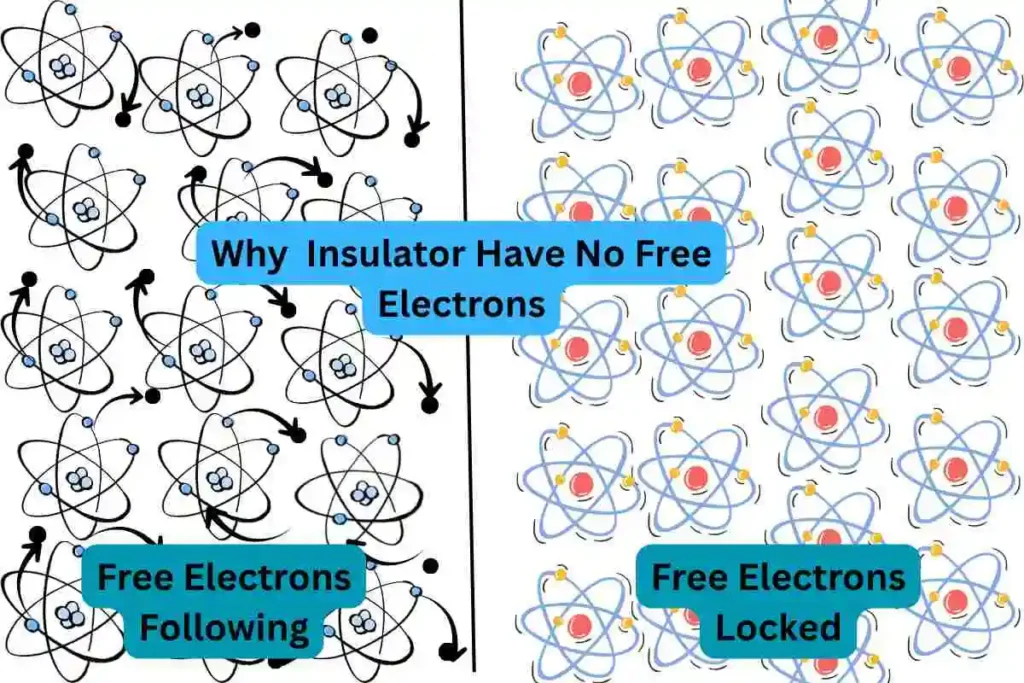
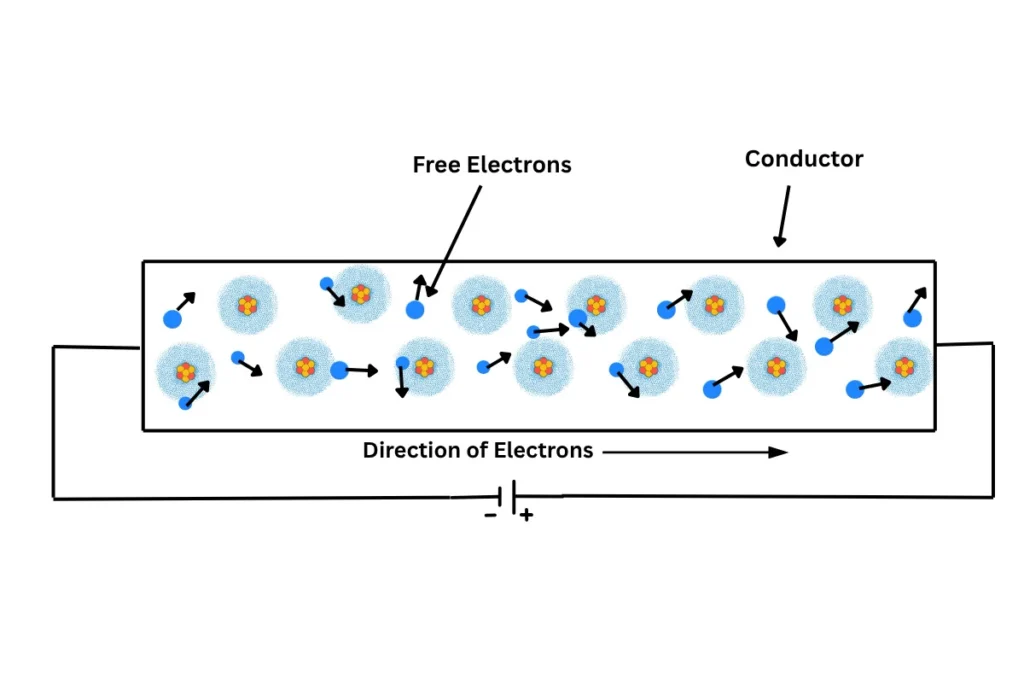
Without electrons, electricity cannot be generated or flow. The main reason for electric current is the movement of electrons. These electrons are found in metals, semiconductors, and other conductors. Electrons have negative charges. These electrons are located in the outer orbit of metals and other conductors and are free and can move easily.
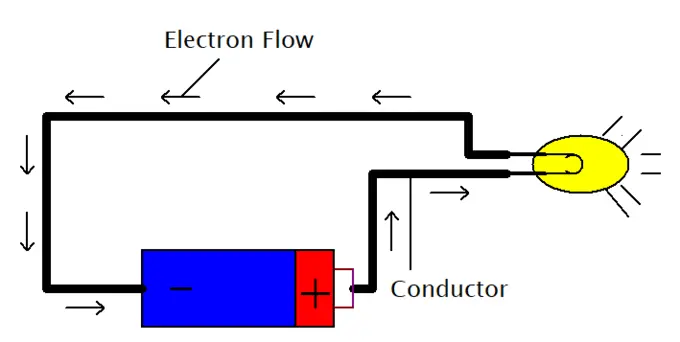
Electrons have negative charges. These electrons are located in the outer orbit of metals and other conductors and are free and can move easily. These are called free electrons, and these electrons play an essential role in electricity. Without these, we can neither generate electricity nor transmit it from one place to another.
When these free electrons are induced by an external force such as an electric field or voltage, they flow in one direction, producing an electric current.
Conclusion
The electron in the atom is a unique and fundamental particle, which plays a vital role in the structure of the universe, chemical processes, transfer of energy, and the operation of modern technology. Without it, neither life nor the development of contemporary science and technology would exist. This multifaceted role of the electron makes it one of the most important particles in the universe.
FAQ
1. What is the Role of Electron Carriers in Photosynthesis
Electrons’ primary function in photosynthesis is to transport high-energy electrons from one place to another.
2. What is the Role of Electrons in a Voltaic Cell
In a voltaic cell, electrons are used to transfer energy and generate an electric current. In this process:
- Electrons are released at the anode.
- These electrons travel to the cathode through the free electrons of the external circuit.
- Electrons are used at the cathode.
3. What is the Role of Electrons in Static Electricity
In static electricity, electrons are used to create and transfer charge.
- When two surfaces are rubbed together, electrons from one surface are released and deposited on the other surface.
- The transfer of electrons creates one positive charge and the other negative charge.
- When this charge is balanced, the electrons flow rapidly, causing a spark or electric shock.

I am an electrical engineer and also a blogger. I write informative blog posts on topics related to electrical and electronics engineering. If you are interested in these topics, you are welcome to my site to read these articles.