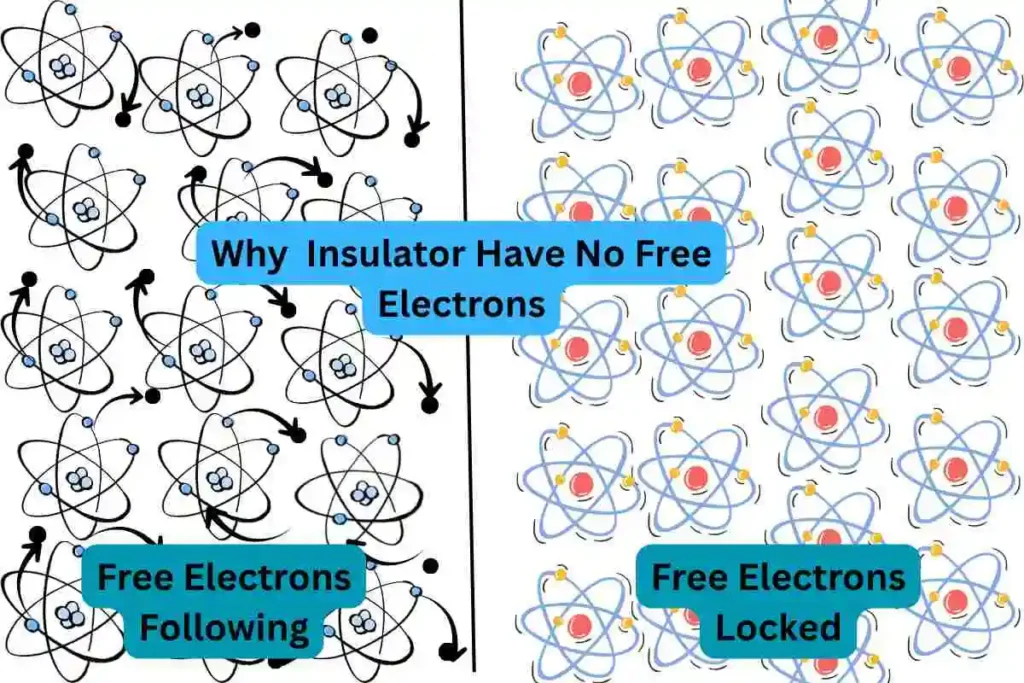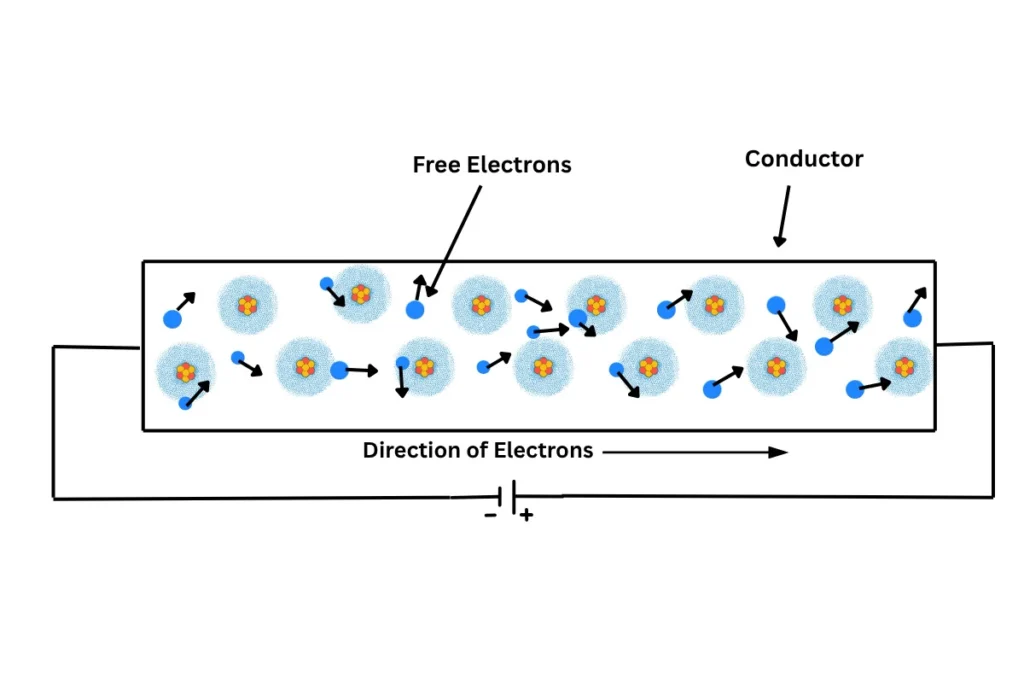
Why Can One Ignore Quantisation of Electric Charge
Everything around us is made of matter, and at the heart of this matter lies a fundamental property known as electric charge. These are the fundamental structures—ranging from the electricity that powers our homes to the forces that bind atoms together—that provide the primary underlying power.
We often picture this energy as a smooth, continuous stream. However, according to the principle of charge quantization, electric charge actually exists in discrete packets. Any amount of charge is always a whole-number multiple of the elementary charge, which equals 1.6 × 10⁻¹⁹ C. You can never have a fraction of this basic unit.
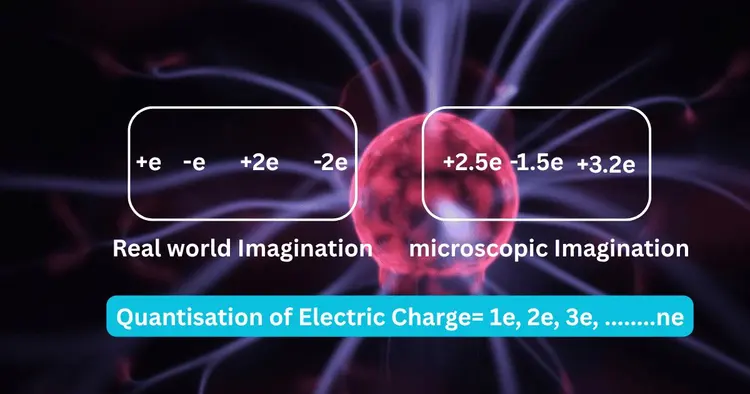
While this microscopic rule remains absolute in quantum physics for understanding molecular structures, a fascinating shift occurs in our macroscopic world when you flip a light switch or use a battery; engineers and scientists completely set aside this strict rule.
So, why ignore quantisation of electric charge in practical, real-world applications? The answer bridges the gap between the invisible subatomic realm and the large-scale physics we rely on daily. Let us explore how such a fundamental scientific law fades into the background when we look at the bigger picture.
What Do You Mean By Quantization of Electric Charge
What is the Quantisation of Electric Charge?
To understand the quantization of charge, you have to look at how charge actually exists in nature. It does not flow as a perfectly smooth, endless stream. Instead, it comes in distinct, countable blocks. We call this basic building block the elementary charge, represented by the letter e.
The principle of quantization of charge states that any total electric charge (q) is always a whole number, or integer, multiple of this elementary charge. We express this rule with a simple formula: q = ±ne.
In this equation:
- q represents the total charge.
- n stands for an integer (such as 1, 2, 3, and so on).
- e represents the elementary charge, which equals 1.6 × 10⁻¹⁹ Coulombs.
This means you can have charges of 1e, 2e, or 100e, but you can never have a fractional charge like 1.5e or 2.7e. Electric charge only exists in these exact packets.
Examples in Subatomic Particles
We see clear examples of this rule in the behavior of subatomic particles. These tiny components follow the math perfectly.
- An electron carries exactly one negative elementary charge (-1e).
- A proton carries exactly one positive elementary charge (+1e).
If an object gains three electrons, its total charge becomes -3e. If an object loses 5 electrons, its charge becomes +5e. You will never find a particle, atom, or object with a charge of 2.5e because you cannot split an electron or proton into smaller pieces to get a fractional charge.
Why This Matters for Atoms and Molecules
This concept does more than give us a math formula. It serves as a fundamental rule for understanding atomic and molecular structures.
The precise, balanced charges of subatomic particles allow atoms to form stable structures. Because a proton carries the exact opposite charge of an electron, an atom with equal numbers of both becomes perfectly neutral. This exact mathematical balance dictates how atoms attract, repel, and bond together to build molecules.
Without the rigid rules set by the quantization of charge, atoms would not behave predictably. The stable molecular structures that make up everything in our universe, from the water we drink to the DNA in our bodies, could not exist.
Why can the quantization of electric charge be ignored in practical situations?
When we study atoms and subatomic particles, the quantization of charge acts as a strict, unbreakable rule. However, when we step out of the laboratory and look at the everyday world, we completely ignore this principle. Why does this fundamental law stop mattering in our daily lives? The answer comes down to scale, measurement, and practical physics.
The Massive Jump to Macroscopic Systems
To understand why we ignore charge quantization, we first have to consider the sheer size of macroscopic systems. In our everyday world, the total electric charge we deal with is incredibly large compared to the tiny elementary charge of a single electron.
For example, a typical charged object in a high school physics experiment might carry a charge of one microcoulomb (10-6 C). While one microcoulomb sounds small, you must remember that a single elementary charge equals just 1.6 X 10⁻¹⁹ C. To reach just one microcoulomb, you need more than six trillion individual electrons!
The Power of Continuous Approximation
Because we deal with such massive numbers of electrons, the individual, distinct packets of charge blend. Think of a sandy beach. If you hold a handful of sand right in front of your eyes, you see the individual grains. But when you look down the coastline from a distance, the beach appears as a completely smooth, continuous surface.
Electric charge works the same way. At larger scales, we stop seeing the individual “grains” of charge. The charge appears continuous rather than discrete. This continuous charge distribution makes the quantization of charge completely negligible for any practical calculation.
Measurement Limitations in the Real World
Our real-world tools also dictate how we treat electric charge. Most practical instruments cannot detect individual charges. When you use a multimeter to test a wire, it measures the amount of electric charge in the wire. Because our everyday tools only see the collective effect of billions of moving electrons, we have no practical reason or ability to account for individual particles.
Microscopic Rules vs. Classical Physics
The importance of quantization depends entirely on the branch of physics you study. At the microscopic level, as in quantum mechanics, charge quantization remains a crucial foundation. You cannot explain how an atom works without it.
However, this concept is not significant in classical physics. Classical physics focuses on large-scale interactions. Treating charge as a continuous, flowing quantity allows scientists and engineers to use simpler math without sacrificing any real-world accuracy.
How Can One Ignore Quantisation of Electric Charge?
We ignore charge quantization by treating electric charge as a continuous flow rather than as individual packets of energy. You can picture this like pouring a glass of water. You do not count the individual water molecules as they fall into the glass. Instead, you treat the water as one continuous liquid.
This same logic applies to electric charge. The basic unit of charge, the electron, is incredibly small. In macroscopic systems, the total charge is much larger than a single elementary charge. Even a tiny static shock contains billions of electrons. Because the individual discrete packets of charge blend on a large scale, physicists and engineers use continuous mathematical models. By smoothing out the math, we make complex calculations much easier without losing any practical accuracy.
When Is It Appropriate to Ignore the Quantisation of Electric Charge?
You can safely ignore the quantisation of charge anytime you step out of the microscopic world and deal with large-scale systems.
Classical Physics and Everyday Scale
In classical physics, we observe how objects interact at human scales. Whether you are calculating the force between two charged metal plates or studying static electricity, the sheer volume of electrons makes the discrete nature of charge completely negligible. We only need the total macroscopic charge to find precise answers.
Real-World Applications
Engineers and electricians ignore quantisation every single day. When designing real-world applications, they treat electricity as a steady stream. Some common examples include:
- Capacitors: When calculating how much energy a capacitor stores, we treat the charge on its plates as a continuous distribution.
- Electric Circuits: When we measure the flow of power through household wiring or a computer motherboard, we track the total current, not the individual electrons.
- Electric Currents: Power grids push massive amounts of energy across vast distances. At this scale, tracking single charges is both impossible and useless.
While the quantization of charge remains a crucial, unbreakable rule at microscopic scales—such as in the study of atoms and quantum mechanics—it simply fades away in macroscopic contexts. As long as you deal with everyday power, classical physics, and standard technology, you can leave the discrete packets of charge behind.
Conclusion
We have explored how electric charge exists in tiny, distinct packets. This principle, the quantisation of charge, acts as an absolute rule for subatomic particles. However, as we move from single electrons to massive macroscopic systems, the sheer volume of these packets blends. Because we deal with trillions of charges at once, we can treat electricity as a smooth, continuous flow.
While counting individual charges remains fundamental at the microscopic level for understanding how atoms work, it becomes completely negligible in everyday technology. Ultimately, the universe operates under two different sets of rules depending on how closely you look. It takes both the strict, discrete packets of quantum mechanics and the smooth, continuous flow of classical physics to understand the world around us fully.
FAQ
-
Does classical physics become mathematically incorrect by ignoring the quantisation of charge?
No. Classical physics remains highly accurate. For macroscopic systems, the error margin when treating electric charge as a continuous fluid is so small that it is practically zero.
-
Can standard lab multimeters detect a single elementary charge?
No. Standard testing tools measure macroscopic systems. They require billions of flowing electrons to register even the smallest readable electric charge on their displays.
-
At what exact size do engineers stop ignoring the quantisation of charge?
There is no single cutoff number. Engineers shift from classical physics to quantum mechanics at the nanoscale, particularly in modern semiconductor design, where counting individual electrons can drastically change device behavior.
-
Do quarks break the rule of quantisation since they have fractional charges?
Quarks do carry fractional charges, such as +2/3e or -1/3e. However, we never observe isolated quarks in nature. They always bind together to form whole integer values of electric charge.
-
Why doesn’t Coulomb’s law include an integer variable for quantisation?
Coulomb’s law focuses on interactions within macroscopic systems. It assumes a continuous charge distribution because calculating trillions of discrete elementary charges would make the formula unnecessarily complex.
-
Does the quantisation of charge matter in human nerve impulses?
Even microscopic biological functions involve millions of sodium and potassium ions. Therefore, neuroscientists treat the electrical charge traveling through nerves as a continuous flow rather than as discrete packets.
-
How many elementary charges exist in a simple static electricity shock?
A tiny carpet shock transfers trillions of electrons. This massive volume clearly demonstrates why we ignore the discrete nature of charge in everyday electrostatic events.
-
How does a highly sensitive Faraday cup handle the quantisation of charge?
While a Faraday cup can measure very small ionic currents in vacuums, it still captures thousands of ions per millisecond. The instrument ultimately reads this collection as a continuous electrical signal.
-
Can extreme temperatures make the quantisation of charge matter in macroscopic systems?
Yes. At temperatures near absolute zero, macroscopic quantum phenomena like superconductivity occur. In these unique states, you can observe discrete quantum effects that the continuous charge model cannot explain.
-
Do chemical batteries rely on continuous charge or discrete packets to function?
The internal chemical reactions move discrete, individual ions. Yet engineers treat the resulting battery output as a continuous electric current because of the massive number of particles reacting simultaneously.
-
Why do astrophysics equations ignore the quantisation of charge for solar flares?
Solar flares involve highly energized plasma containing unimaginable quantities of charged particles. Modeling this massive macroscopic system demands continuous mathematical approximations to work efficiently.
-
If scientists discover smaller fundamental particles, will the elementary charge value change?
The elementary charge (e) remains the standard observable unit for isolated particles. Discovering new sub-particles would not change how we calculate total electric charge in classical physics.
-
Does ignoring quantisation help speed up circuit simulation software?
If we tried to track every single electron in a microchip, even the most powerful computers would struggle and likely fail. Instead, engineers treat electric charge as a smooth, continuous flow. This makes the calculations much simpler and allows the software to work quickly and efficiently.

I am an electrical engineer and also a blogger. I write informative blog posts on topics related to electrical and electronics engineering. If you are interested in these topics, you are welcome to my site to read these articles.