Best Power Backup Options for Home
You are attending an important work meeting—or perhaps you had just sat down to relax while watching a movie—and suddenly, everything goes dark. Power outages are frustrating, inconvenient, and almost always happen at the worst possible moments. As we become increasingly dependent on electronics for our daily tasks, safety, and comfort, a continuous power supply is no longer merely a luxury. To ensure the smooth functioning of your household during a grid failure, you need a reliable energy solution.
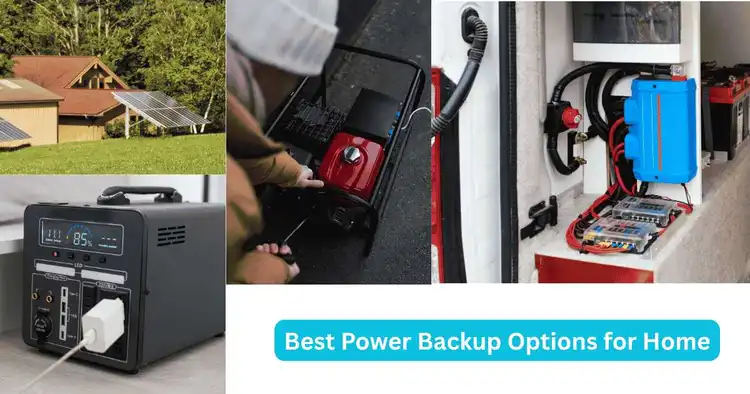
Whether you wish to power a few essential gadgets or your entire home without any power interruptions, selecting the right setup is crucial. In this guide, we will explore the best power backup options for home use, helping you understand your choices and select the perfect system to keep your devices running and your family comfortable.
What is Power Backup for Home?
A home power backup system acts as a secondary energy source that takes over when your primary utility grid fails. Think of this as a second option for electrical power for a home. These setups either store energy ahead of time or generate it on demand, ensuring your house stays powered during everything from brief flickers to extended blackouts.
Modern households depend on a constant stream of electricity. A sudden outage instantly disrupts your routine, but a solid backup plan keeps your life moving forward. There are several practical reasons why having a reliable power backup is absolutely essential:
- Supporting remote work: Continuous power ensures your Wi-Fi router and computers stay active, meaning you never drop out of a meeting or lose unsaved files.
- Protecting major appliances: Sudden, frequent power outages can damage sensitive electronic equipment. A reliable system protects refrigerators, HVAC units, and smart home devices.
- Running critical equipment: For families relying on medical equipment like CPAP machines, uninterrupted power provides life-saving safety.
- Maintaining comfort and security: You can keep your security cameras recording, your lights shining, and your climate control running smoothly regardless of the weather outside.
Ultimately, investing in a backup power source delivers pure peace of mind. You never have to panic over storm forecasts or grid instability. Even when darkness settles over the rest of the neighborhood, your home remains illuminated, secure, and fully operational.
What is the Best Source of Backup Power for Home
If you are wondering what the absolute best backup power source is, the honest answer is: it depends entirely on your situation. There is no one-size-fits-all solution for energy independence. The ideal setup for a cozy apartment looks completely different from the heavy-duty system needed to run a large family home.
To figure out the best emergency storage source for your household, you should carefully weigh these three primary factors:
- Your Power Load: Take a quick walk through your house. Do you just need to keep your internet router, phones, and laptops alive? Or do you need to power a refrigerator, air conditioner, and well pump? Identifying your essential appliances determines exactly how much power capacity you actually need for standby power.
- Typical Outage Duration: Monitor the weather conditions and the stability of the power grid in your area. If your neighborhood only faces brief, hour-long blackouts, a standard battery setup does the trick. However, if severe storms frequently knock out your power for days at a time, you must look into long-lasting, renewable solutions.
- Your Budget: A simple, small-scale power storage system can cost a few hundred dollars, whereas a generator or solar powerbackup system for an entire home requires a significant upfront investment.
Balancing these factors helps you find a reliable residential backup system that strikes an ideal balance between high efficiency, dependable performance, and your personal budget..
Different Types of Power Backup Options for Home
1. Inverter Power Backup for Home
Inverters are popular for providing instant power during an outage by converting stored DC battery power into AC current electricity for your home appliances. They are ideal for running essential household gadgets like lights, fans, and small electronics during short-to-medium power cuts.
2. Battery Power Backup Systems
Rechargeable battery backup systems, often paired with inverters, store electricity from the grid or other sources. They are silent in operation, require minimal maintenance, and can range from small portable batteries to large, whole-home solutions using lithium-ion or lead-acid technology.
3. UPS (Uninterruptible Power Supply) for Home
UPS devices are essential for sensitive electronics such as computers, routers, and home office equipment. They provide an immediate, short-term power supply that allows you to safely shut down devices or maintain connectivity during brief outages.
4. Solar Power Backup for Home
Solar backups use photovoltaic panels to generate electricity from sunlight, storing excess power in solar batteries. This eco-friendly option reduces utility costs and provides sustainable energy during extended outages, making it a long-term investment for energy independence.
5. Generator Power Backup for Home
Generators, available in both portable and standby models, run on fuels like petrol, diesel, or natural gas to produce electricity. Portable generators are great for temporary, targeted backup, while standby generators automatically power your entire home during longer blackouts.
6. Portable Power Backup Solutions
Portable standby power and compact battery power banks are great for emergencies and outdoor use. These lightweight devices can charge phones, laptops, and small appliances on the go, offering flexibility for both home and travel.
Which Power Backup Is Best for Home?
Finding the perfect power backup is not a guessing game. It all comes down to where you live and how much electricity you actually need. The auxiliary power capable of running a small apartment easily fails to provide electricity to a large house.
Let us look at two common situations to help you decide:
- The Budget-Conscious Apartment Dweller: You likely just want to keep your Wi-Fi, phone, and a fan running. A simple home inverter or a portable UPS fits your space nicely. They stay quiet, require no fuel, and cost very little to maintain.
- The Large Family in a Storm-Prone Area: If you face days without electricity, you need serious energy. A standby generator or a robust solar system ensures your refrigerator stays cold and your heating system keeps running.
Comparing Your Top Options
Every power outage system has its own unique strengths. Here is how the main choices stack up for daily home use:
- Inverters and Battery Banks: These units are silent and require almost zero maintenance. They are perfect for running essential lights and fans. However, their runtime depends heavily on the capacity of the battery you purchase.
- Solar Systems: Solar gives you total energy freedom. It operates quietly and directly lowers your monthly power bills. The catch is the high upfront installation cost, though it pays off significantly over the long term.
- Generators: When you need raw power, single phase ac generators deliver. They will run your entire house as long as you have fuel. On the downside, they are noisy, require frequent oil changes, and involve ongoing fuel costs.
- UPS Systems: A UPS protects sensitive electronics like computers and routers from sudden shutdowns. They provide instant power to prevent data loss, but they only last a few minutes to an hour.
Quick Comparison Summary
- Best for silence and low maintenance: Solar Systems and Inverters.
- Best for whole-home heavy lifting: Standby Generators.
- Best for protecting sensitive electronics: UPS Systems.
- Best for long-term cost savings: Solar Systems.
Choose the system that matches your exact power needs, budget, and local weather patterns to keep your home safe, functional, and comfortable.
How to Setup Backup Power for Home
A sudden blackout can leave you scrambling in the dark. However, with a solid plan, you can overcome this challenging situation and provide your home with an uninterruptible power supply. If you want to know how to setup backup power for home, you are in the right place. This guide walks you through the entire process, from figuring out your energy needs to testing your new system.
1. Calculate Your Total Power Load
To begin with, walk around your home and prepare a list of electrical appliances. Separate your essential appliances (refrigerators, medical devices, Wi-Fi) from non-essential ones (televisions, extra lighting). Check the starting and running wattage on your essential items and add them up. This total number dictates exactly how much energy capacity you actually need.
2. Choose the Right System
Once you know your wattage, balance that capacity with your budget. If you only need to run a few basics, a small battery inverter works perfectly. For running a whole house, you will want to invest in a robust standby generator or a comprehensive solar system.
3. Decide on Installation: DIY vs. Pro
For portable power backup and small inverters system setup is incredibly easy. You simply plug your appliances directly into the unit. However, if you choose a standby generator or a solar grid system, always hire a certified electrician. Proper hardwiring is crucial for your safety.
4. Prioritize Essential Safety Precautions
Electric safety is non-negotiable when dealing with electricity.
- Ventilation: Never run fuel-powered generators indoors or in an attached garage.
- Grounding: Ensure your system is properly grounded to prevent dangerous electrical shocks.
- House Wiring: Always use heavy-duty, outdoor-rated extension cords for portable units.
5. Test and Maintain Your System
Don’t wait for a major breakdown to find out whether or not your setup works. Run a full test by flipping off your main breaker(miniature circuit breaker) and turning on your backup power. Finally, establish a regular maintenance schedule. Check battery health, change generator oil, and test your system every few months so you are always prepared.
Do you want to keep your home safe? Then grab a notepad and start calculating your essential power load today!
Emergency and Advanced Power Backup Solutions
Sudden power outages require a rapid response, while long-term energy security calls for smart planning. Understanding both emergency and advanced power backup options helps you build a resilient, comfortable home.
Emergency Power Backup for Home: Fast and Reliable Solutions
When the grid fails without warning, you need immediate electricity to keep your family safe. An emergency power backup for home focuses heavily on short-term, quick-deployment solutions that bridge the gap until regular power returns.
These setups bypass complex wiring and professional installation. You just plug your devices in and get instant relief from the dark.
Consider these reliable emergency backup options:
- Portable power stations: These lightweight, battery-powered units easily run essential medical devices, charge phones, and power small appliances. Many models pair with portable solar panels for simple off-grid charging.
- Uninterruptible Power Supply (UPS): A basic UPS delivers seamless, instant power to your desktop computer or Wi-Fi router the exact second the lights go out. This short window gives you time to save important work and safely shut down sensitive electronics.
- Rechargeable emergency lighting: Strategically placed smart bulbs with built-in batteries automatically illuminate your hallways and living spaces during a grid failure.
Advanced Power Backup for Home: The Future of Energy Security
If you want total peace of mind and maximum energy independence, an advanced power backup for home serves as the ultimate upgrade. Modern technology transforms how homeowners store, manage, and consume electricity.
Today’s high-tech setups do much more than simply wait for an outage. They actively monitor your household energy usage, lower your monthly bills, and integrate perfectly with your daily routine.
Top advanced energy solutions feature:
- Hybrid battery systems: Combining solar panels, high-capacity home batteries, and grid connectivity creates a continuous power loop. You generate your own clean energy all day and store the excess for overnight use or sudden emergencies.
- AI-driven energy management: Smart electrical panels learn your specific habits. During a blackout, the system automatically cuts power to heavy appliances and prioritizes your most critical circuits, extending your battery life.
- Smart home integration: You can monitor real-time battery levels, adjust power output, and track solar generation directly from a smartphone app. This gives you complete control over your home’s energy, no matter where you are.
Conclusion
The decision of how to choose the best power backup options for your home ultimately depends on your specific budgetary situation. We all have unique energy requirements, budgets, and challenges related to local weather conditions. Whether you simply need a portable backup power source to keep your internet running, or a comprehensive solar power backup battery system to power your entire home—making the right choice makes all the difference.
Investing in a reliable electrical energy backup system offers far more than just convenience. It delivers true energy independence and complete peace of mind. You do not need to worry about impending storms or sudden grid failures caused by unforeseen circumstances. Instead, you know your family stays safe, comfortable, and connected no matter what happens outside.
The best way to get started is simply by calculating your essential power load. Take a quick walk through your house and list the appliances you cannot live without. Once you know exactly how much electricity you need, you can confidently narrow down your choices and select a system that fits your budget perfectly. Do not wait for the next major blackout to figure out your energy plan. Secure your household power setup today and keep your home bright, warm, and fully functional through any outage.
FAQ
-
How long do home backup batteries usually last?
Most last 5–15 years. Lithium-ion batteries have a longer lifespan than lead-acid and need less maintenance.
-
Are home power backup systems noisy?
Battery inverters and solar setups are silent. Generators can be noisy, like a lawnmower. For quiet operation, choose battery-based systems.
-
Do power backup systems need regular maintenance?
Yes, generators need oil changes and fuel checks; battery systems need occasional cleaning and checks every six months.
-
How much does a basic home power backup cost?
Small portable units start at a few hundred dollars; whole-home systems like generators or solar batteries can cost $3,000 to $10,000 or more. Calculate your needs before buying.
-
Will my devices shut off before the backup power kicks in?
A UPS provides instant power so devices stay on. Generators take 10–20 seconds to start, so pair a UPS with a generator if you need seamless backup.
-
Can I use a power backup system if I live in an apartment?
Yes, portable power stations and battery inverters are safe for apartments. Never use gas or propane generators indoors.
-
Do solar panels work during a power outage?
No, grid-tied solar panels shut off during blackouts for safety. Pair with home batteries to use solar power when the grid is down.
-
Can a backup battery run an air conditioner or refrigerator?
Yes, but only high-capacity battery systems can handle large appliances, and they may run for a limited time. Check your appliance’s wattage to ensure compatibility.

I am an electrical engineer and also a blogger. I write informative blog posts on topics related to electrical and electronics engineering. If you are interested in these topics, you are welcome to my site to read these articles.