Who Invented electricity? – A historical perspective
In today’s era, electricity has become an integral part of our lives. Today, it isn’t easy to imagine life without electricity. We operate countless appliances in our homes, like fans, bulbs, refrigerators, TVs, computers, etc., with electricity. But have you ever wondered who invented electricity? Did a single person find it, or was it the result of many scientific experiments over time? Let us try to find the answer to this question in detail in this article.
What is Electricity? Who Invented Electricity

Electricity is a form of energy that is produced when charged particles move. In simple terms, electricity is produced when there is motion between charged particles. It takes two primary forms:
1. Static Electricity
Static electricity is produced when two surfaces are rubbed together and electrons are transferred. For example, when you rub a rubber balloon against your hair, the balloon sticks to your hair.
2. Current Electricity
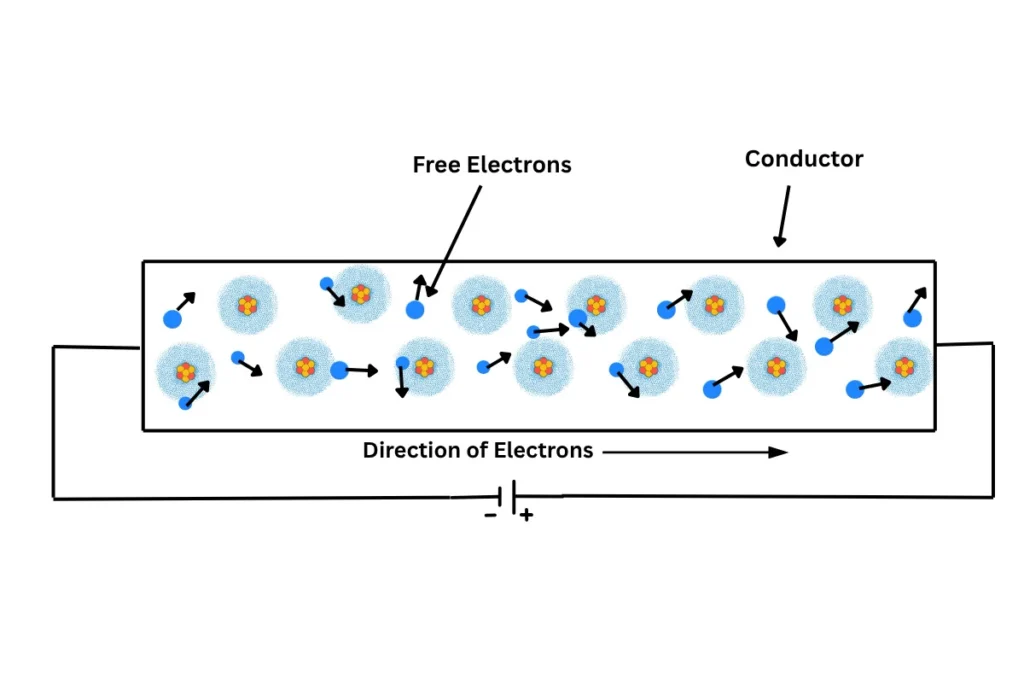
Current Electricity is what you use in your everyday tasks, such as running a fan, a light bulb, or a charger. It is produced when electrons flow in an orderly manner through a conductor such as copper or aluminum wire. There are two types of current electricity:
- DC current
- AC current.
Electricity is not only a source of energy, but it is also the root of our technological age. ‘Electricity invention’ is a term that reflects the progress made in energy and science. The discovery of electricity did not happen in a single moment; rather, it has been a scientific journey in which many great scientists contributed.
Who Discovered Electricity and When
The Concept of Electricity in Ancient Times
In ancient times, the concept of electricity was knowledge based on natural phenomena. People’s first experience of electricity was from lightning, which they considered to be the fury of the gods. Ancient civilizations like the Indian, Greek, and Egyptian considered it a symbol of divine power.
Scholars of the time tried to study various forms of electricity, but they did not have modern equipment and scientific methods. Around 600 BC, the Greek philosopher Thales of Miletus discovered that if amber (a tree gum) was rubbed together, it attracted tiny particles. This discovery was an early example of static electricity.
As time passed, curiosity about electricity grew. In the 17th and 18th centuries, scientists began to study electricity more systematically. Benjamin Franklin’s famous kite experiment, in which he proved that there is no difference between lightning and regular electricity, was an essential step towards electricity invention’. It opened new doors for scientists to understand the nature of electricity.
The discovery of electricity ushered in the age of science
William Gilbert (Father of Electricity) – 1600 AD
In the age of science, the contribution of William Gilbert to the discovery of electricity was significant. In 1600 AD, he published a book named “De Magnete”, which was based on magnetism and static electricity. Gilbert explained that the force of attraction generated when amber and other substances are rubbed is a different type of force, which he named “Electricus”. This word is derived from the Greek word “Electron”, which means amber.
Gilbert also stated that the Earth is a giant magnet and that because of its magnetic properties, the compass needle points towards the north. Gilbert also stated that the Earth is a giant magnet and that because of its magnetic properties, the compass needle points towards the north. William Gilbert is called the father of electricity and magnetism. His discoveries helped scientists understand the connection between static electricity and magnetism and were an essential step towards electricity invention’.
Stephen Gray and Charles du Fay
Stephen Gray was an English scientist who discovered that electricity flows in 1729. He showed through experiments that electricity can be carried from one place to another. He tested different substances and found that some substances can conduct electricity (conductors), while some cannot (insulators).
Du fey proved that these two types of electricity are opposite to each other and attract each other. This discovery was important for understanding the principle of static electricity.
Benjamin Franklin – Discovered the Nature of Electricity
In 1752, Franklin experimented to prove that lightning and static electricity are the same type of force. He flew a kite with a metal key tied to a silk thread. When the kite came in contact with the clouds, electricity flowed through the key. This experiment proved that there is no difference between lightning and static electricity.
Franklin also proved that electricity consists of positive and negative charges. Franklin also invented the lightning rod, which is used to protect buildings from lightning. His work not only gave a new direction to ‘electricity invention’ but also laid a strong foundation for future scientists.
Luigi Galvani and Alessandro Volta – Electrochemical Discoveries
Luigi Galvani was an Italian scientist who discovered “bioelectricity” in the 1780s. He experimented with frog legs and found that when metal wires were attached to the frog’s muscles, the muscles contracted.
In 1800, Volta created the “voltaic pile”, the world’s first battery. It was made by immersing copper and zinc plates in salty water. The voltaic pile demonstrated that chemical reactions could produce continuous electricity.
Michael Faraday and Electric Generation
In 1831, Michael Faraday discovered electromagnetic induction. He proved that when a magnet is moved near a coil of wire, an electric current is generated in the wire. This discovery became the basis of electricity generation.
Thomas Edison and the commercial use of electricity
Thomas Edison is considered the father of the commercial use of electricity. In 1879, Thomas Edison created the first practical and long-lasting incandescent light bulb. In 1882, he established the first power plant in New York City, called the Pearl Street Station. This plant provided electricity to hundreds of homes and businesses using DC (Direct Current) electricity.
Nikolaus Tesla and the revolution of AC current
Nikola Tesla is called the father of AC (Alternating Current). Tesla developed the transformer and the Induction Motor. There was a “War of Currents” between Tesla and Thomas Edison, in which Edison was supporting DC, while Tesla was in favor of AC.
James Clerk Maxwell and the Electrostatic Theory
James Clerk Maxwell developed mathematical equations to explain the relationship between electric and magnetic fields, known today as Maxwell’s equations.
Maxwell’s equations revolutionized the field of electromagnetism. His work not only gave a new direction to ‘electricity invention’ but also laid a strong foundation for modern physics and technology.
Conclusion: Did one person discover electricity?
The answer to this question is – no. The discovery of electricity was a gradual process in which many scientists contributed. Each one added something new to it, and the electricity we are using today is the result of that collective effort.
FAQ
1. Who Discovered Electricity
The credit for the discovery of electricity goes to many scientists, but Benjamin Franklin made the most important contribution. He proved in 1752 that electricity and lightning are the same thing by flying a kite. After this, Michael Faraday and Thomas Edison developed it.
2. Who Discovered Static Electricity
The credit for the discovery of static electricity goes to the ancient Greek scientist Thales. Through his experiments, he found that when amber (resin) is rubbed with wool, it attracts light objects. This discovery was made around 600 BC and is considered the first discovery of static electricity.
3. What is the War of Currents
The “War of Currents” was a technological conflict that occurred in the 1880s between Thomas Edison and Nikola Tesla. Edison was in favour of using DC (direct current), while Tesla was in favour of using AC (alternating current). Eventually, the AC system proved more efficient and was widely adopted.
4. Who Made Electric Batteries First
The first electric battery was created by Italian scientist Alessandro Volta in 1800. He developed a battery called the “voltaic pile”, which contained a cloth soaked in salt between plates of zinc and copper. This battery is considered to be the first successful device to produce a continuous electric current.
5. Who Made Electric Light Bulb First
The first electric light bulb was invented by Thomas Edison in 1879. Although scientists such as Humphry Davy and Joseph Swan had made attempts before, Edison created a practical and long-burning bulb.
6. When was Electricity First used in Home
After the discovery of electricity, domestic use of electricity began in the late 19th century. Electricity was first supplied to a house in New York in 1882 from Thomas Edison’s Pearl Street Station. It was the first time electricity was used for lighting in homes. Gradually, this technology spread all over the world, and today it has become a necessity in every home.
7. First Electricity in World
For the first time in the world, electricity was produced in 1800 by Alessandro Volta’s battery, which was called a voltaic pile. It was the first successful attempt at electricity invention. After this, generators and light bulbs were made in the 1870s, which started the practical use of electricity.

I am an electrical engineer and also a blogger. I write informative blog posts on topics related to electrical and electronics engineering. If you are interested in these topics, you are welcome to my site to read these articles.