What is The Difference Between AC and DC Current
Electricity powers our lives, but do you know how it actually works? Grasping basic electricity concepts helps you make smarter choices about your home appliances, solar panels, and electric vehicles. If you want to understand the difference between AC and DC clearly, you are in exactly the right place. In this article, you will understand in detail the ac vs dc Current: What’s the Difference?, so that you can finally comprehend the energy flowing through your walls and gadgets.
You might wonder, what is AC current, and exactly what is DC current? By exploring these two main types of electric current, you will quickly discover the importance of AC and DC in daily life. From charging your smartphone to lighting up entire cities, both play crucial but distinct roles.
What Is Alternating Current (AC)? Understanding the Basics
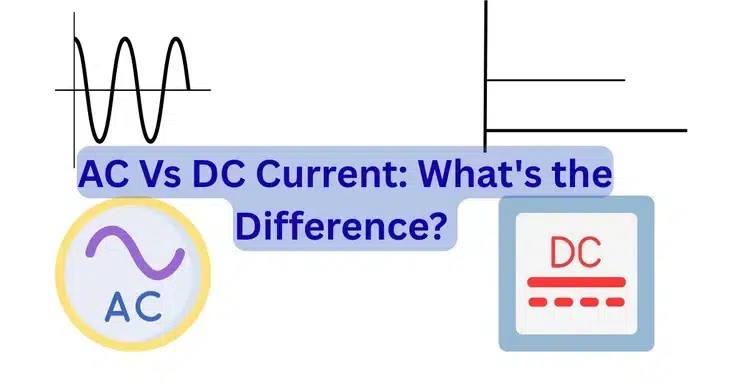
First, take a look at the standard outlets on your wall. If you want to know what AC electricity is, you will find the answer right there. The official definition of AC (Alternating Current) states that, unlike DC, AC constantly reverses its direction—flowing back and forth. If you were to visualize this flow of electricity on a graph, it would appear as a smooth, wavy line, known as a ‘sinusoidal waveform.’
This rapid shifting creates an AC voltage variation that enables power companies to transmit electricity over long distances with minimal energy loss. Depending on where you live in the world, this back-and-forth shift happens at a specific rate, known as the AC frequency (50Hz vs 60Hz).
Because it travels so well over long distances, it forms the backbone of the vast AC power grid. This efficiency is the main reason we rely on AC power in homes and offices everywhere.
When you plug your television, refrigerator, or microwave into the mains, you tap directly into this powerful alternating current. If you want a deeper explanation, you can also read our detailed guide on what alternating current is.
What Is Direct Current (DC)?
Have you ever wondered what keeps your smartphone running or your flashlight glowing? If you are asking what DC electricity is, the answer is right in your hand. The basic definition of direct current states that it is a type of electricity in which current flows in one direction. Unlike other types of power that fluctuate, it delivers a constant voltage and current, providing a steady, reliable stream of energy.
You see this steady energy everywhere. Some of the most common DC power examples include solar panels, flashlights, and portable power banks. Because of its predictable and stable nature, you will primarily find DC in batteries and electronics. Most of your everyday gadgets rely heavily on low-voltage DC systems to operate safely and efficiently. Whenever you plug your laptop into a wall outlet, the bulky brick on the cord serves as a DC power supply, converting the wall’s AC power into the steady stream your device needs to stay charged.
Core Difference Between AC Vs DC Current
Understanding the fundamental difference between AC and DC feels much easier when you picture electricity as water flowing through a pipe. Both types of current provide the energy we need to power our lives, but they behave in entirely different ways. Let us explore the primary differences that set them apart.
The Direction of Current
The most significant distinction comes down to the direction of current. When you look at AC vs DC flow, you will notice they travel on completely different paths. Direct current is straightforward—the electrons march forward in a single, unwavering direction. Alternating current, on the other hand, constantly shifts. The electrons move forward, then backward, changing direction dozens of times every second.
Variation of Voltage and Waveforms
Because of how these electric currents move, we observe a significant difference in voltage variation. Direct current provides a steady, constant voltage. On a graph, the electrical signal forms a flat, unbroken line. Alternating current voltage continuously rises to a peak, falls back to zero, and drops into a negative value before repeating the cycle.
This creates a distinct waveform difference. When engineers look at a visual comparison of AC and DC on an oscilloscope, they immediately spot the AC sinusoidal vs DC straight line patterns. The AC signal creates a smooth, rolling wave (the sine wave), while the DC signal remains a flat, predictable line across the screen.
Symbols and Electrical Characteristics
If you look closely at the power adapters around your home, you will easily spot the common AC and DC symbols. A straight solid line with a dashed line underneath represents DC, showing its steady nature. A small wavy line represents AC, reflecting its rolling waveform.
When comparing the overall electrical characteristics of AC vs DC, we see why both exist. AC travels efficiently over long distances, making it perfect for power grids. DC offers incredible stability, making it the only choice for storing energy in batteries and safely running sensitive computer microchips.
How AC and DC Are Generated: Power Plants vs Batteries
Electricity does not just magically appear in our outlets or devices. We have to create it. Depending on the type of power we need, we use very different methods to bring that energy to life.
Creating Alternating Current
If you want to know how AC is generated, you need to look at motion. We produce alternating current using large electric generators that spin magnets around coils of wire. As the magnetic field rotates, it pushes and pulls electrons in the wire, creating the alternating back-and-forth flow.
Typically, you will find massive AC generators (alternators) rotating within power stations to produce AC electricity. Whether burning coal in a steam power plant, splitting atoms in a nuclear reactor facility, or harnessing the power of the wind in a wind farm, the primary objective in all these cases is simply to spin a large turbine. It is this very rotational motion that generates high-voltage AC electricity, which then travels through miles of power lines to reach your home.
Generating Direct Current
Understanding how DC is generated requires looking at different technologies. Unlike the spinning mechanical parts needed for AC, we usually get DC from batteries and solar panels through chemical reactions or direct sunlight capture.
Inside a standard battery, a chemical reaction slowly releases a steady stream of electrons that flow out in one single direction. Similarly, when sunlight hits a solar panel, it knocks electrons loose in a steady, one-way stream. There are no moving parts, just a reliable flow of direct current.
Bridging the Gap: Power Conversion
Because we use both types of electricity every day, our devices constantly need to switch between them. Converting AC to DC and DC to AC happens seamlessly behind the scenes.
When you plug your laptop into a wall socket, the ‘power brick’ attached to its cord acts as a converter. It takes the ‘Alternating Current’ (AC) from the wall outlet and converts it to the stable ‘Direct Current’ (DC) that your computer’s battery requires.
On the other hand, if you have solar panels installed on your roof, they generate DC power. To power your household appliances, the system relies on a specialized device—an inverter—which converts DC power to AC. If you would like to learn more about inverters, you can read our article titled “How Inverter works.“
We manage this power conversion AC-DC using two specific tools: rectifiers and inverters. Rectifiers convert alternating current to direct current. Inverters do the exact opposite, taking the steady direct current from a battery or solar panel and chopping it up to create an alternating current wave.
Common Applications of DC: From Smartphones to Electric Vehicles
Direct current provides a steady, one-way flow of electricity. Because it remains constant and predictable, it is the absolute best choice for storing power and running sensitive equipment. Here are the most common ways we use DC in our daily lives:
- Personal Tech and Gadgets: You hold direct current in your hands every day. Manufacturers rely heavily on DC power in electronics because tiny microchips need a perfectly stable power supply to process information. You will find DC in computers and phones, keeping your screens bright and your processors running quickly. Almost every modern gadget relies on a DC supply to function without short-circuiting.
- Charging and Connectivity: Whenever you plug a cord into your laptop or phone block, you are using USB-C DC. The small brick on your charging cable draws power from the wall and converts it to safe, low-voltage DC power that gently charges your batteries without overwhelming the delicate internal parts.
- Modern Transportation: The automotive industry depends on this steady power. You will find powerful DC motors running the windows, windshield wipers, and entertainment systems in standard gas cars. More importantly, DC in electric vehicles is at the core of modern transportation, as massive battery packs store and deliver direct current to power the car forward efficiently.
- Green Energy Generation: As we move toward a cleaner future, DC in renewable energy systems plays a starring role. When sunlight hits a solar panel, the natural reaction produces direct DC power. Since you cannot easily store alternating current, we capture this green energy using massive DC battery storage facilities, storing the power for when the sun goes down.
Common Applications of AC: Powering Homes, Offices, and Industry
Alternating current reverses direction constantly, allowing it to travel across hundreds of miles of wire without losing much energy. Because it can easily push power over long distances, it serves as the foundation of our global power grid. Here is how AC shapes our larger world:
- Running Your Household: When you plug a device into the wall, you connect it directly to a massive alternating-current network. We use air conditioners for household appliances like refrigerators, microwaves, and washing machines. These heavy-duty machines need the strong, raw power that only AC provides. To make this easy, builders install standardized AC sockets and plugs in every room, giving you instant access to the grid.
- Keeping Workspaces Comfortable: Step into any office, and you will see AC hard at work. We heavily rely on AC in commercial buildings to keep massive spaces functional. This includes using AC for lighting and HVAC systems, ensuring employees stay cool in the summer and warm in the winter. Planners follow strict AC power supply standards to ensure these massive buildings operate safely without overloading the local grid.
- Driving Heavy Industry: The things you buy at the store exist because of alternating current. We rely on AC in factories to run the assembly lines, conveyor belts, and robotic arms that build our products. Heavy manufacturing depends on massive industrial AC motors because they are incredibly durable, easy to maintain, and capable of generating immense torque.
- Connecting the World: None of this works without a unified system. Every neighborhood relies on grid-connected AC systems to safely share and distribute electricity. Power plants use large-scale AC equipment to deliver this alternating current to millions of homes simultaneously, proving that AC is truly the undisputed king of long-distance power distribution.
Efficiency, Safety, and Cost: Comparing AC and DC in Real-World Use
When builders and engineers map out a new electrical grid, they have to weigh the pros and cons of both power types. Here is a clear look at how they compare in everyday applications.
- Evaluating Power Efficiency: When comparing the overall efficiency of AC vs DC, the distance the power must travel matters most. For long-distance transmission, AC traditionally wins because transformers can step up the voltage easily. However, DC systems eliminate the power factor in AC, a phenomenon where alternating waves fall out of sync and waste energy. For short distances, DC is often far more efficient.
- Managing Energy Loss: Every wire creates electric resistance. This resistance leads directly to energy loss and heat. Because DC delivers a constant, steady voltage without the continuous back-and-forth shifting of AC, it creates less line loss in certain high-voltage scenarios. This means less wasted heat and more usable electricity at the destination.
- Understanding Safety Risks: When looking at AC vs DC safety, both command respect, but they act differently on the human body. The shock risk AC vs DC presents unique challenges. AC causes muscle spasms, making it harder to let go of a live wire. DC causes a single strong jolt that often throws the person away from the source. Both are dangerous, but high-voltage DC arcs can be much harder to extinguish.
- Material and Insulation Needs: The way these currents behave changes how we build wires. AC voltage peaks higher than its average usable voltage, meaning it requires thicker, heavier insulation. DC systems often have lower insulation requirements for the same amount of delivered power, which can save space and materials.
- Breaking Down the Budget: Money always plays a factor. The infrastructure cost AC vs DC heavily favors AC for local community grids because transformers are relatively cheap and highly reliable. DC systems require expensive rectifiers and inverters to manage the power, driving up the initial hardware costs.
- Installation and Upkeep: For standard buildings, the installation complexity of AC remains low because the entire industry relies on standardized AC equipment. However, maintenance considerations for DC systems can sometimes be simpler because they lack the complex frequency synchronization required by large AC grids.
- Making the Final Call: Ultimately, choosing AC or DC for a project depends entirely on the end goal. A standard suburban neighborhood will almost always use AC. A massive offshore wind farm sending power miles underwater will likely use DC to minimize transmission losses.
AC vs DC in Modern Technologies: Renewables, Data Centers, and Smart Homes
Our world is shifting rapidly. As we move away from fossil fuels and build smarter homes, the way we use electricity is transforming. Direct current is making a massive comeback in some of our most advanced technologies.
- Harnessing the Sun: Solar panels naturally generate direct current. The debate over AC vs DC in solar energy usually comes down to how you plan to use that power. You must choose between AC coupling and DC coupling when adding batteries to your home. DC coupling stores solar energy directly in the battery without conversion, making it incredibly efficient for off-grid setups.
- Powering the Internet: Every time you stream a movie or check your email, you rely on a massive server farm. The use of DC in data centers is skyrocketing. Servers naturally run on DC power. By supplying DC directly to the server racks, companies skip the wasteful process of converting AC from the wall, saving millions of dollars in electricity and cooling costs.
- Driving the Future: Electric vehicles operate entirely on massive battery packs. While you can plug a car into a standard AC wall outlet, it charges very slowly. This is why DC fast charging for EVs has revolutionized travel. These roadside stations bypass the car’s internal converter and pump high-voltage direct current straight into the battery, giving you hundreds of miles of range in minutes.
- Illuminating Our Spaces: The old incandescent lightbulbs loved AC power. Today, things are different. The rise of DC lighting and LED technology means your lights actually want direct current. Modern LEDs run much cooler and last much longer when fed a steady diet of low-voltage DC, leading many modern offices to run dedicated DC wiring just for their lights.
- Building Local Grids: Communities are realizing they do not always need the main power grid. DC microgrids are popping up in rural areas and hospital campuses. These localized networks combine solar panels, wind turbines, and batteries, sharing steady DC power across a small area to ensure the lights never go out during a major storm.
- Smarter Living Spaces: The modern house is packed with gadgets that demand direct current. Advanced smart home power systems now integrate USB-C wall outlets and low-voltage wiring. Instead of using bulky adapter bricks for every single device, homes are being built to distribute DC directly to televisions, routers, and smart speakers.
- A Blended Future: We are no longer living in a world where one current has to defeat the other completely. The future of DC distribution lies in teamwork. Engineers are actively designing hybrid AC-DC systems that use AC to transmit power across the country, but seamlessly transition to DC to power our neighborhood solar arrays, electric cars, and digital lives.
How to Decide When to Use AC or DC in Your Projects or Installations
Picking the right current does not have to feel like a guessing game. By breaking your project down into smaller, manageable parts, the right answer usually reveals itself. Here are the most critical factors to look at when choosing between AC and DC for your next build.
- Evaluate Your Distance and Power Requirements
Think about how far your electricity needs to travel if you plan to send power across a massive commercial property or run lines between several distant buildings. Alternating current handles the journey beautifully. AC pushes power over long stretches without losing much energy. On the flip side, if you are building a contained system—like a solar setup on an RV or a portable charging station—direct current provides the perfect, steady energy you need for those shorter distances. - Master Your Voltage Level Selection
You need to match the pressure of your electricity to the needs of your equipment. AC gives you incredible flexibility because you can easily step the voltage up or down using cheap, reliable transformers. DC limits your flexibility a bit more. Changing the DC voltage requires complex converters, which can drive up your budget. If your project needs multiple different voltage levels to run various machines, AC makes the process much simpler. - Identify Your Type of Load (Motors, Electronics)
Look closely at what you actually want to turn on. The type of load (motors, electronics) heavily dictates your power choice. If your project involves delicate computer servers, telecommunications gear, or battery banks, you absolutely need a smooth, constant DC supply. However, if you plan to run heavy manufacturing equipment, massive air conditioning units, or large industrial pumps, AC provides the raw, rugged power those heavy-duty motors crave. - Factor in Crucial Design Considerations
Good builders always think about the future. When mapping out your design considerations, ask yourself if you plan to expand the system later. Standard AC systems integrate seamlessly with the local grid, making it easy to draw more power as your business grows. DC systems often operate completely off the grid. While off-grid DC setups give you independence, scaling them up usually requires buying more expensive batteries and solar arrays. - Follow Safety Standards and Regulatory Requirements
You can never cut corners on safety. Every local government enforces strict safety standards to prevent fires and shocks. Because AC naturally crosses zero volts as it fluctuates, it is generally easier to extinguish electrical arcs if something goes wrong. High-voltage DC can sustain a dangerous arc, meaning you must buy specialized, heavy-duty circuit breakers. Always check your local regulatory requirements before you buy any hardware, as many building codes dictate exactly which current you must use for specific rooms. - Look at Practical Examples of AC vs DC Selection
Sometimes the best way to learn is to look at what already works. Let us look at a few practical examples of AC vs DC selection. If you want to build a smart home lighting network using advanced LEDs, running a dedicated low-voltage DC line saves energy and extends bulb lifespan. Conversely, if you want to set up a commercial woodworking shop, you should stick to AC to easily power the massive table saws and dust collection systems. - Apply Essential Electrical Engineering Tips
Professionals rely on a few simple electrical engineering tips to keep projects running smoothly. First, always standardize your plugs so nobody accidentally plugs an AC device into a DC socket. Second, if you use a hybrid system, physically separate your AC and DC wires to prevent dangerous interference. Finally, never guess on your wire thickness; DC often requires thicker cables to handle the constant current safely.
Conclusion: AC Vs DC Current
We often flip a switch without a second thought, but knowing the difference between alternating current (AC) and direct current (DC) gives you a huge advantage. As we explored, AC acts as the heavy lifter for long-distance power distribution. It easily steps up and down in voltage to push energy from massive power plants right to your neighborhood. Meanwhile, DC serves as the precise, steady force powering your digital life. From the smartphone in your pocket to the electric vehicle in your driveway, DC rules the world of batteries, renewable energy, and sensitive electronics.
Understanding how these two currents work helps you make much smarter choices for your own practical applications. Whether you plan to install solar panels, wire a smart home, or just figure out which adapter to use for your new laptop, knowing your power sources keeps your equipment safe and efficient. You no longer have to guess why a bulky power brick sits on your charging cable or how your battery stores energy.
FAQ
What is Alternating Current (AC)?
Alternating current is a type of electricity where the flow of energy constantly changes direction back and forth. We use AC to power homes, offices, and massive city grids because it travels great distances very efficiently.
What is Direct Current (DC)?
Direct current is electricity that flows steadily in one single direction. You will primarily find DC power in batteries, solar panels, and everyday portable electronics like your smartphone.
Why do we use AC for our homes instead of DC?
AC travels easily over hundreds of miles without losing much energy. Power companies can easily change its voltage using simple transformers, making it the most efficient choice for a massive, shared power grid.
Which type of electricity is safer: AC or DC?
Both types are highly dangerous at high voltages. AC can cause muscle spasms that make it hard to let go of a wire, while a high-voltage DC shock often throws you backward. You must always handle both types of electricity with extreme care.
Can I store AC power for later use?
No, you cannot easily store alternating current directly. To save energy for a rainy day, we must first convert the AC power into DC power and store it inside a battery.
Do my laptop and smartphone use AC or DC power?
Your personal electronics run entirely on DC power. The bulky block on your charging cable takes the AC power from your wall outlet and converts it into the steady, safe DC power your battery requires.
Why do solar panels produce DC power?
Solar panels naturally generate direct current because sunlight knocks electrons loose in a steady, one-way stream. To use this green energy for your standard household appliances, a special device must convert it into AC.
What exactly is an inverter?
An inverter is a helpful electrical device that changes direct current (like the power from a battery or solar panel) into alternating current. This allows you to run standard household appliances off stored energy.
What does a rectifier do?
A rectifier performs the exact opposite job of an inverter. It takes the alternating current from your wall outlet and smooths it out into the steady direct current needed to charge your electronic devices.
Are electric vehicles powered by AC or DC?
Electric vehicles rely heavily on DC power because they use massive battery packs to store energy. When you plug your car into a charging station, equipment converts the grid’s AC power into the DC power the car needs to drive.

I am an electrical engineer and also a blogger. I write informative blog posts on topics related to electrical and electronics engineering. If you are interested in these topics, you are welcome to my site to read these articles.